




Traditional Wooden Airer
These pieces for a traditional wooden airer are practical household furnishings built from mahogany, pine, and oak to dry textiles efficiently.
Traditional Wooden Airer
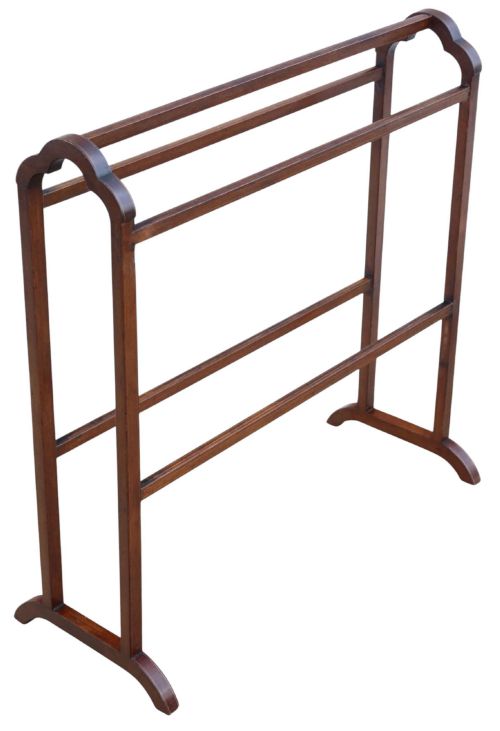
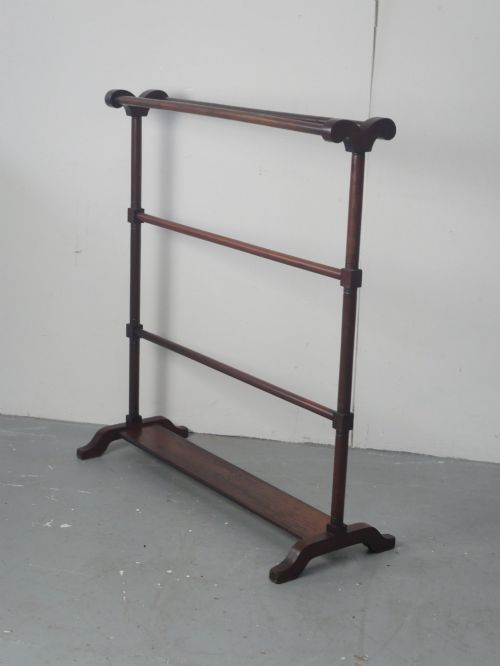
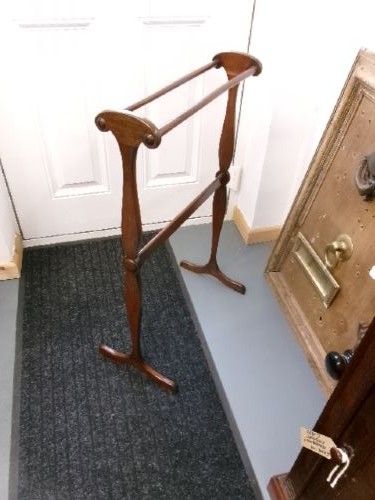
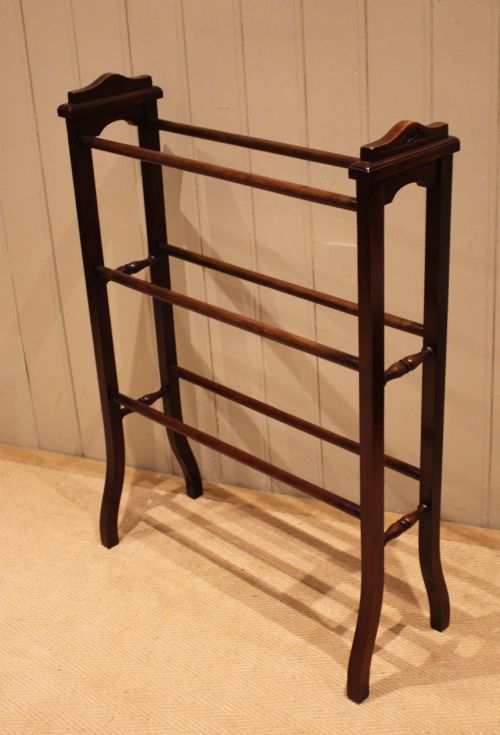
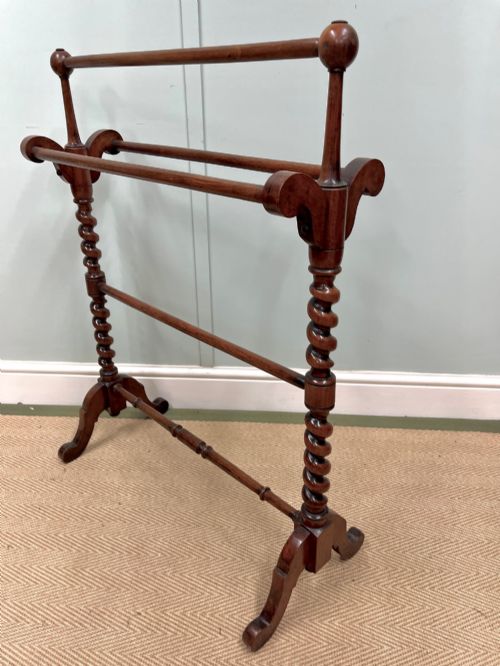
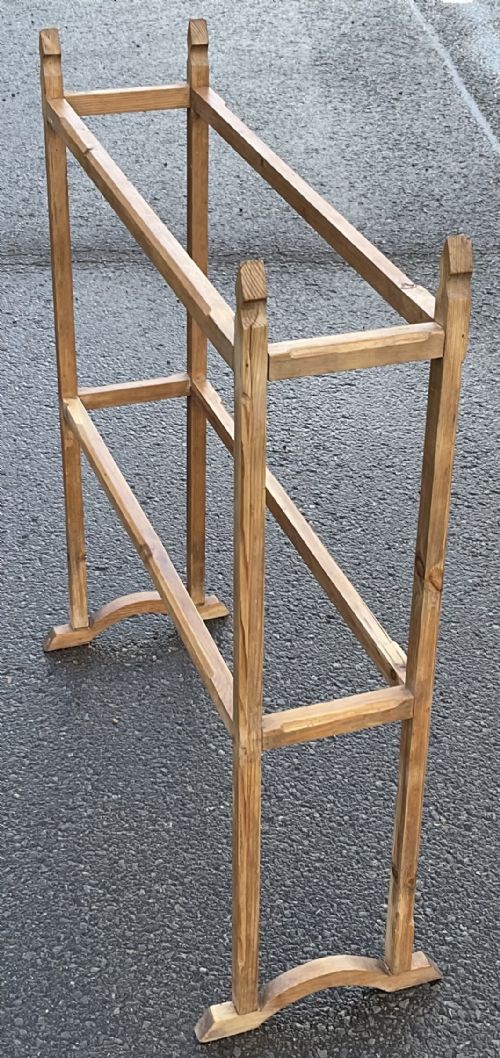
When you search for a traditional wooden airer, you examine pieces primarily catalogued as towel rails, towel rail stands, and kitchen racks. These items serve domestic utility, providing functional horizontal bars for hanging laundry or garments in domestic spaces.
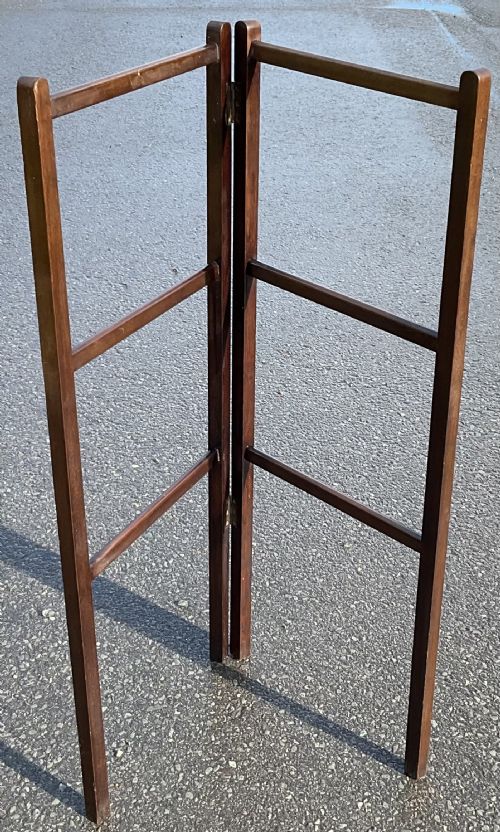
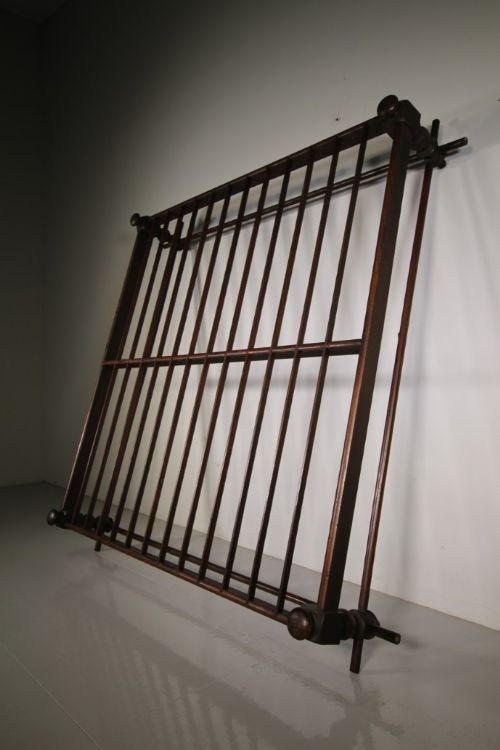
You are most likely to meet Edwardian and Victorian examples on this page, alongside items from the nineteenth century, Regency period, and rustic farmhouse styles. The forms span standing towel rails with multiple bars, smaller folding formats, and kitchen hanging racks.
Materials span mahogany, pine, and oak, occasionally enhanced with satinwood inlay, brass, ebonised wood, or boxwood details. These practical domestic fixtures reflect the straightforward craftsmanship of British households across the nineteenth and early twentieth centuries.
How they were made
Makers construct these pieces using solid timbers such as mahogany, pine, and oak, shaped into upright supports and horizontal hanging rails. Woodworking joints secure the framework to withstand daily household use.
Surface treatments vary from polished mahogany and ebonised finishes to decorated pine and satinwood inlay. Brass components occasionally provide functional detailing or structural support.
Materials include brass fittings, ebonised wood, and satinwood inlay details.
What varies in quality
The sophistication of the timber selection and decorative detailing separates simpler utility items from finer examples. Plain pine stands contrast with polished mahogany frames featuring inlaid satinwood or ebonised surfaces.
Proportion and scale also define the range, from compact small rails to generous standing structures and large hanging kitchen racks. The integrity of the original joints and the presence of decorative turnings or brass elements influence the overall character.
The Traditional Wooden Airer Glossary
- Towel rail stand
- A freestanding wooden frame with multiple horizontal bars designed for holding towels or laundry. These pieces typically rest on feet or extended side supports.
- Kitchen hanging rack
- A ceiling or wall-mounted wooden frame used in traditional kitchens for drying food or textiles. Such items offer elevated storage space.
- Ebonised wood
- Timber treated with a dark stain or finish to resemble ebony. This technique creates a dense, dark surface aesthetic.
- Satinwood inlay
- Decorative woodwork where contrasting light satinwood is fitted into recesses within a primary timber base. This adds decorative geometric or linear patterns.
Traditional Wooden Airer: Frequently Asked Questions
Where were these pieces used?
These items functioned primarily in domestic spaces such as sculleries, kitchens, and bedrooms. They provided accessible surfaces for airing laundry and towels near hearths or windows.
Larger standing formats occupied floor space in utility areas, while hanging racks attached to kitchen ceilings to utilise ambient rising warmth.
How do I care for the wood?
Maintain the timber surfaces by dusting gently with a dry cloth and avoiding excessive moisture. Direct exposure to intense heat sources can cause wood to warp or split.
Applying occasional suitable wax polish preserves the finish on polished mahogany and pine without harming the historic surface.
How do I date these items?
Dating relies on observing timber choices, construction methods, and stylistic details associated with specific periods. Victorian pieces often employ solid mahogany or decorated pine, while Edwardian examples show lighter framing.
Nineteenth-century items frequently display hand-finished joints and characteristic turnings that distinguish them from later twentieth-century reproductions.
Can I use them for daily drying?
These items handle light textiles and towels effectively in modern settings. Inspect the stability of the joints before loading heavier garments onto the rails.
Placing them in well-ventilated rooms prevents moisture accumulation around the wooden joints during regular household use.