
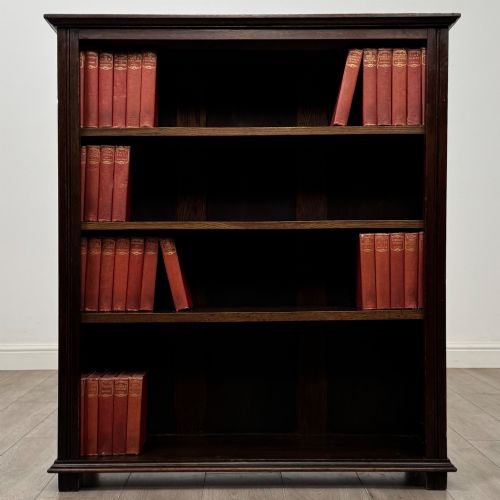
Standing Library Bookcase
A standing library bookcase organises heavy volumes within reach, bringing architectural timber and fitted shelving to domestic rooms.
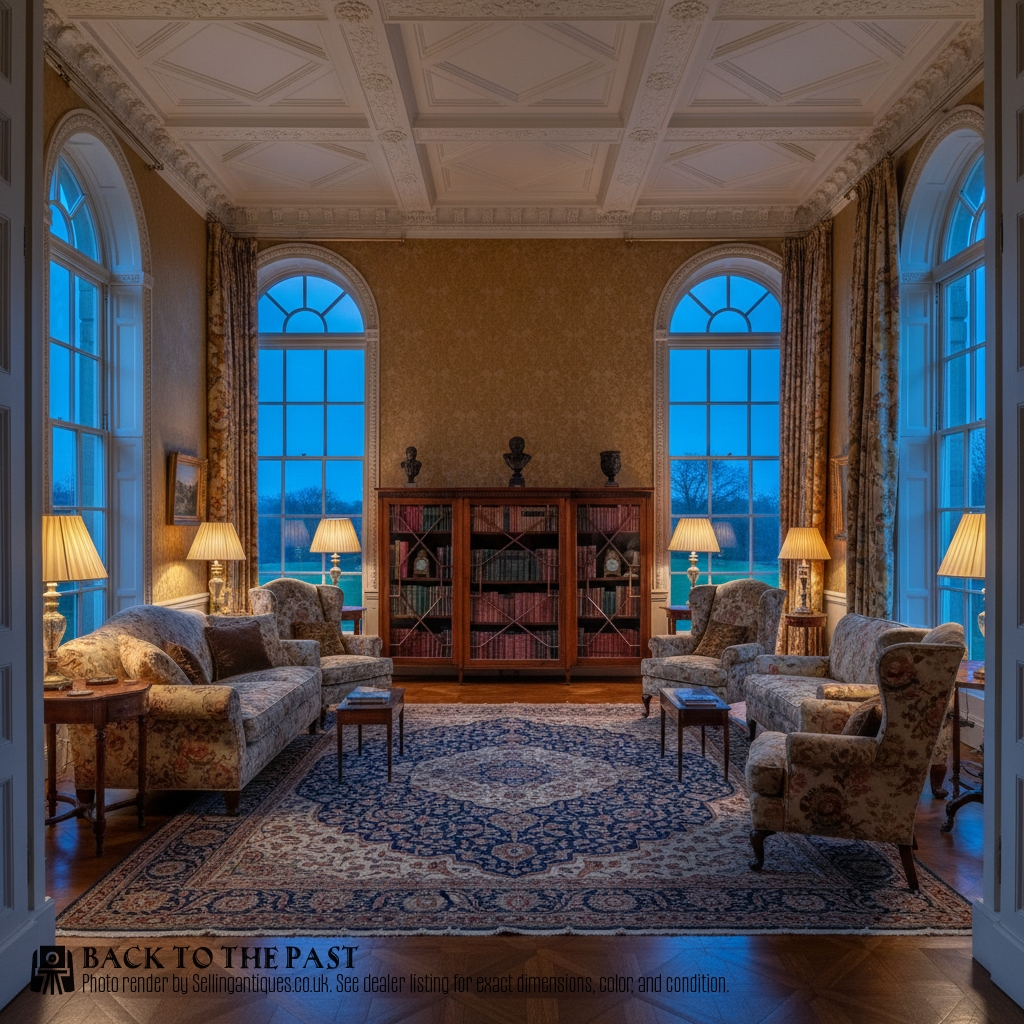
Standing Library Bookcase
A standing library bookcase provides accessible storage for substantial collections of books across floors and walls. Buyers seeking a standing library bookcase encounter open shelving, revolving formats, and variants fitted with cupboards or glazed doors.
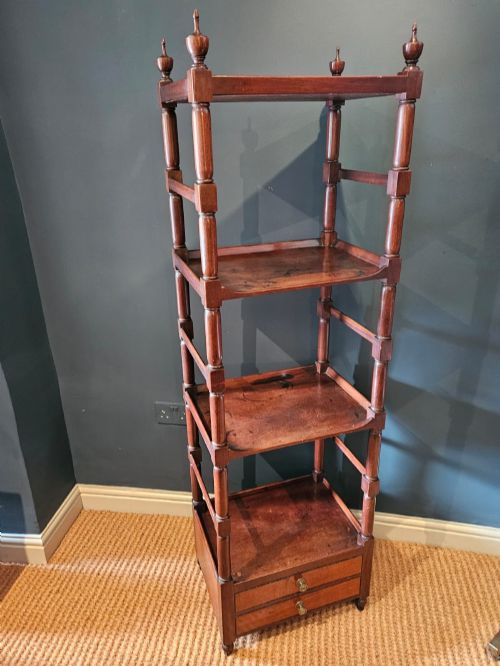
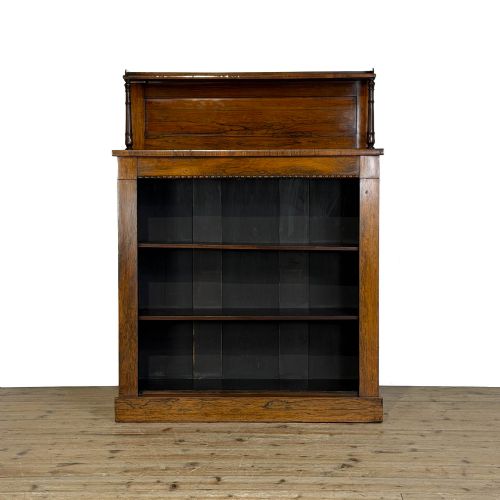
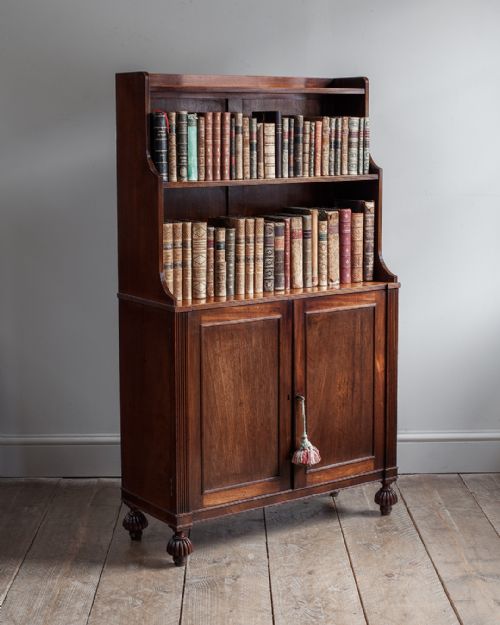
The selections span periods from the Georgian era through the Victorian and Edwardian decades into the early twentieth century. Common configurations include open mahogany and oak structures, revolving designs, and waterfall tiers suited for domestic study spaces.
Materials and construction
Cabinet makers utilised dense hardwoods such as mahogany, oak, walnut, rosewood, and satinwood to support the weight of heavy volumes. Brass handles, cast iron elements, and castors facilitated movement on larger freestanding examples.
Inlay work, carved details, and adjustable shelf mechanisms demonstrate the technical skill applied during the Victorian, Edwardian, and Regency periods. Timber selection dictated the structural integrity required for large tiered and revolving bookcases.
Listings feature woods including mahogany, oak, rosewood, satinwood, and walnut across Georgian, Victorian, and Edwardian periods.
Judging standard and craftsmanship
Higher grade pieces display superior timber selection, such as figured mahogany, burr walnut, or quarter-sawn oak, coupled with refined carving and precise inlay work. The integration of adjustable shelving mechanisms and solid backboards distinguishes superior examples from simpler utilitarian pieces.
Proportion and stability define the construction standard, particularly in revolving formats and tall open bookcases. Original timber patination and retained brass or cast iron fittings elevate the standing of individual pieces.
Gillows·Maple And Co
The Standing Library Bookcase Glossary
- Waterfall bookcase
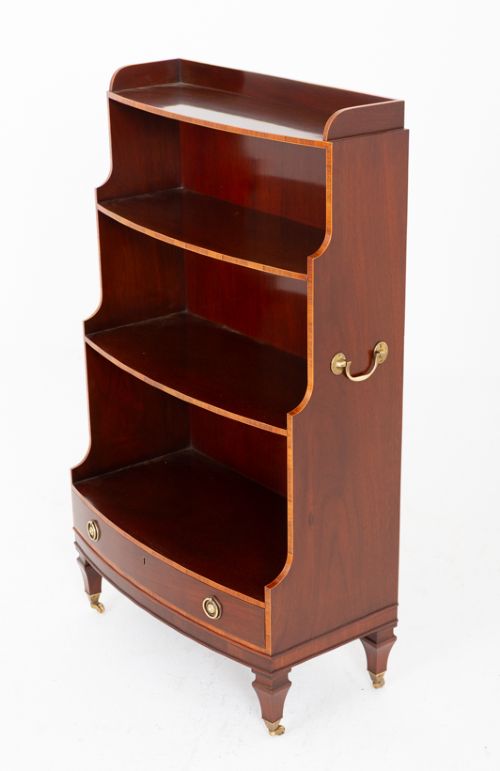
- A tiered piece where each lower shelf steps out wider than the one above it. This form became popular during the Regency and Edwardian periods.
- Revolving bookcase
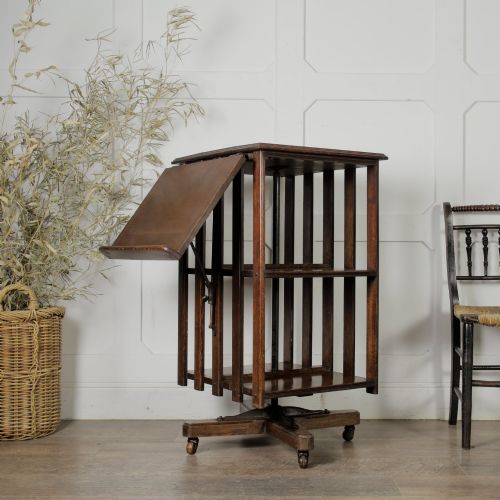
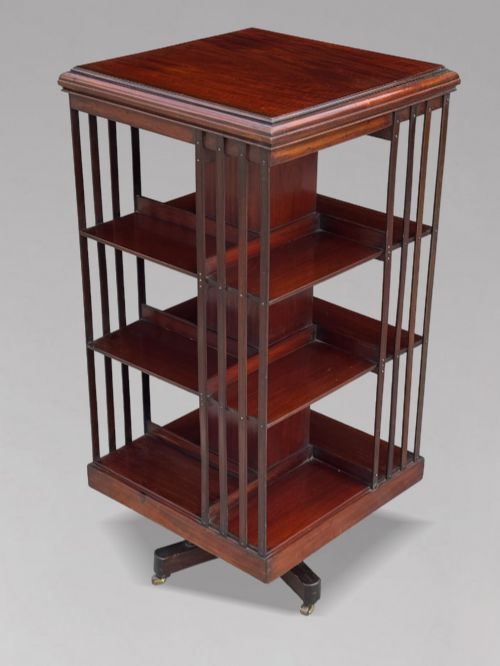
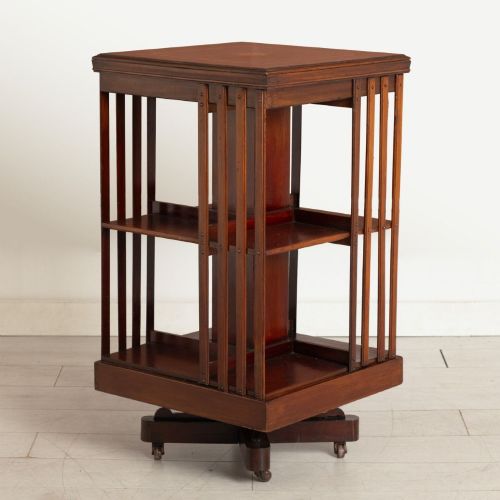
- A freestanding design on a pivoting base that allows books to be accessed from all sides. These typically turn on a cast iron mechanism.
- Astragal glazed
- A door fitted with small wooden strips holding individual panes of glass in place. This technique protects books from dust while maintaining visibility.
- Open bookcase
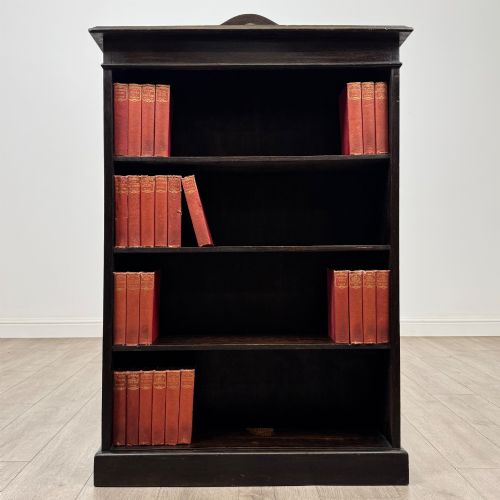
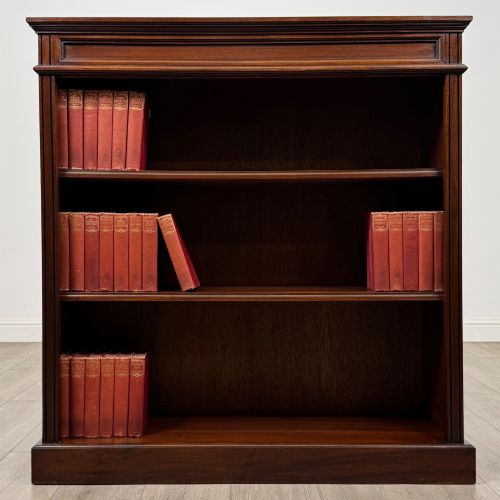
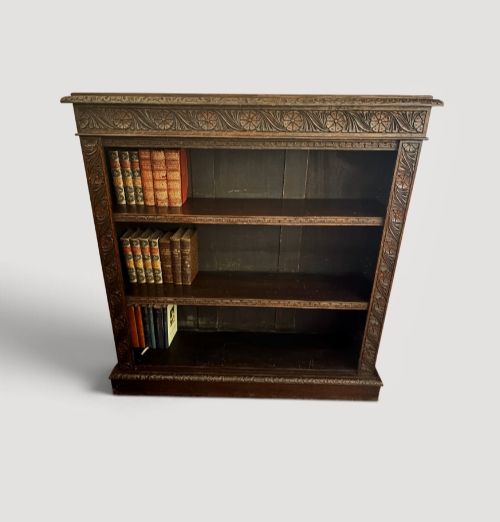
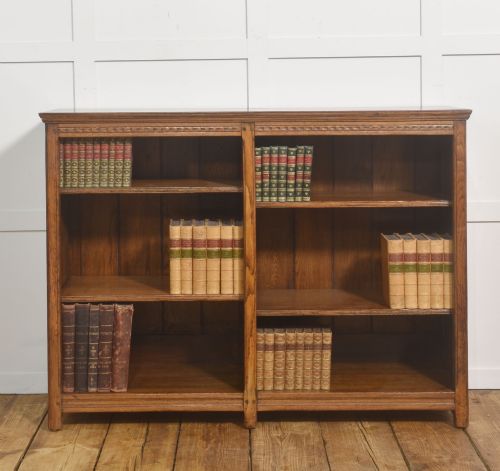
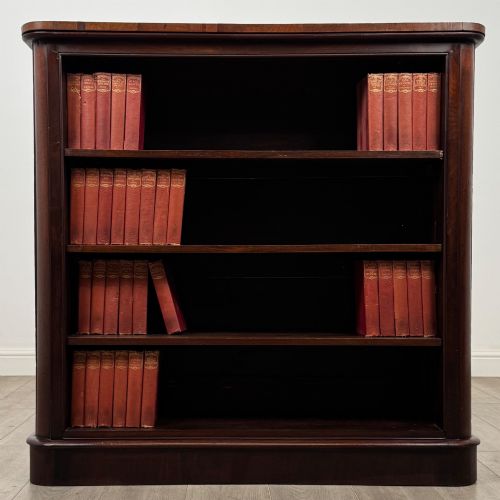
- A shelving unit without doors that provides immediate access to volumes. Many Victorian and Edwardian examples feature adjustable wooden shelves.
Standing Library Bookcase: Frequently Asked Questions
What is a revolving bookcase?
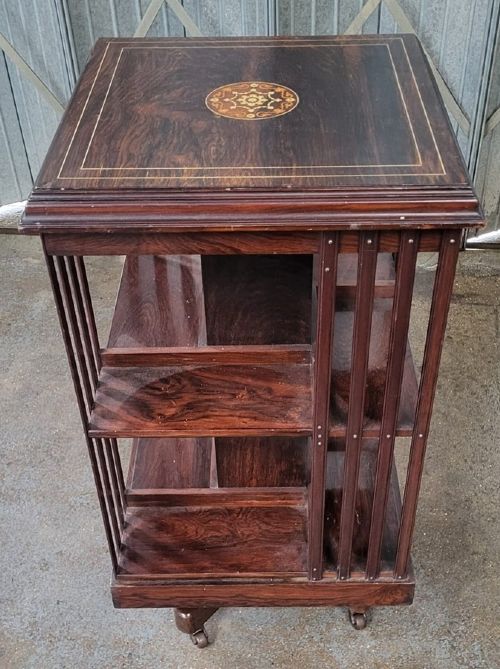
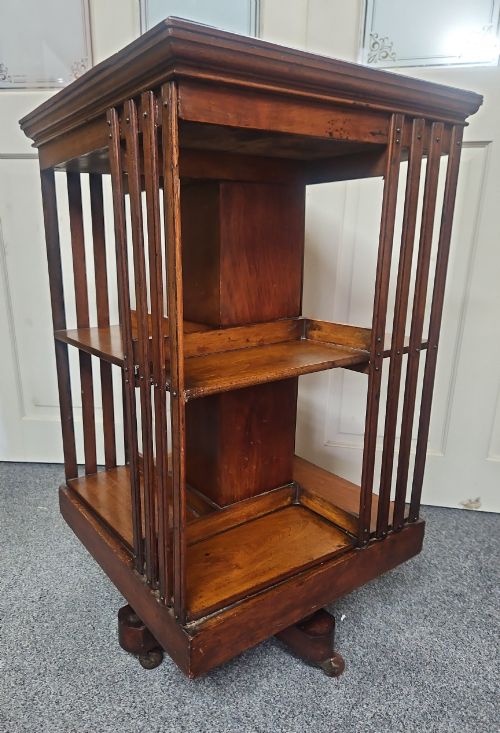
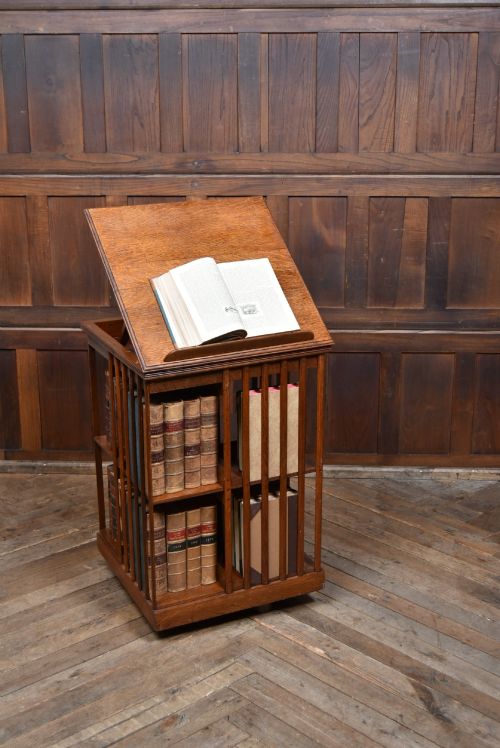
A revolving bookcase is a compact, freestanding unit mounted on a concealed pivot and base. It allows multiple books to be stored in a small footprint and accessed by turning the unit.
Most surviving examples date from the Edwardian period and employ mahogany or oak, often finished with inlaid details on the top surface.
How do I adjust the shelves?
Many library bookcases feature internal vertical racks or brass slots that allow timber shelves to be repositioned at different heights. This accommodates volumes of varying sizes.
Adjustable shelving is particularly common in Victorian and Edwardian open bookcases designed for working libraries.
Where should I place a freestanding bookcase?
Freestanding bookcases require stable floor space away from direct heat sources and strong sunlight to protect the polished hardwood and book bindings. Open versions work well against walls or as room dividers when double-sided.
Revolving formats suit corners or spaces beside seating where 360-degree access is practical.
How do I identify an Edwardian bookcase?
Edwardian bookcases often feature lighter timbers such as satinwood or inlaid mahogany alongside golden oak, reflecting the decorative tastes around nineteen hundred. Common forms include revolving tables and open shelving units.
Constructed around the early twentieth century, they generally display simpler lines than heavy Victorian furniture.