



Standing Lamp Giltwood
These standing lamp giltwood pieces bring grand Italian and French decorative schemes into a room through carved timber and gold leaf.
Standing Lamp Giltwood
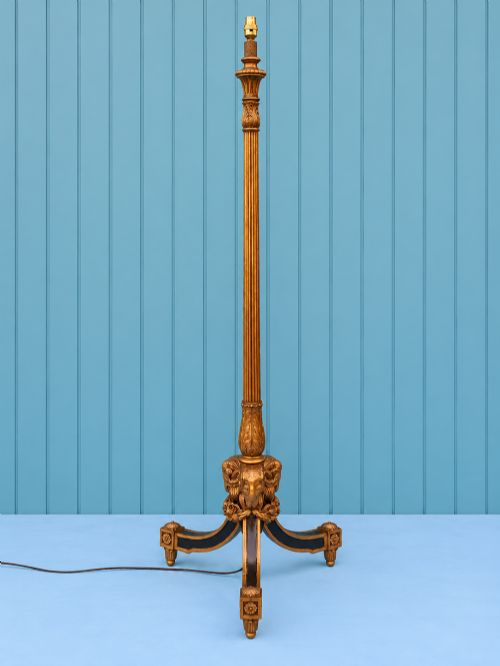
When you search for standing lamp giltwood, you find tall lighting columns designed to illuminate a room while adding architectural weight. The examples appearing here lean heavily towards Italian Florentine workmanship, Edwardian standard lamps, and pieces influenced by French Rococo or Neoclassical taste.
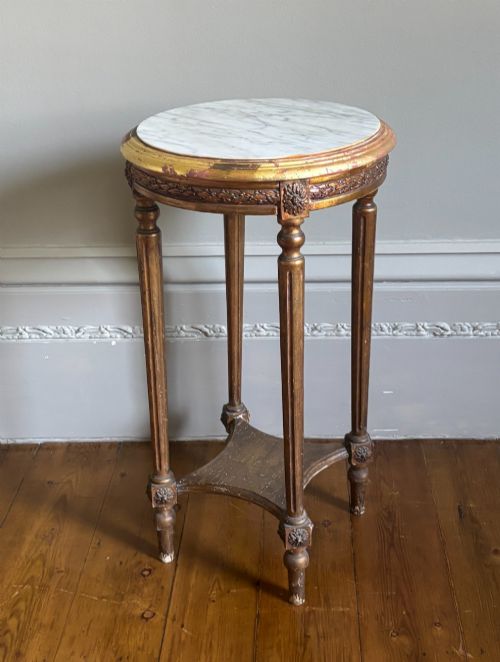
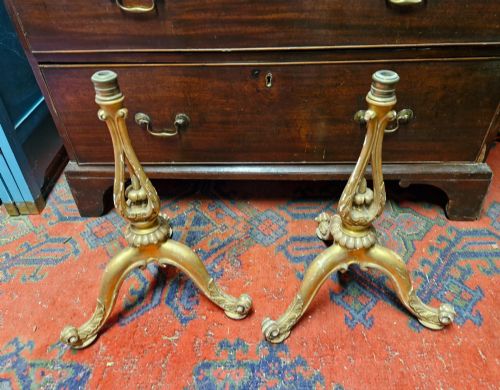
Most items on this page date from the nineteenth and early twentieth centuries, spanning periods from eighteen-fifty to nineteen-thirty. Alongside standard floor lamps, you encounter related furniture and bases such as side tables with marble tops, occasional tables, and converted pricket stick lamp bases.
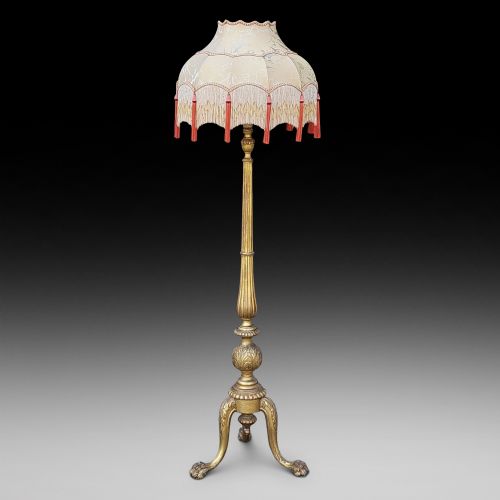
The dominant forms are tall turned or carved timber columns resting on tripod or circular bases, finished in gold leaf or gesso over wood. They serve as primary vertical accents in traditional drawing rooms, often paired with fabric shades.
How they were made
The construction relies on solid wood, heavily built up with layers of gesso before the application of fine gold leaf or gilt finishes. Carvers shaped the timber by hand, producing intricate floral mouldings, fluted columns, and elaborate scrolled tripod supports.
Many items incorporate contrasting materials such as inset marble tops, brass fittings, and structural elements of metal or carved wood. The surface was often burnished to create varying degrees of matte and reflective shine across the carved details.
Standing Lamp Giltwood Retail Price Guide 2026
Typical asking prices for standing lamp giltwood among the pieces listed under this phrase on Sellingantiques today, from the lower quarter to the upper quarter. They describe what is for sale here now, not the wider market.
Listings feature standard lamps and side tables from the Edwardian era back to eighteen-fifty, constructed in giltwood, gesso, marble, and brass.
What varies in quality
Quality rests primarily on the depth and crispness of the hand-carved detail in the timber and gesso. Pieces at the upper end show sharp, undercut foliage and well-defined architectural proportions, whereas simpler items rely on shallow moulding.
The integrity of the gilt surface determines visual success, with superior examples retaining rich tonal variation rather than flat, modern metallic paint. Stability in the underlying wood and the weight of the base also dictate how well the tall column stands over time.
The Standing Lamp Giltwood Glossary
- Giltwood
- Timber that has been coated with thin sheets of gold leaf or gilt. This finish provides the characteristic bright, reflective surface seen on classical furniture and lighting stands.
- Gesso
- A plaster mixture applied to wood surfaces as a smooth base for gilding. It allows carvers to achieve sharp relief work before applying gold leaf.
- Neoclassical
- A decorative style drawing on classical Greek and Roman motifs. It appears in these lamps through symmetrical columns, urn details, and restrained leaf ornamentation.
- Pricket stick
- A heavy candle holder featuring a central spike to secure the candle. Converted pricket sticks form some of the older lamp bases on this page.
- Tripod base
- A three-legged support structure commonly utilised on tall floor lamps to ensure stability. These bases often feature scrolled feet or carved animal motifs.
Standing Lamp Giltwood: Frequently Asked Questions
How do I wire a vintage giltwood lamp?
Most antique standards require modern rewiring to meet current safety standards. A qualified electrician can thread modern flex through the internal column without damaging the historic wood.
It helps to retain original brass lamp holders where possible, updating only the internal workings and the plug.
What shade suits a standing lamp giltwood?
Traditional tall silk or pleated fabric shades complement the ornate gold leaf finish. Proportion is key, ensuring the diameter of the shade matches the visual weight of the carved base.
Neutral tones work well against gilded surfaces, allowing the carved details of the column to remain the focal point.
How do I clean a gilt surface?
Dust the carved timber gently with a dry, soft brush to avoid disturbing fragile gold leaf. Moisture and modern chemical cleaners will strip the historic gesso and gilding.
Regular light dusting prevents grime from settling into the deep recesses of the floral and acanthus leaf carvings.
How can I tell Italian from French pieces?
Italian Florentine and Baroque styles tend to feature bolder, heavier carving with deep relief and rich gilt accumulation. French Rococo and Louis-style pieces often display more restrained asymmetry and refined, slender proportions.
Examining the underlying timber and the crispness of the gesso work also reveals regional workshop habits from the nineteenth century.