


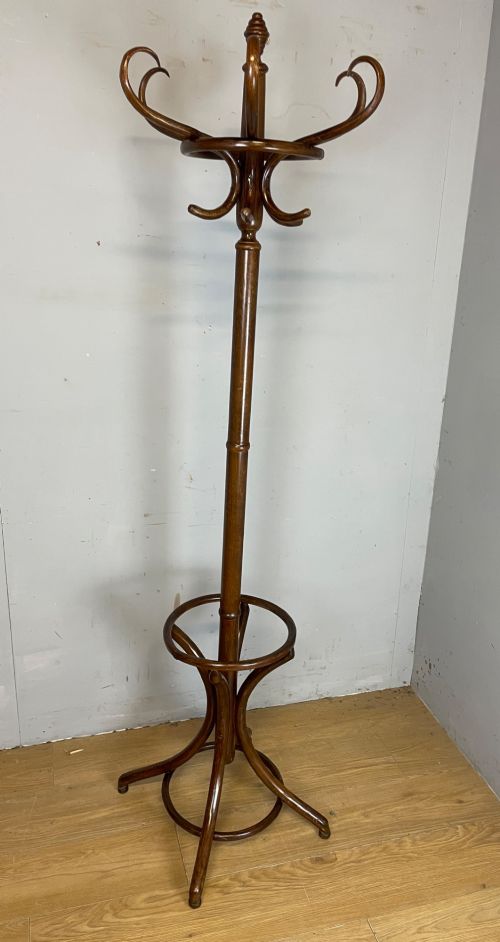
Standing Hall Rack
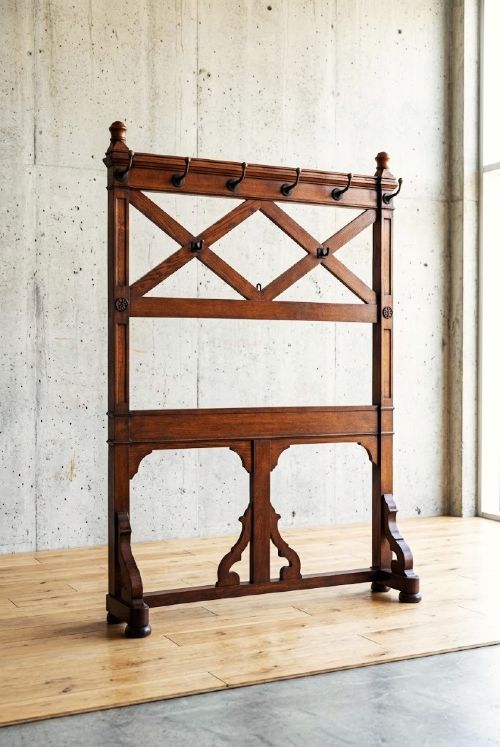
A standing hall rack welcomes visitors with a designated place for hats, coats, sticks and umbrellas in the entranceway.
Standing Hall Rack
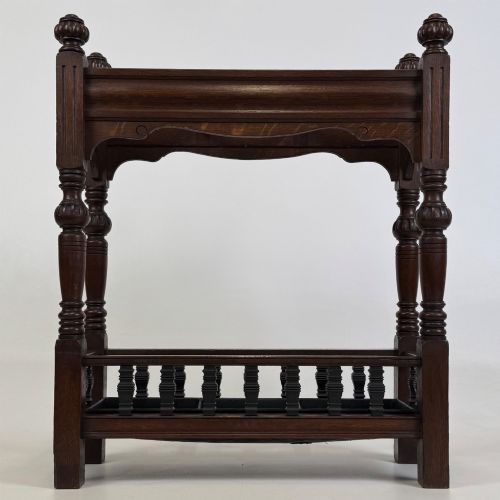
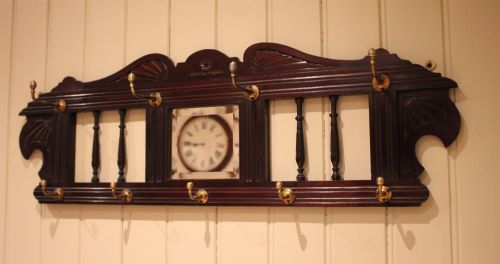
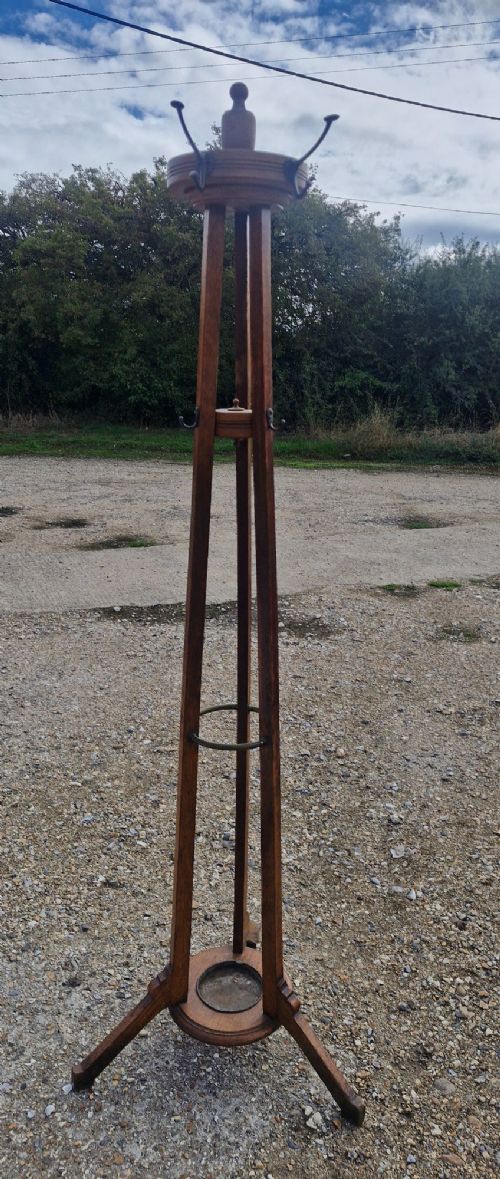
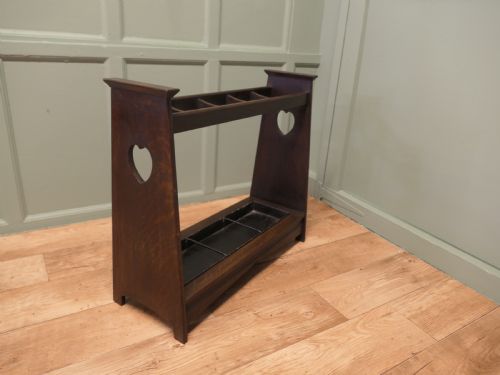
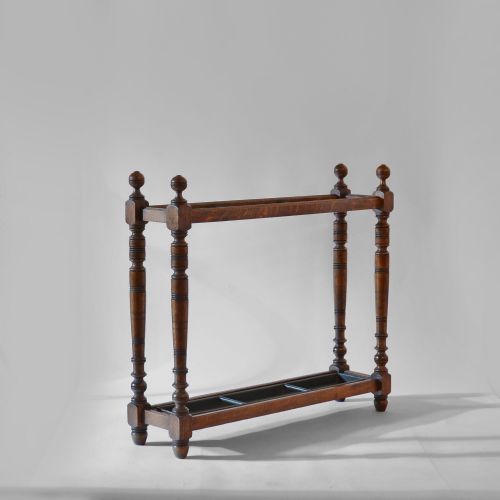
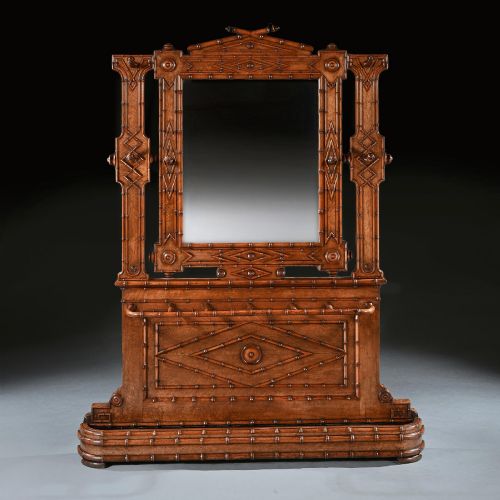
A standing hall rack serves as a multifunctional piece of hallway furniture combining hooks for garments with integrated umbrella and stick holders. When exploring a standing hall rack, buyers encounter a variety of forms ranging from compact umbrella holders to large multi-functional hall seat stands.
The pieces spanning the Victorian and Edwardian periods showcase distinct stylistic movements including the Aesthetic Movement, Arts and Crafts, and Art Nouveau. Examples executed in oak, mahogany, pine and beech demonstrate how entrance furniture evolved to meet domestic needs across the nineteenth and twentieth centuries.
Materials and Technique
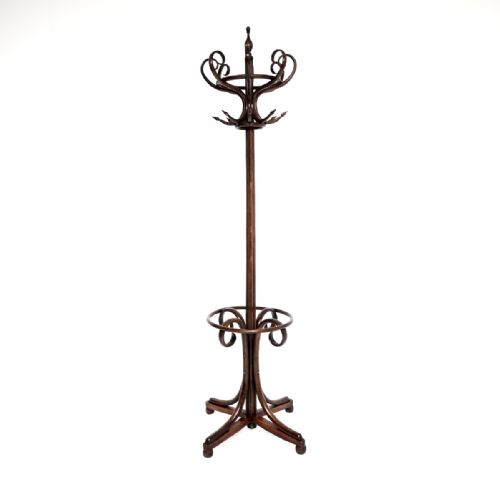
Makers utilised solid timbers such as oak and mahogany alongside bentwood beech to construct the main frameworks of these hall furnishings. Carpenters employed traditional joinery to support heavy coats and hats while integrating compartments for walking sticks.
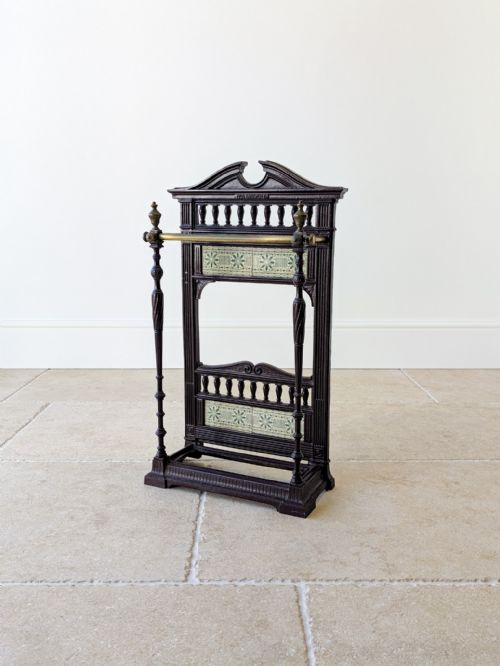
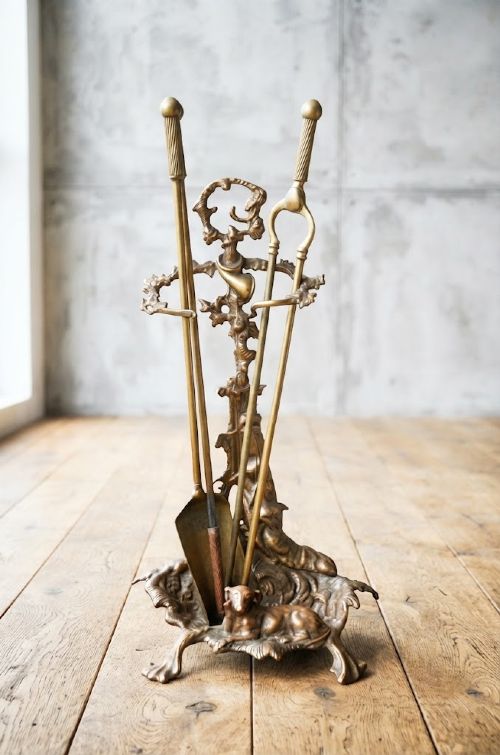
Metal components including cast iron, brass, nickel plating and metal drip trays provide durability and moisture management for wet umbrellas. Certain pieces incorporate specialised manufacturing techniques like faux bamboo turning or steam-bending beech wood.
Recorded periods span the Victorian, Edwardian, and Art Deco eras alongside the Aesthetic Movement and Arts and Crafts style.
Craftsmanship and Proportion
The standard of a standing hall rack rests upon the selection of timber, the integrity of the structural joints, and the retention of original hardware such as brass hooks and metal drip trays. Finer pieces demonstrate careful attention to detail in carved ornamentation or stamped foundry marks on cast iron frames.
Coalbrookdale
The Standing Hall Rack Glossary
- Drip tray
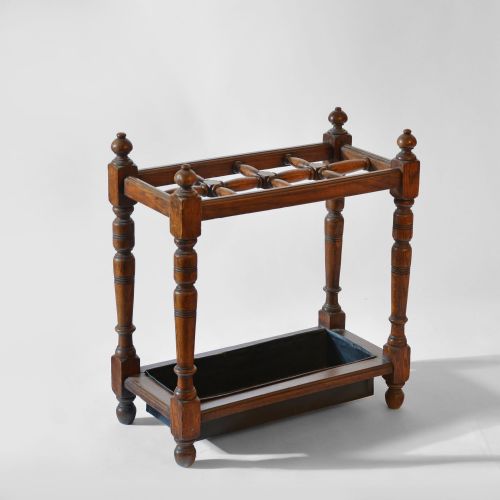
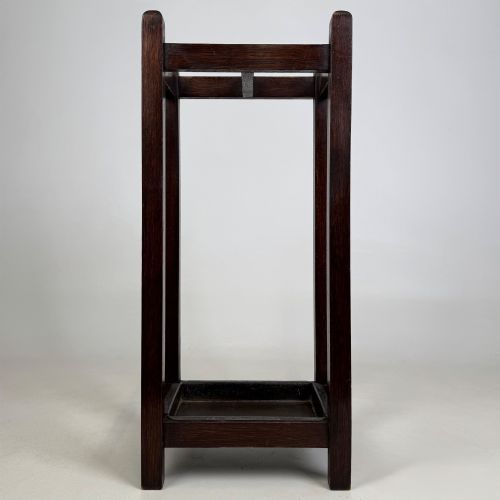
- A removable metal basin positioned at the base of a stick stand to catch water from wet umbrellas. These trays protect the surrounding flooring from moisture damage.
- Bentwood
- Wood that has been rendered pliable by steam and shaped into curved forms, commonly utilised in beech hat and coat stands. This technique produces lightweight yet sturdy furniture frames.
- Hallstand
- A combined piece of hallway furniture typically incorporating coat hooks, a mirror, glove drawers and umbrella holders. Larger versions often include a built-in bench seat.
- Stick stand
- A freestanding holder designed specifically for walking sticks, riding crops and umbrellas. They frequently employ cast iron or turned wood frames with multiple vertical divisions.
Standing Hall Rack: Frequently Asked Questions
What fits on a hall rack?
These pieces accommodate coats, hats, scarves, walking sticks and umbrellas in a designated entranceway space. Many variations also incorporate mirrors and small compartments for daily accessories.
Larger versions provide integrated seating benches alongside the standard garment hooks and stick holders.
How do I maintain wood and metal parts?
Wooden surfaces require occasional waxing to preserve the finish and nourish the grain against dry air. Metal components and drip trays benefit from gentle dusting and careful moisture control.
Period cast iron and brass parts should be kept dry to prevent oxidation and maintain their original patination.
Where should I place a standing hall rack?
An entrance hall or boot room provides the most practical and historically appropriate location for these furnishings. Their narrow footprint allows them to stand against hallway walls without obstructing passageways.
Sufficient vertical clearance is necessary to accommodate full-length coats and tall umbrella frames.
How do I identify Edwardian examples?
Edwardian pieces frequently display lighter oak construction and cleaner lines compared to heavier Victorian designs. They often reflect Arts and Crafts or early twentieth-century aesthetic sensibilities.
Simpler geometric forms and reduced heavy ornamentation characterise this later period of production.