






Standing Brass Fire Screen
These standing brass fire screen examples are hearth furnishings designed to block radiant heat and sparks, bringing period warmth to a room.
Standing Brass Fire Screen
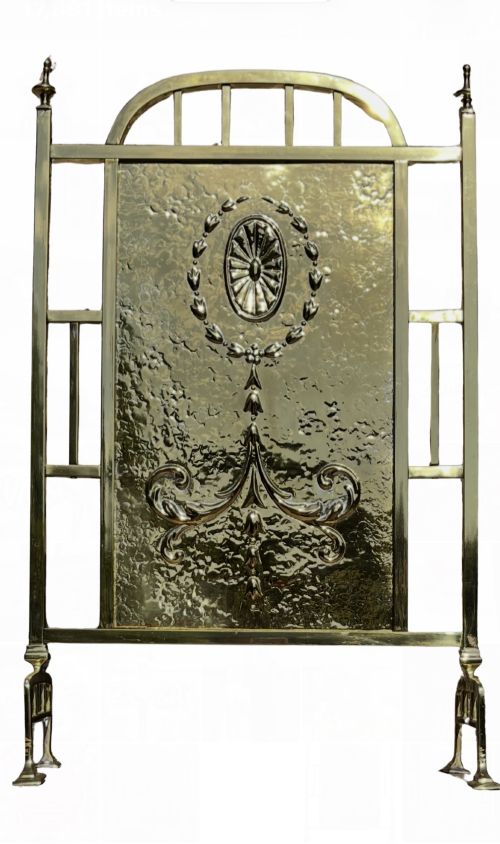
A standing brass fire screen combines a metal frame with protective mesh, glass, or fabric panels to manage fireplace warmth. When you search for a standing brass fire screen, you encounter Victorian, Georgian, and Regency designs spanning the nineteenth century.
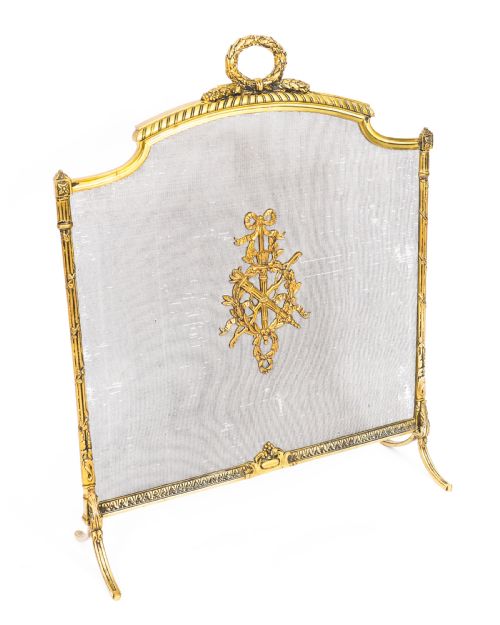
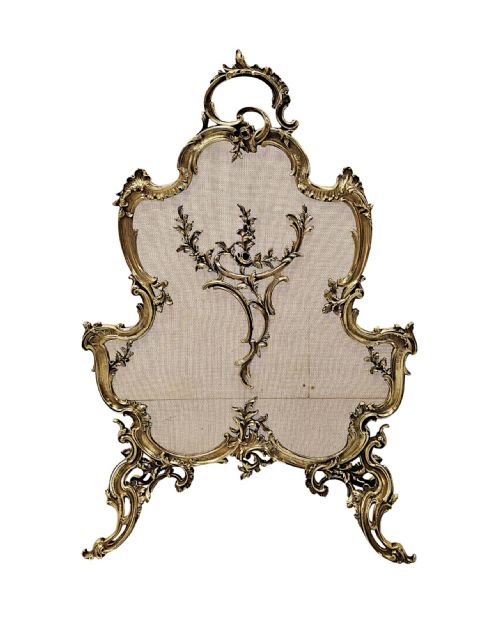
The selection ranges from simple demi-lune spark guards to elaborate French Empire and Rococo revival pieces incorporating gilt bronze. Pole screens with needlework panels and candle shields also appear among the fireplace accessories.
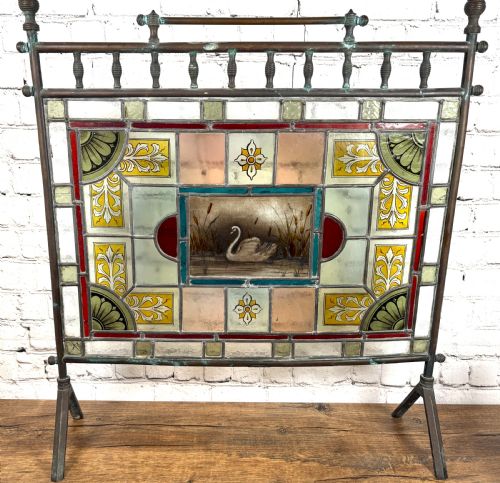
Most examples rely heavily on brass frameworks, frequently paired with metal or steel mesh to catch embers while maintaining visibility of the fire. Certain variations introduce stained glass or embroidered inserts instead of simple mesh.
Materials and construction methods
Construction relies on cast and beaten brass, often shaped into ornate Rococo curves or geometric Regency frames. Metal and steel mesh are secured within these borders to create durable spark guards.
Selected pieces incorporate specialist decorative elements such as stained glass, lead work, gilt bronze, and rosewood or giltwood pole mounts. Needlework panels and poker work are mounted within adjustable wooden or brass frames.
Standing Brass Fire Screen Retail Price Guide 2026
Typical asking prices for standing brass fire screen among the pieces listed under this phrase on Sellingantiques today, from the lower quarter to the upper quarter. They describe what is for sale here now, not the wider market.
Day's patent candle shield stands ready to ensure your tallow stays precisely where it belongs, saving evening reading from sudden wax catastrophe.
What distinguishes finer examples
Quality rests in the weight of the brass casting and the precision of the decorative detailing. Pieces executed in the French Rococo or Empire manner show sharper chasing and more complex metalwork than utilitarian guards.
The integrity of the inserted panels, whether leaded stained glass, fine needlework, or woven wire mesh, defines the standard of the piece. Intricate mechanics on adjustable pole screens and spark guards also separate standard items from superior workshop output.
The Standing Brass Fire Screen Glossary
- Spark guard
- A protective barrier placed before a hearth to catch flying embers. These utilise fine metal mesh within a rigid frame.
- Pole screen
- A vertical screen mounted on a tall wooden or metal stand with an adjustable panel. The panel slides up and down to shield the face from fireplace heat.
- Needlework panel
- A decorative textile insert worked in thread, frequently mounted within a pole screen frame. These often display traditional floral or pictorial motifs.
- Demi-lune
- A half-moon shape characteristic of certain spark guards designed to curve around the hearth opening. This profile fits snugly against the fireplace surround.
- Gilt bronze
- Metal cast and coated with a gold finish, frequently employed in ornate revival frames. This material adds a rich metallic lustre to decorative hearth furnishings.
Standing Brass Fire Screen: Frequently Asked Questions
How were standing brass fire screens used?
These furnishings stood before open hearths to shield people from excessive radiant heat and flying sparks. They also served to hide cold grates during warmer months when fires were not lit.
Adjustable versions allowed occupants to raise or lower panels to protect their faces while sitting near the fire. Candle shields performed a similar function for illumination sources.
What styles are common in these fire screens?
Victorian, Regency, and Georgian designs dominate the selection, often featuring revival aesthetics like French Rococo and Empire. These styles incorporate scrolled brass frames, floral motifs, and asymmetrical casting.
Simpler utilitarian forms like demi-lune spark guards focus purely on mesh protection rather than ornate surface decoration. Art Nouveau examples introduce flowing linear patterns from later in the period.
How do I care for a brass fire screen?
Dust the brass framework regularly with a soft cloth to prevent soot and ash accumulation. Avoid harsh chemical cleaners that strip the natural aged patina from the metal.
Check mesh and fabric inserts gently, as historical materials require careful handling. Keep wooden poles and needlework panels away from excessive moisture and direct heat sources.