




Stamped Victorian Desk
A stamped victorian desk carries the literal mark of its maker, offering proven heritage for a study.
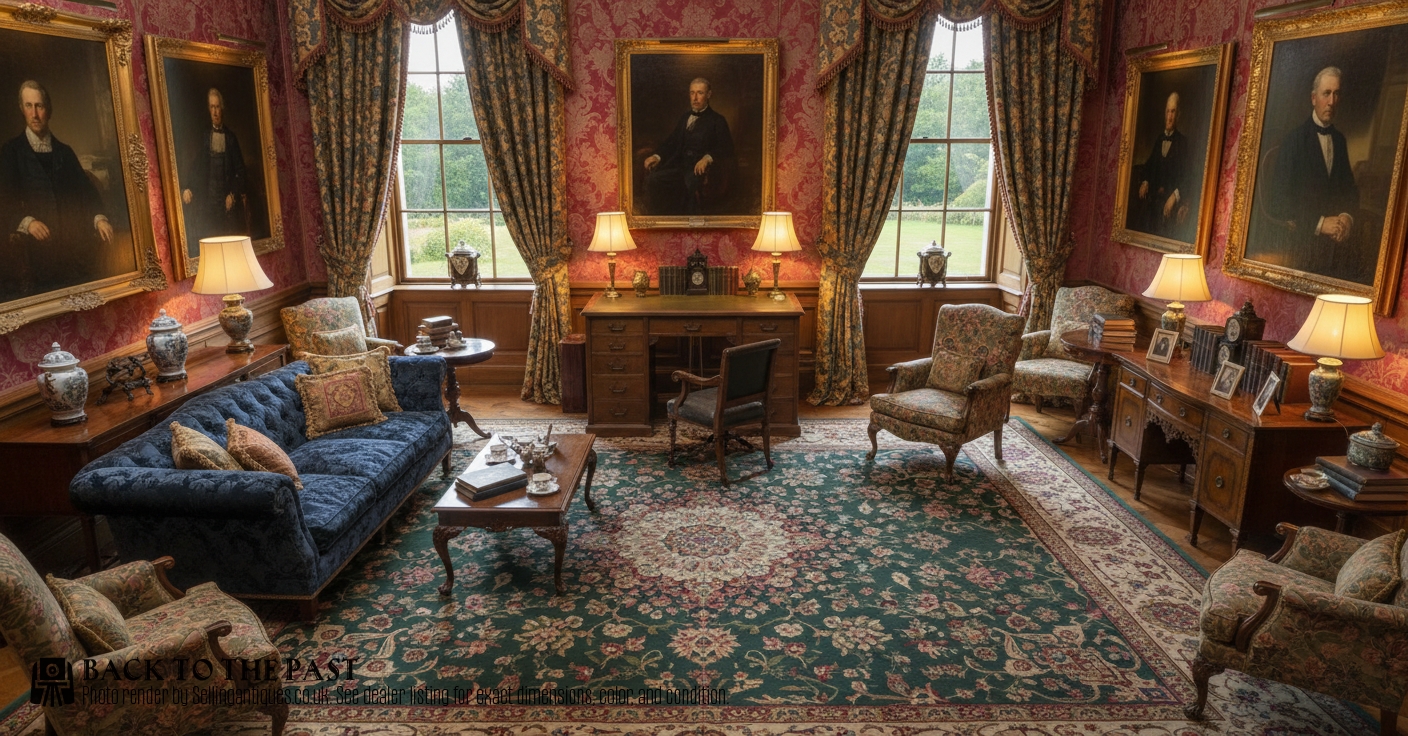
Stamped Victorian Desk
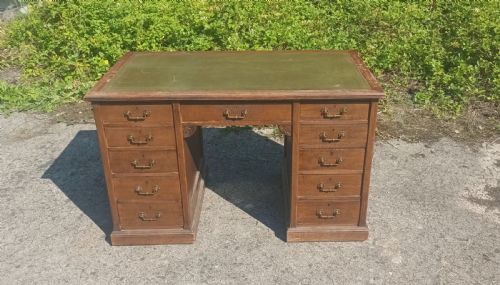
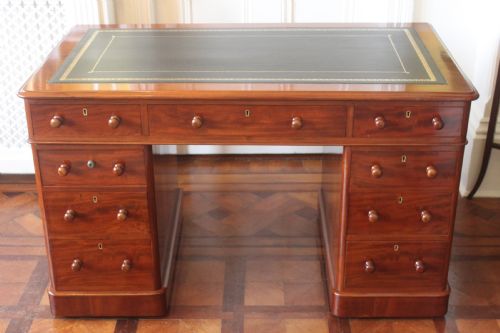
A stamped victorian desk brings documented nineteenth-century cabinet work directly into the modern study. These pieces include large pedestals in mahogany and oak, alongside related writing furniture and office armchairs bearing maker marks.
Buyers most frequently encounter pedestal desks from the Victorian era, often featuring fitted drawers and leather writing surfaces. Stamped examples on this page range from walnut and mahogany pedestal forms to matching office armchairs.
How they were made
Cabinet makers utilised dense hardwoods such as mahogany, oak, and walnut for the structural carcass and drawer linings. Brass hardware, leather inserts, and metal stamps provided both functional utility and maker attribution.
Construction relied on traditional joinery methods suited to heavy commercial and domestic use, incorporating inset tooling and secure locking mechanisms. Makers applied ink or metal stamps directly to drawer tops or rails to record their trade.
Makers occasionally stamped drawer tops with such enthusiasm that the impression punched entirely through the wood into the cavity below.
What varies in quality
The distinction between ordinary and exceptional pieces rests upon the clarity of the maker stamp and the reputation of the firm. Desks bearing complete signatures from renowned London cabinet makers command greater interest than anonymous workshop pieces.
Timber selection and secondary wood usage also dictate overall grade. Superior examples retain original leather inserts, matching brass locks, and unblemished veneers across pedestals and writing surfaces.
Jas Shoolbred·Edwards & Roberts·Howard & Son·James Winter & Sons·Gillows·W Fry and Co
The Stamped Victorian Desk Glossary
- Maker stamp
- An impression or brand applied by the manufacturer to identify their workshop. These marks confirm the origin of the piece.
- Pedestal desk
- A form comprising two banks of drawers supporting a central writing top. This layout provides substantial storage beneath the surface.
- Inlaid writing desk
- A table fitted with decorative wood veneers or contrasting materials across the top. Such detailing was typical of late nineteenth-century production.
- Kneehole
- The central recessed space beneath a desk designed for the user's legs. It separates the two pedestals of drawers.
Stamped Victorian Desk: Frequently Asked Questions
Where do I find the maker stamp on a Victorian desk?
Makers typically applied their stamp to the top edge of an upper drawer or along the rear framework.
Inspect these areas carefully in good light, as the marks can be faint or pressed deeply into the timber.
Are these desks suitable for daily computer work?
Many nineteenth-century pedestal desks offer sufficient surface area and knee clearance for modern writing and computing.
Their sturdy timber construction easily supports daily use in a contemporary study.
What woods were commonly used for Victorian office furniture?
Cabinet makers relied primarily on mahogany, oak, and walnut for the visible exterior surfaces.
Secondary timbers like pine or beech were often utilised for internal drawer construction.