


Staithes Art Group Painting
A staithes art group painting captures the coastal light and rural labour of Yorkshire through the lens of British Impressionism.
Staithes Art Group Painting
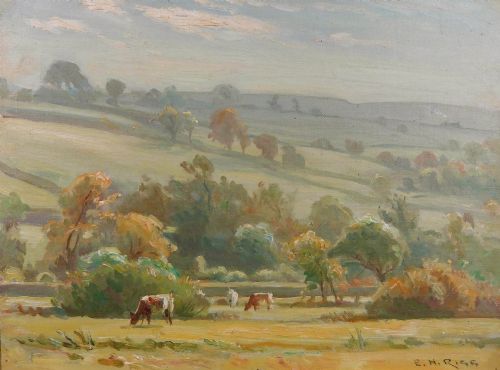
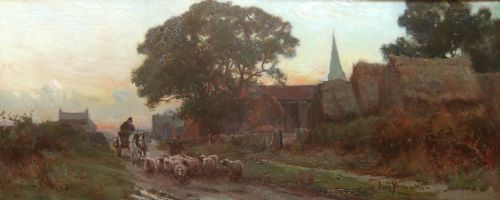
When you examine a staithes art group painting, you are looking at works rooted in the late Victorian and early twentieth centuries, spanning the Edwardian era into the nineteen forties. These pieces record rural landscapes, harbour scenes, Yorkshire villages such as Hinderwell, and quiet domestic gardens rendered by artists connected to the northern fishing port.
The version you are most likely to meet on this page is an oil painting on canvas or panel, alongside watercolours on paper. Subjects range from moorland streams and farmyards to marine views and still life studies, reflecting the wide scope of these regional painters.
Materials and Technique
Artists utilised oil paint on canvas, oil on panel, and watercolour pigment on paper. The application of oil paint often builds a textured surface that captures the shifting weather of the Yorkshire coast and countryside.
Watercolour works rely on fluid washes and precise brushwork on paper to define coastal light and harbour details. Both mediums demonstrate the direct observation characteristic of British Realism and Impressionism during this period.
Several canvases record the exact cottage doors and back gardens where these hardy northern painters drank tea between squalls.
Judging Quality and Execution
The separation between standard works and superior examples lies in the confidence of brushwork and the management of natural light. Stronger pieces convey atmospheric depth and a distinct sense of place rather than relying on formulaic composition.
Condition of the canvas, paper stability, and the preservation of original pigment integrity also define the standing of a piece. Works that retain their surface vibrancy without excessive restoration command closer attention from collectors.
Ernest Higgins Rigg·Owen Bowen·Ernest Dade·Arthur Tucker·James William Booth·Florence Hess·James Watson·Frederick W Jackson·Rowland Henry Hill·Frederick Mayor
The Staithes Art Group Painting Glossary
- British Impressionism
- A painting style influenced by French movements but adapted by British artists to capture domestic light and outdoor subjects. It relies on broken brushstrokes and vibrant colour relationships.
- Oil Paint
- A slow-drying medium composed of pigments suspended in a drying oil, typically linseed. It allows for rich colour saturation and layered impasto textures.
- Watercolour Pigment
- Finely ground colour suspended in a water-soluble binder, applied to paper in transparent washes. This technique produces luminous effects depending on the paper ground.
- Panel
- A rigid wooden or manufactured flat support used in place of canvas for oil paintings. Panels offer a stable surface that prevents the flexing associated with stretched cloth.
Staithes Art Group Painting: Frequently Asked Questions
What periods do these paintings cover?
The available works span from the Victorian era through the Edwardian period and into the nineteen forties. Most pieces cluster around the early twentieth century.
This timeframe aligns with the active years of the Staithes group and related northern painters.
How do I care for an oil painting?
Keep paintings away from direct sunlight and rapid humidity shifts to protect the canvas and oil pigments. Dust the surface gently with a soft, dry brush.
Avoid using moisture or chemical cleaners on the paint surface.
What subjects are most common?
Common subjects include Yorkshire harbours, moorland streams, farmyards, and garden scenes. Coastal views and rural life form the core of the regional output.
Still life studies also appear among the recorded works.
How do I distinguish watercolours from oils?
Watercolours are executed on paper under glass, showing transparent washes and the texture of the paper beneath. Oils use heavy pigments on canvas or panel with a tactile, opaque surface.
Framing usually separates the two mediums visually.