

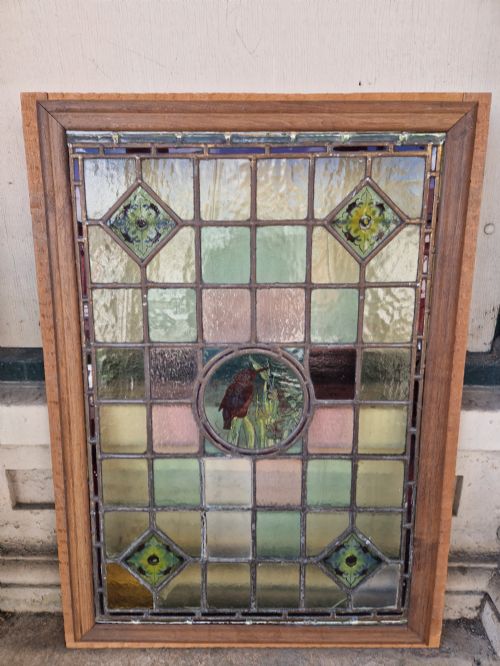


Stained Glass Window Hanging
These stained glass window hanging pieces catch the morning light and shift the room's mood entirely.
Stained Glass Window Hanging
A stained glass window hanging brings historic architectural salvage and decorative panels directly into modern domestic interiors. When searching for a stained glass window hanging, buyers encounter Victorian, Edwardian, and early twentieth century examples framed in wood or bound in lead. These pieces range from simple geometric leaded designs to pictorial panels depicting birds and religious scenes.
The inventory on this page draws heavily from Victorian and nineteenth century traditions, alongside pieces dated around 1890, 1910, and 1920. Forms include architectural window panels and salvaged church glass originally constructed for specific buildings. Each stained glass window hanging preserves traditional glazing methods developed centuries ago.
Materials and construction
Glaziers built these panels using coloured and painted glass secured within flexible lead came networks. Artisans combined vitreous enamel paint with kiln firing techniques to fix permanent details onto the glass surface before soldering the lead joints.
Support frames utilise pine wood or sturdy timber surrounds designed to bear the weight of heavy leaded panels. Amber bullseyes and hand painted pictorial elements appear alongside standard leaded glass to create texture and depth.
Stained Glass Window Hanging Retail Price Guide 2026
Typical asking prices for stained glass window hanging among the pieces listed under this phrase on Sellingantiques today, from the lower quarter to the upper quarter. They describe what is for sale here now, not the wider market.
The listings span the Victorian era, the 1890s, 1910, and 1920, incorporating styles from Gothic Revival to Arts and Crafts.
Assessing quality
Quality rests upon the intricacy of the design and the artistic skill evident in hand painted details like birds or religious figures. Panels featuring complex pictorial narratives or unusual glass elements such as amber bullseyes demonstrate higher craftsmanship than standard geometric arrangements.
The integrity of the lead came and the stability of the surrounding timber frame dictate the structural merit of each piece. Superior examples maintain firm lead matrices that securely hold every individual glass segment without excessive bowing.
The Stained Glass Window Hanging Glossary
- Lead came
- The H-shaped lead strips used by glaziers to join individual pieces of glass together. This flexible metal forms the dark matrix outlining every design.
- Bullseye
- A small, circular centre piece of blown glass showing a concentric ripple pattern. These appear in windows to add texture and catch the light.
- Vitreous enamel
- A coloured glass paste fused to the surface of window glass through high temperature firing. This technique allowed makers to paint permanent details and shading.
- Architectural salvage
- Building components rescued from structures slated for demolition or alteration. Church windows and domestic panels often reach the market through this trade.
- Gothic Revival
- An architectural and decorative style drawing inspiration from medieval forms. Pointed arches and religious iconography characterise this nineteenth century movement.
Stained Glass Window Hanging: Frequently Asked Questions
How do I hang a heavy window panel?
Secure hanging brackets directly into the wooden frame rather than relying on the lead came or glass itself. Use strong steel chain or wire rated for the specific weight of the timber and glass.
Anchor your fixings into wall studs or secure window frame hooks to ensure the panel remains stable when suspended.
Are these windows meant for exterior placement?
Most pieces function best as interior window hangings where they are protected from harsh weather and wind pressure. Historic leaded panels lack the modern thermal seals required for exposed exterior installation.
Suspending them inside a larger window frame allows natural light to pass through while keeping the delicate lead work safe.
How do I date a stained glass panel?
Examine the style of the timber frame, the painting technique on the glass, and the overall design motifs. Pieces bearing Gothic Revival elements or specific nineteenth century religious themes align with Victorian production standards.
Compare the lead profile and glass colours against documented examples from periods like the 1890s or 1910 to narrow down the decade of creation.
How do I clean antique stained glass?
Wipe the glass gently with a soft, dry microfibre cloth to remove surface dust. Avoid harsh chemical cleaners that can damage painted enamel or corrode old lead came.
For stubborn marks, use a damp cloth with mild soap, drying the lead and glass immediately afterwards to prevent moisture damage.