

Staffordshire Transferware Pottery
Staffordshire transferware pottery brings domestic scenes and historical vistas into daily life through rich monochrome prints on durable earthenware.
Staffordshire Transferware Pottery
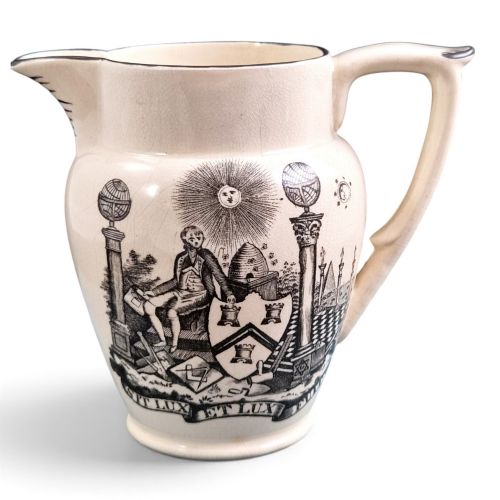
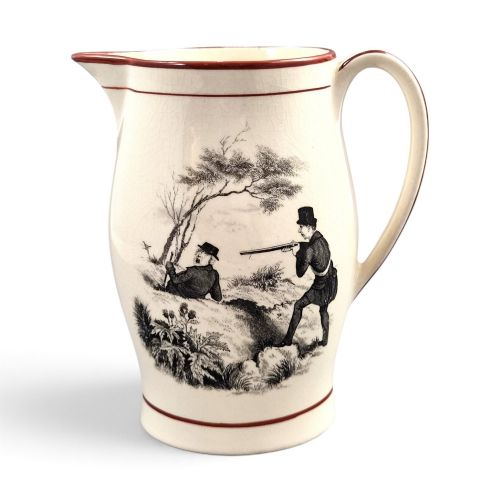
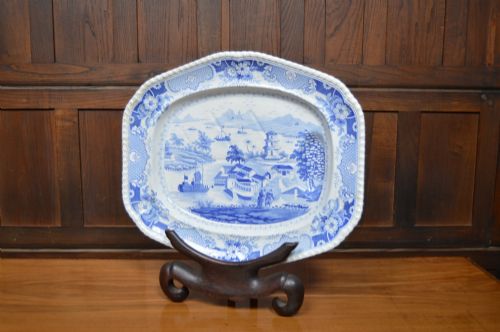
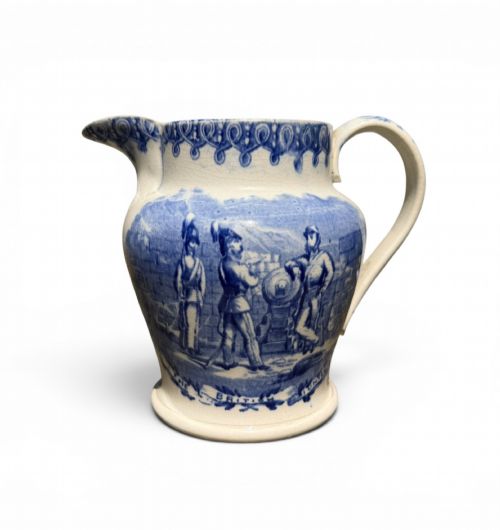
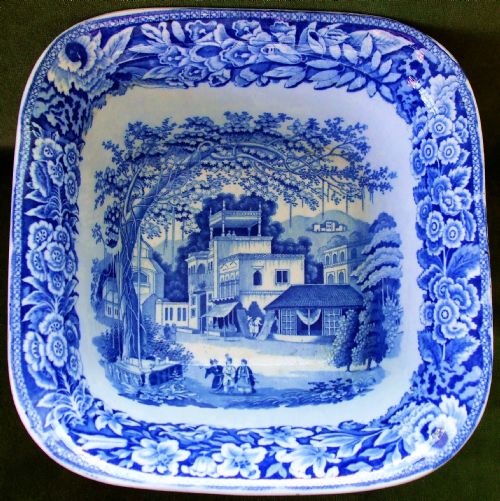
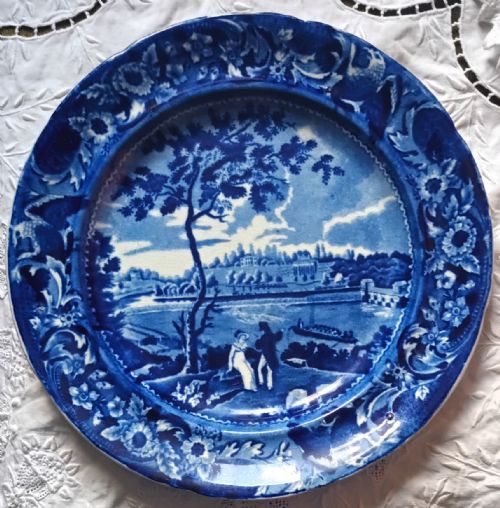
Staffordshire transferware pottery encompasses domestic tableware and large serving vessels produced across the nineteenth century in the English potteries. Collectors seek out these pieces for their narrative scenes, ranging from classical river views to commemorative military plates.
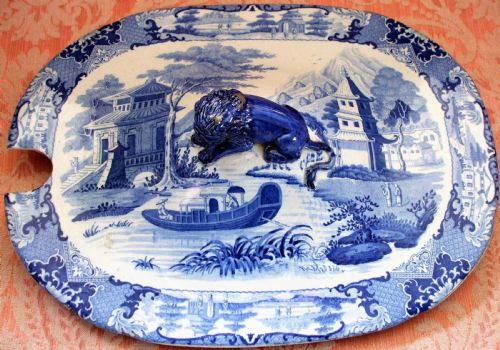
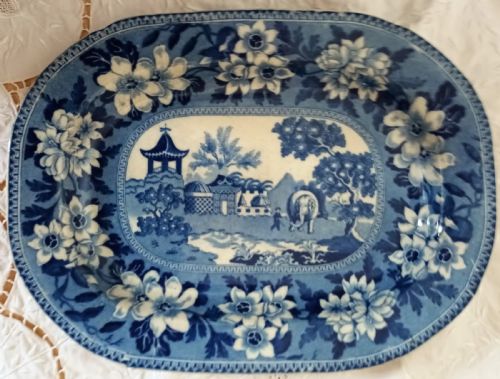
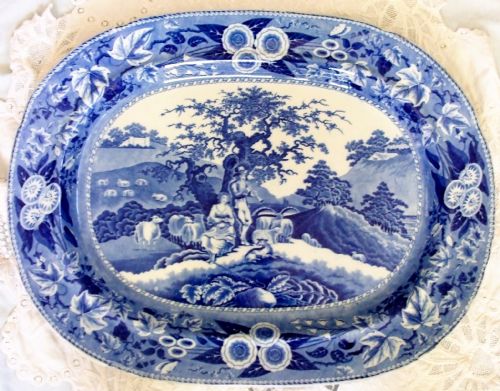
The objects on this page span everyday household utilities and formal dining pieces, appearing in forms such as serving platters, tureens, jugs, and footbaths. Most examples date from the Georgian and Victorian eras, carrying blue, black, or mulberry prints on earthenware bodies.
Materials and methods
Potters shaped these items using creamware, pearlware, and standard earthenware, applying copper-plate prints transferred via tissue paper onto the ceramic surface before glazing. Lead and ceramic glazes sealed the body, often giving the finished tableware a glossy sheen that protected the monochrome or polychrome design underneath.
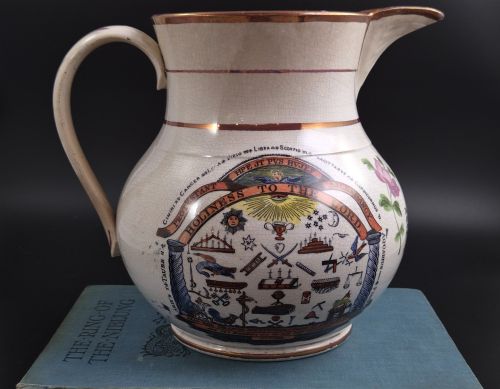
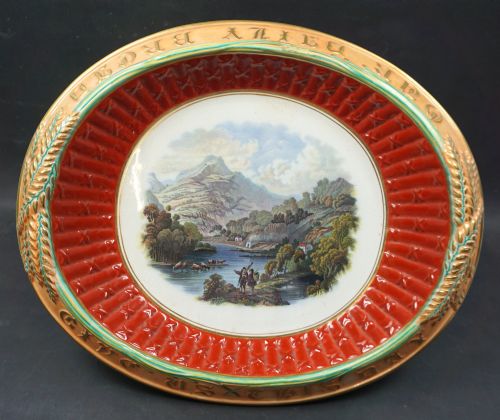
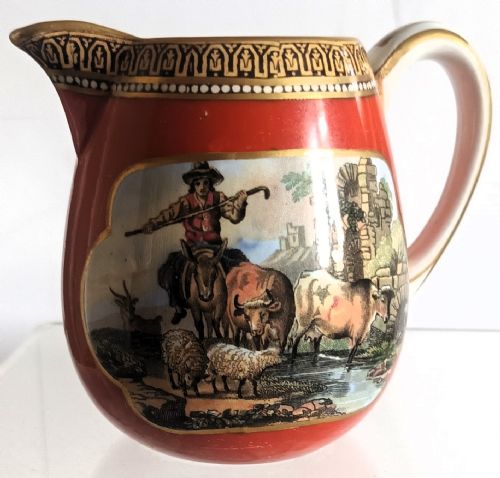
Makers utilised distinct colour chemistry to achieve specific tones, including deep flow blue, mulberry, and black transfer printing. Certain items received supplementary touches of hand-painted polychrome pigments or gilt highlights over the initial printed outline.
Materials represented across the inventory include creamware, pearlware, lead glaze, and ceramic bodies with blue, black, and mulberry prints.
Evaluating quality
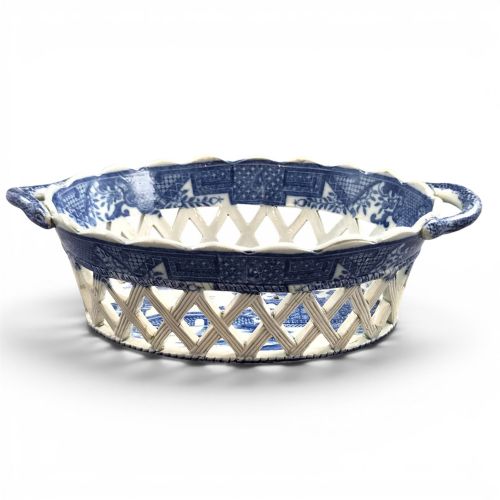
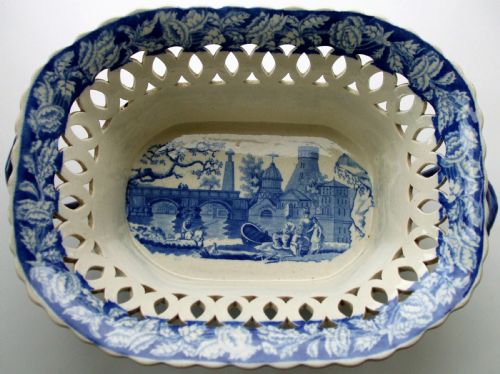
Quality in these ceramics rests upon the crispness of the transfer print and the balance of the composition across complex shapes like footbaths and reticulated chestnut baskets. Finer items display sharp register lines without blurring, where the copper plate has transferred every intricate detail of the architectural or landscape subject.
The sophistication of the vessel form itself dictates distinction, separating standard utilitarian plates from ambitious hollowware like multi-piece tureens and large footbaths. Potters who mastered both sculptural moulding and precise print application created the most desirable examples.
Spode·Robert Hamilton·John Rogers and Son·J and R Clews·J and R Riley·Stubbs·Mintons·Heathcote·John Ridgway·William Adam
The Staffordshire Transferware Pottery Glossary
- Transferware
- Pottery decorated by transferring a printed design from an engraved copper plate onto tissue paper and then onto the unglazed or bisque ceramic body.
- Pearlware
- A refined earthenware developed in the late eighteenth century featuring a subtle bluish glaze that pooled in recesses to mimic Chinese porcelain.
- Creamware
- A pale yellow-hued refined earthenware perfected during the eighteenth century and widely utilised for jugs, plates, and early transfer-printed domestic wares.
- Flow blue
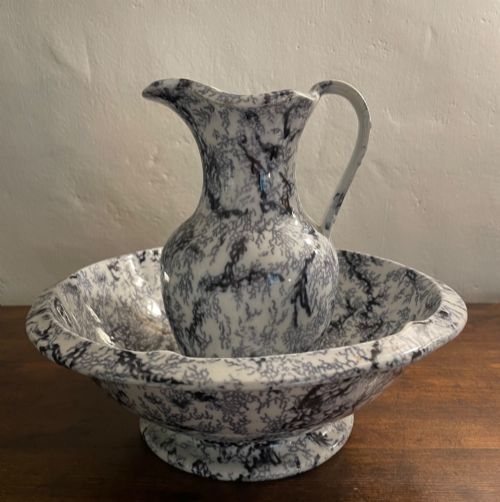
- A style of transfer printing where cobalt blue blurred deliberately into the surrounding white glaze during firing to create a soft, hazy aesthetic.
- Reticulated
- Openwork or net-like ceramic decoration formed by cutting patterns through the clay wall before firing, often seen on chestnut baskets and dessert service pieces.
- Pratt ware
- Earthenware associated with Felix Pratt and other Staffordshire potteries, characterised by low-relief moulding and underglaze polychrome colour printing.
Staffordshire Transferware Pottery: Frequently Asked Questions
What is Staffordshire transferware pottery?
It is earthenware pottery decorated with printed pictorial scenes applied from engraved copper plates.
These pieces range from dinner plates and serving platters to large footbaths and jugs.
How do I date these pottery pieces?
Dating relies on the ceramic body type, such as creamware versus later Victorian earthenware, alongside stylistic clues in the printed borders.
Potters often changed their copper-plate designs and backstamps to reflect changing nineteenth-century tastes and reigns.
How were transferware pieces used?
They served practical dining and domestic functions, from everyday table service to large-scale hospitality involving tureens and footbaths.
Commemorative jugs and plates also marked political events, societies, and historical battles of the period.
How should I display transferware?
Platters and plates suit wall mounting or plate racks to showcase the narrative transfer scenes clearly.
Larger items like footbaths and tureens function well as standalone display centerpieces on sturdy furniture.