



Blue White Pierced Bowl
A blue white pierced bowl brings intricate openwork design and classic cobalt decoration together on ceramic and porcelain tables.
Blue White Pierced Bowl
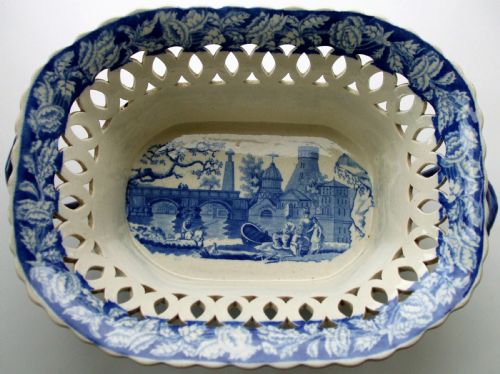
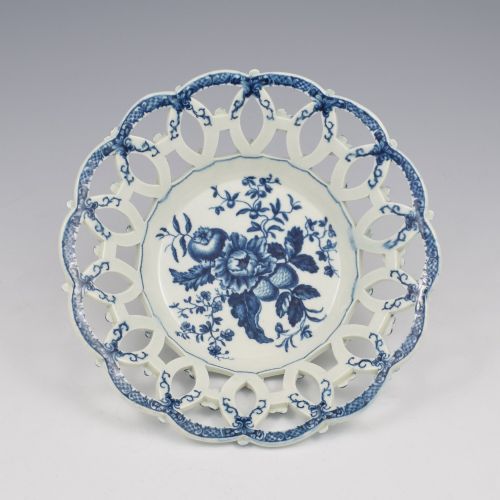
A blue white pierced bowl takes the form of a decorative basket, comport, or dish, often featuring open reticulated sides designed for serving fruit or chestnuts at formal tables. You meet these vessels in 18th-century and 19th-century styles, ranging from Georgian earthenware to Chinese export porcelain and French rococo revival pieces.
The selection on this page centres primarily on chestnut baskets with matching stands, alongside circular baskets and transfer-printed pearlware dishes. Makers such as J. & R. Clews and Worcester produced these items in soft-paste porcelain, ironstone, and pearl glaze pottery during the Georgian and Regency eras.
How they were made
Potters shaped these vessels from soft-paste porcelain, earthenware, and pearlware, applying cobalt blue glaze either by hand painting or via transfer printing methods like the willow and river scene patterns. The intricate pierced lattices and openwork rims required careful cutting of the clay or porcelain body before firing.
Glazing techniques varied from early pearl glazes to fine cobalt applications on Worcester and Chinese export bodies. Ironstone china provided a heavier, robust alternative for large chestnut baskets and trays.
Blue White Pierced Bowl Retail Price Guide 2026
Typical asking prices for blue white pierced bowl among the pieces listed under this phrase on Sellingantiques today, from the lower quarter to the upper quarter. They describe what is for sale here now, not the wider market.
Indian grasshoppers and river forts populate these bowls, proving 18th-century Gloucestershire potters possessed very worldly imaginations.
What varies in quality
Quality rests in the crispness of the pierced openwork and the precision of the cobalt blue transfer or hand-painted details. Finer pieces display clean, sharply defined lattice walls without warping from the kiln, alongside deeply saturated glaze application.
The sophistication of the form dictates distinction, separating standard utility vessels from finely modeled Georgian chestnut baskets complete with matching under-dishes and structured rope-twist handles.
J. & R. Clews·Mason’s Ironstone China
The Blue White Pierced Bowl Glossary
- Chestnut basket
- A decorative footed bowl with pierced sides designed for holding roasted chestnuts at the end of a meal.
- Pearlware
- A refined earthenware developed in the late 18th century featuring a pale bluish glaze that pooled slightly in recesses.
- Transfer printing
- A method of applying intricate engraved designs to ceramics using a paper tissue transfer from a copper plate.
- Soft-paste porcelain
- A ceramic composition containing glass frit and white clay, fired at lower temperatures than true hard-paste porcelain.
- Comport
- A raised decorative dish or bowl used for serving fruit or sweetmeats on the dining table.
Blue White Pierced Bowl: Frequently Asked Questions
What were blue white pierced bowls used for?
These vessels served primarily as decorative chestnut baskets or fruit comports on formal 18th-century and 19th-century dining tables. The pierced walls allowed ventilation for dry goods while presenting an ornamental display.
Over time, collectors moved them from the dining room to display cabinets and side tables, where the cobalt blue patterns and openwork could be appreciated closely.
How do I identify First Period Worcester porcelain?
First Period Worcester pieces date from the 18th century and often feature fine soft-paste porcelain bodies with distinct underglaze blue painting, such as the pine cone pattern.
Look for translucent bodies under strong light and characteristic potting traits typical of the Worcester factory before 1800.
What is pearlware?
Pearlware is an improved earthenware body introduced in the late 18th century to mimic the whiteness of Chinese porcelain. Potters achieved this by adding a small amount of cobalt to the transparent lead glaze.
This glaze tends to pool with a distinct bluish tint in crevices and around the pierced openings of baskets and comports.
How do I care for antique ceramic baskets?
Keep these delicate openwork pieces away from heavy daily use and hand wash them gently in lukewarm water when cleaning is necessary. Avoid harsh abrasives that could harm the historic glaze or fragile pierced rims.
Display them on stable surfaces where the intricate lattice work and transfer-printed scenes remain safe from accidental knocks.