
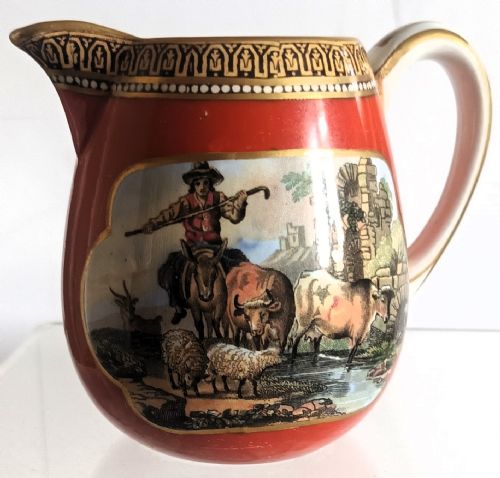
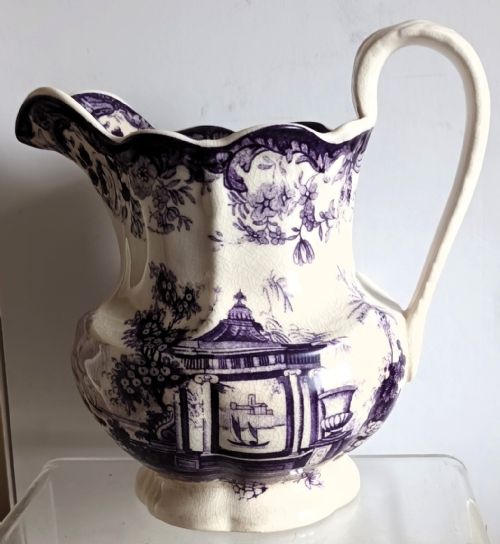


Staffordshire Transferware Pitcher
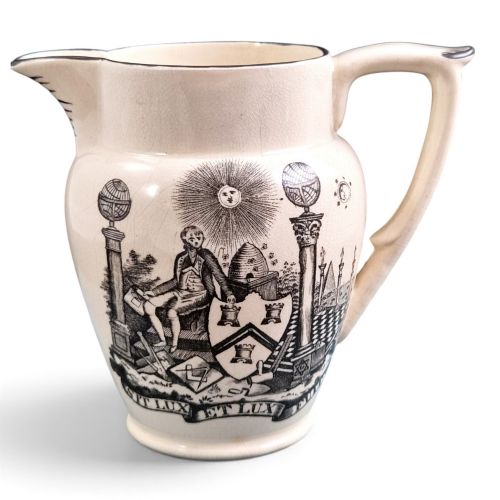
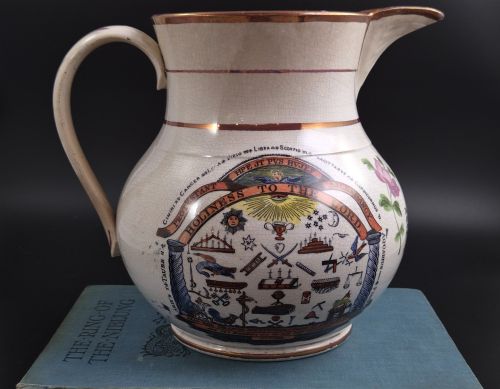
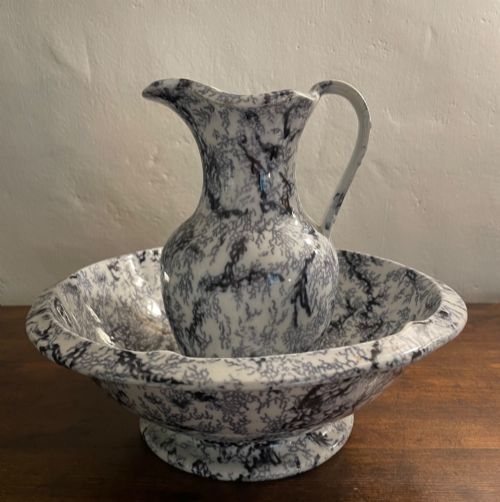
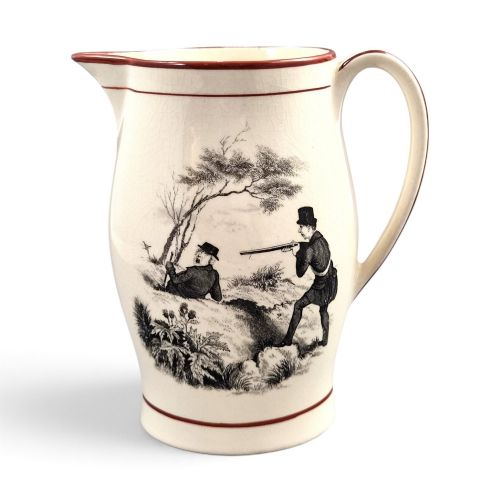
These Staffordshire transferware pitcher examples bring robust British earthenware and striking transfer-printed scenes straight into your home.
Staffordshire Transferware Pitcher
A staffordshire transferware pitcher represents a sturdy tradition of British pottery production spanning the Georgian and Victorian eras. These ceramic vessels arrive in various forms including large footbath jugs, marriage jugs, and commiserative pieces decorated with detailed prints.
You are most likely to meet 19th century earthenware examples displaying blue and white, flow blue, magenta, or black transfer printing. Many of these pieces also incorporate pearlware bodies and creamware glazes characteristic of early workshops.
The selection ranges from sizable one gallon containers down to smaller cream jugs. Subjects span historical landmarks, fraternal orders, and rural scenes like bull baiting.
Materials and Transfer Printing Technique
Potters shaped these pitchers using earthenware, creamware, and pearlware bodies before applying printed designs. The transfer method allowed workshops to replicate intricate copperplate engravings onto curved ceramic surfaces with impressive consistency.
Coloured finishes such as cobalt glaze, metallic lustre glaze, and polychrome hand-painting frequently augmented the initial monochrome transfer prints. Gilt highlights also appeared on select vessels to frame the primary imagery.
A protective clear glaze sealed the earthenware body and fixed the transfer print beneath the surface during firing. This process ensured the printed scenes survived years of daily handling.
Listings feature earthenware, pearlware, and creamware bodies decorated with cobalt, metallic lustre, and polychrome glazes across Georgian and Victorian periods.
Assessing Quality in Staffordshire Pitchers
Quality rests heavily on the crispness of the transfer print and the registration of the copperplate design against the ceramic contour. Stronger pieces exhibit deep, clean lines without blurring or smudged ink in the recesses.
The choice of body material and secondary decoration elevates certain examples above standard utilitarian wares. Pearlware bodies, metallic lustre applications, and skilled polychrome or gilt additions distinguish the finer productions.
Proportion and scale also dictate the desirability of the vessel. Large one gallon jugs demand exceptional throwing skill to maintain structural integrity through the kiln.
Mountford Staffordshire
The Staffordshire Transferware Pitcher Glossary
- Transferware
- Ceramic ware decorated by transferring an engraved ink design from a copperplate onto paper and then onto the unglazed or bisque ceramic body.
- Pearlware
- A refined form of earthenware developed in the late eighteenth century featuring a subtle bluish-white glaze that pooled in crevices.
- Creamware
- A light-coloured refined earthenware with a warm yellowish lead glaze, perfected during the Georgian period.
- Flow Blue
- A style of cobalt blue transfer printing where the colour deliberately bled into the surrounding white glaze during firing to create a hazy, atmospheric effect.
- Metallic Lustre Glaze
- A metallic film applied over the ceramic glaze to impart a reflective copper, silver, or purple sheen when fired.
Staffordshire Transferware Pitcher: Frequently Asked Questions
What is a staffordshire transferware pitcher?
These items are ceramic jugs produced in the Staffordshire potteries and decorated with applied transfer prints depicting historical scenes, portraits, or landscapes.
Potters utilised earthenware bodies finished with glazes ranging from simple creamware to vibrant cobalt.
How were these pitchers used historically?
Households utilised these vessels for carrying liquids, serving beverages at table, or holding water for washing.
Larger formats like footbath jugs and one gallon containers served heavier domestic chores in Georgian and Victorian homes.
How do I date a staffordshire pitcher?
Dating relies on observing the ceramic body composition, such as early creamware versus later pearlware, alongside the colour palette of the transfer print.
Stylistic cues like Georgian architectural motifs or Victorian commemorative themes further narrow the period of manufacture.
How do I care for antique earthenware?
Wash these ceramic pieces gently by hand using mild soap and warm water, avoiding harsh abrasive scrubbers that might damage the historic glaze.
Display them away from direct sunlight and sudden temperature shifts to protect the porous earthenware body.