
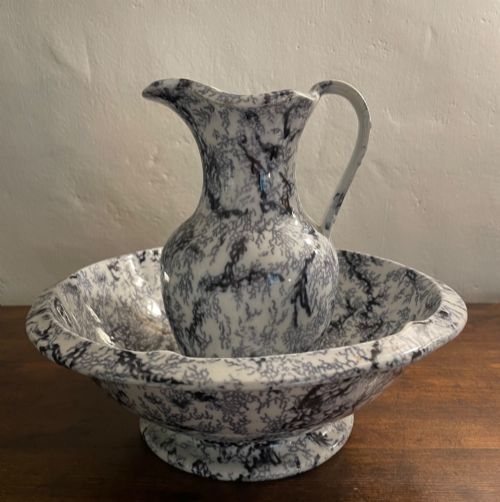
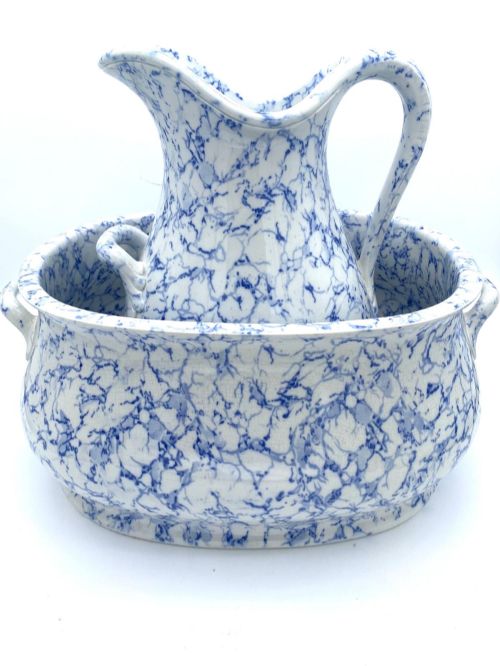


Blue White Transferware Jug
A blue white transferware jug brings deep cobalt decoration and historical scenes straight to a country house table.
Blue White Transferware Jug
A blue white transferware jug combines utilitarian ceramic form with intricate printed decoration developed across several historical periods. Buyers examining this page encounter pieces ranging from compact Georgian and Victorian water vessels to substantial washstand pitchers.
Materials and construction methods
Potters shaped these vessels from earthenware, porcelain, and ceramic bodies before applying detailed cobalt glaze transfers. Kiln firing fixed the rich blue pigment beneath a transparent lead glaze to create a durable, glossy surface.
Certain decorative pieces incorporate delicate gold leaf highlights over the glazed body to add a touch of refinement. Skilled hands formed spouts and applied handles to functional bodies designed for daily household use.
One hefty specimen held a full gallon of liquid for thirsty household guests.
Assessing visual quality and design
Quality separates simple utility wares from ambitious exhibition pieces through the clarity of the transfer print and the depth of the cobalt glaze. Sharp lines in complex patterns like Italian Marble or Pine Cone distinguish finer examples from softer, blurred impressions.
The artistry of the underlying ceramic form dictates overall merit, whether through sculptural mask heads, dramatic scale such as one-gallon capacities, or the sophisticated aesthetic of Arts and Crafts design.
Minton·Caughley Coalport·Worcester
The Blue White Transferware Jug Glossary
- Transferware
- Ceramic decorated by printing a design from an engraved copper plate onto tissue paper, which was then transferred onto the unglazed or bisque ceramic body. This technique allowed factories to produce intricate patterns efficiently.
- Cobalt Glaze
- A deep blue metallic oxide used under the glaze to withstand high kiln temperatures without fading. It forms the signature rich colour seen on early earthenware and porcelain.
- Earthenware
- Porous pottery fired at lower temperatures than stoneware or porcelain. It serves as the primary body material for many nineteenth-century domestic pitchers.
- Lead Glaze
- A glassy coating applied to pottery before a final firing to render the porous body waterproof. It gives traditional ceramics their characteristic smooth sheen.
Blue White Transferware Jug: Frequently Asked Questions
What were blue white transferware jugs used for?
These vessels served practical roles carrying water for washing, dining, and household chores.
Larger specimens functioned within full washstand sets or acted as shop window displays.
How do I date a blue white transferware jug?
Dating relies on ceramic body composition, glaze characteristics, and the specific transfer pattern style.
Georgian and Victorian examples often feature distinct architectural or pictorial motifs tied to known factory production periods.
What is a mask head jug?
A mask head jug incorporates a moulded facial feature directly beneath the pouring spout.
This sculptural detail bridges eighteenth-century porcelain traditions and functional earthenware production.
How do I care for antique ceramic jugs?
Antique ceramics require gentle hand washing in warm water without harsh chemical detergents.
Keeping them away from direct sunlight protects any delicate gold leaf highlights present on the surface.