


Staffordshire Spaniel Dogs
Staffordshire spaniel dogs sit upon Victorian mantelpieces as steadfast companions, bringing ceramic warmth and traditional English character to a room.
Staffordshire Spaniel Dogs
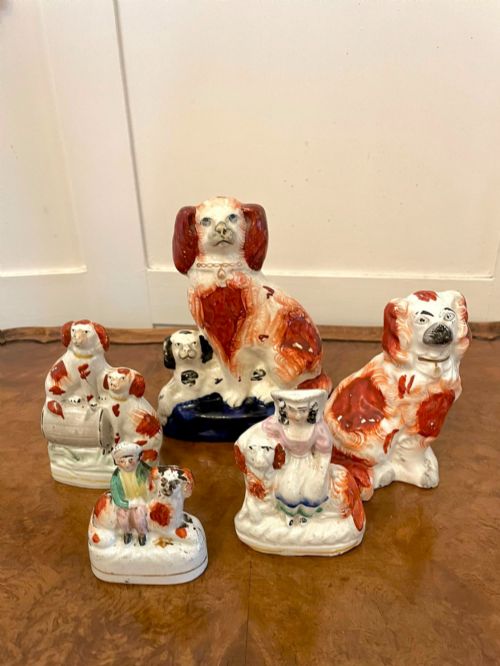
Staffordshire spaniel dogs include seated figures, pairs designed for mantelpiece display, money boxes, and utilitarian vessels such as Toby jugs and spill vases. The pieces span the nineteenth century, with strong representation from the Victorian era and the eighteen-sixties.
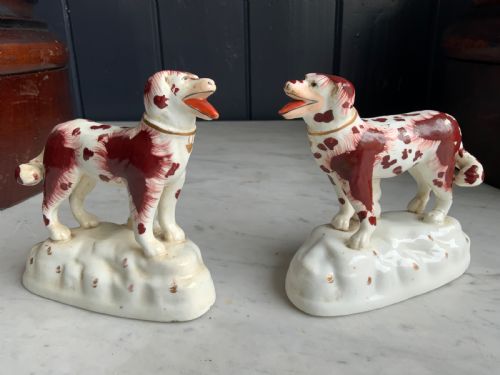
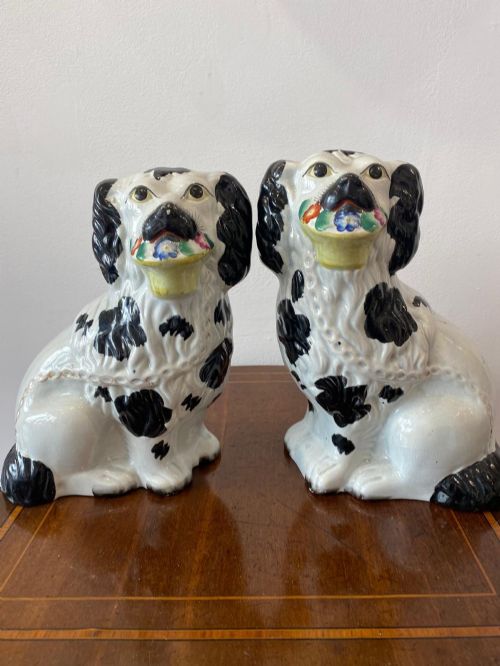
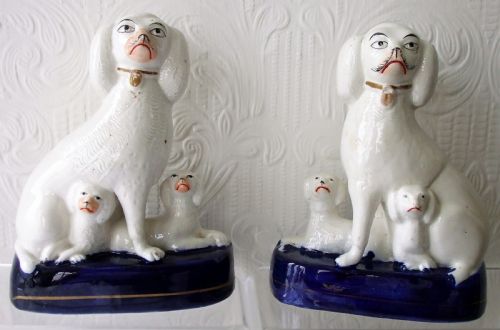
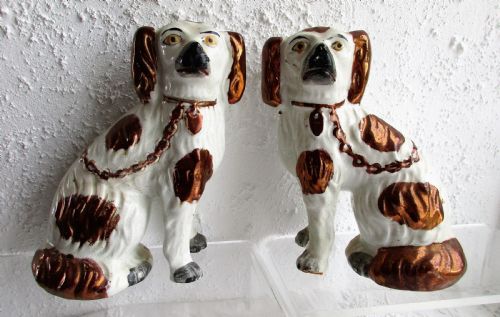
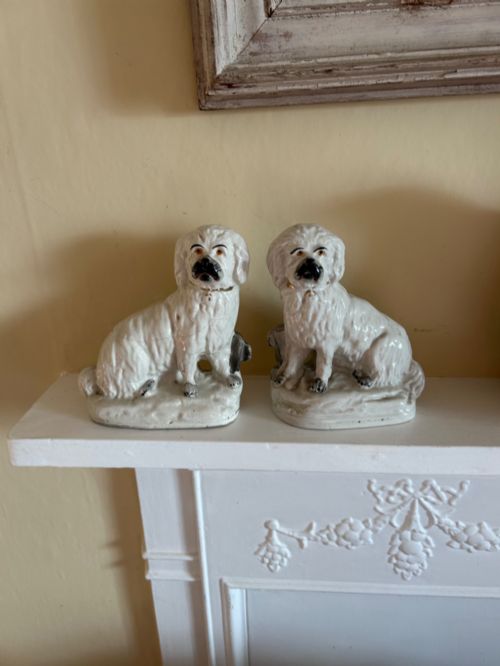
Buyers encounter distinct forms ranging from traditional white and gilt pairs to black and white comforter spaniels, alongside variants featuring red markings, copper lustre, and occasional depictions of poodles or terriers. Pairs frequently face inwards, intended to sit symmetrically at either end of a fireplace.
While most examples originate from the Victorian period, variations stretch from Regency pieces to later twentieth-century interpretations by makers such as Beswick and Royal Doulton.
What varies in quality
The weight and finish of the ceramic body also separate standard production pieces from finer examples, particularly where tactile elements like moulded fur or separate legs show careful attention to anatomical form.
Some nineteenth-century spaniels doubled as money boxes, encouraging Victorian children to save their pennies inside a hollow dog.
Royal Doulton·Beswick·Boness Pottery
The Staffordshire Spaniel Dogs Glossary
- Comforter spaniels
- Staffordshire ceramic figures traditionally placed on parlor hearths to watch over the household. These dogs usually appear in mirrored pairs facing one another.
- Wally dogs
- A traditional Scottish and northern English vernacular term for ceramic spaniels displayed on mantelpieces. The expression derives from wallie, meaning porcelain or earthenware.
- Spill vase
- A hollow vertical cylinder attached to a figure, designed to hold wooden spills for lighting fires and candles. They often take the form of tree trunks beside the main subject.
- Copper lustre
- A metallic glaze technique producing a warm, coppery, reflective finish across the pottery surface. This effect is achieved through the application of metallic salts during the reduction firing process.
- Enamel
- Opaque vitreous colours painted over the fired glaze and fixed with a lower temperature second firing. These pigments provide the characteristic black, red, and tan markings on the coats.
Staffordshire Spaniel Dogs: Frequently Asked Questions
How do I know if they are a genuine pair?
Genuine pairs usually face one another symmetrically, designed to sit at opposite ends of a mantelpiece. Look for matching scale, consistent glaze characteristics, and corresponding facial markings that indicate they were modelled together.
Differences in size or posture often suggest married pairs gathered from separate origins rather than a matched set fired at the same time.
What are comforter spaniels?
Comforter spaniels are nineteenth-century ceramic figures modelled after Queen Victoria's favourite King Charles spaniels. Households placed them on mantelpieces as decorative fireside companions.
They became a staple of Victorian interior decoration, typically displayed looking inward toward the centre of the hearth.
How do I tell earlier pieces from later ones?
Earlier nineteenth-century examples often feature deeper earthenware bodies, hand-painted details with softer enamel colours, and separate clay components like legs or modelled bases. Later twentieth-century versions display more uniform slip casting and brighter, highly standardised finishes.
Weight, glaze crazing, and the crispness of the mould lines also offer clues to the approximate age of the ceramic.
Were these dogs only used as ornaments?
While the majority of figures served purely decorative purposes on mantelpieces, potters also adapted the spaniel form into practical household objects. Collectors frequently find examples functioning as money boxes, quill holders, Toby jugs, and spill vases.
These functional pieces combined Victorian parlor sentiment with everyday utility.