

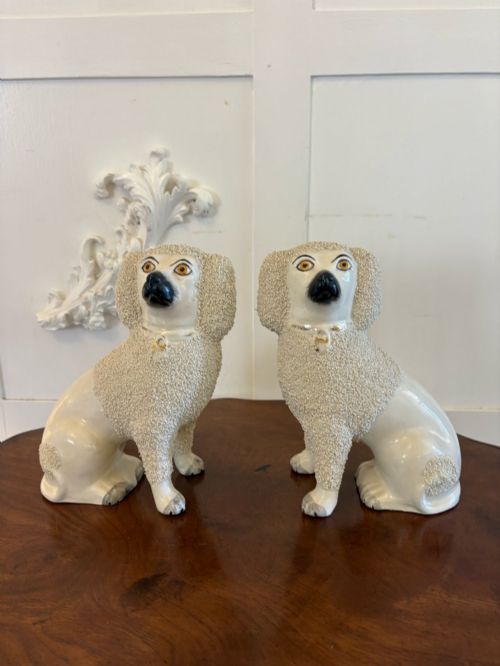
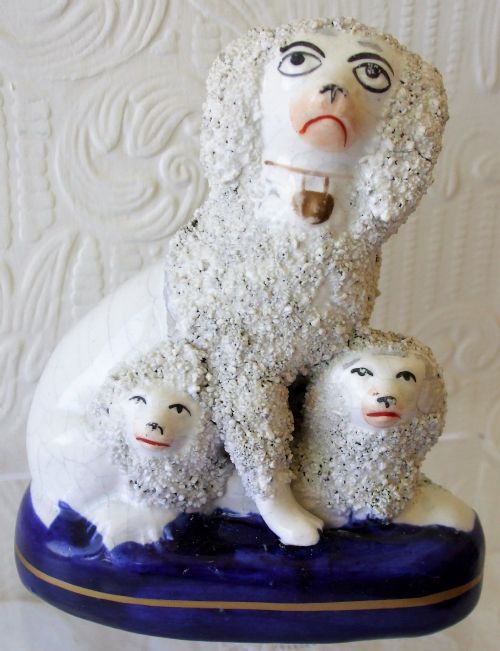


Staffordshire Shredded Clay Figure
These Staffordshire shredded clay figure items are Victorian earthenware domestic ornaments that bring genuine nineteenth-century character to a mantelpiece.

Staffordshire Shredded Clay Figure
A Staffordshire shredded clay figure is typically a Victorian earthenware figurine, figure group, or utilitarian spill vase depicting animals and human subjects. The selection on this page consists predominantly of nineteenth-century poodles, sheep, and individual figures such as a Turk. These pieces served as decorative ceramic objects in homes during the Victorian era and often incorporate miniature pups or specialised forms like inkwells.
Most examples found here date from the nineteenth century, including specific decades such as the eighteen-sixties and eighteen-eighties. Buyers frequently encounter pairs of poodles alongside miniature versions and more elaborate figure groups. The makers utilised earthenware and glazed pottery to model these domestic animals and figures, capturing a distinct nineteenth-century aesthetic.
Methods and Materials
Production relied on traditional pottery techniques of moulding and hand-finishing during the Victorian period. Potters built up the textured surface manually to simulate animal fleece before firing and glazing the earthenware. Enamel decoration was subsequently applied and fired again to secure the pigment.
Staffordshire Shredded Clay Figure Retail Price Guide 2026
Typical asking prices for staffordshire shredded clay figure among the pieces listed under this phrase on Sellingantiques today, from the lower quarter to the upper quarter. They describe what is for sale here now, not the wider market.
Victorian potters laboriously teased raw clay into tiny curls by hand, ensuring every poodle emerged from the kiln with a permanently startled hairdo.
Assessing Quality
Quality in these nineteenth-century ceramics rests on the crispness of the shredded clay texture and the precision of the modelling. Finer pieces maintain distinct, well-defined curls in the clay rather than flattened or muddy surface work. The application of enamel and gold leaf also distinguishes superior examples through clean lines and careful placement.
Pairs and grouped figures with associated pups or functional elements like inkwells often demonstrate greater ambition in the workshop. The survival of crisp detail beneath the glaze separates standard production from the more accomplished figures of the Victorian period.
James Dudson
The Staffordshire Shredded Clay Figure Glossary
- Earthenware
- Porous pottery fired at lower temperatures and traditionally glazed to hold liquids and accept enamel colours. It forms the primary ceramic body for nineteenth-century Staffordshire figures.
- Lead glaze
- A glossy coating containing lead oxide applied to pottery before firing to produce a smooth, shiny finish. This surface protects the underlying earthenware and enriches the enamel colours.
- Enamel
- Opaque glass-like paint applied over the glazed ceramic surface and fired at a lower temperature to adhere. It provides the bright surface colours on Victorian figurines.
- Spill vase
- A hollow ceramic figure incorporating a small cylinder designed to hold wooden spills for lighting fires. These practical decorative objects combine utility with animal or human figures.
- Gold leaf
- Extremely thin gold beaten into sheets and applied to ceramics for decorative highlights. It brings metallic brilliance to collars, bases, and decorative details.
Staffordshire Shredded Clay Figure: Frequently Asked Questions
What are Staffordshire shredded clay figures?
These pieces are nineteenth-century earthenware pottery figures and decorative groups manufactured in the Staffordshire potteries. They frequently depict poodles and sheep with textured clay coats.
Potters during the Victorian period produced these ornaments in various sizes, ranging from miniatures to substantial pairs designed for display.
How were these figures used originally?
Victorian households placed these ceramic figures on mantelpieces, side tables, and shelves purely for domestic decoration. Some specialised forms, such as inkwells and spill vases, also served practical everyday functions.
Pairs of poodles and sheep were popular ornaments intended to bring charm and character to nineteenth-century parlours.
How do I identify a Victorian piece?
Nineteenth-century pieces typically display earthenware bodies covered in lead glaze, complemented by hand-painted enamel and gold leaf details. The characteristic shredded clay technique creates a distinct textured wool appearance.
Stylistic conventions of the Victorian period, combined with specific animal and figural subjects, help confirm the nineteenth-century origin.
What subjects appear in these listings?
The current selection focuses heavily on poodles, often shown in pairs or with miniature pups. Other subjects include sheep and individual human figures such as a Turk.
Form variations range from standard decorative figurines to utilitarian items like inkwells and spill vases.