


Staffordshire Pottery Water Jug
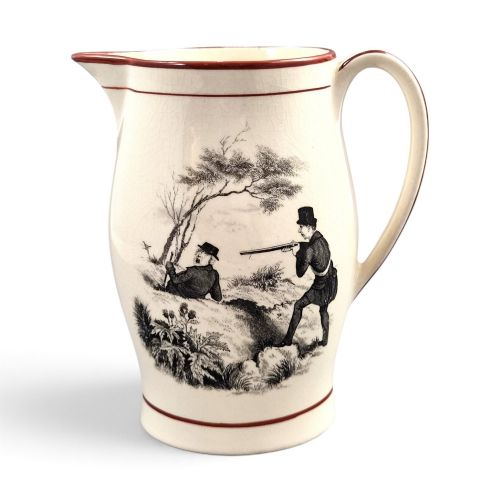
These staffordshire pottery water jug examples bring robust earthenware bodies and hand-decorated transfer prints directly into domestic service.
Staffordshire Pottery Water Jug
A staffordshire pottery water jug represents centuries of utilitarian and commemorative ceramics produced in the potteries district. These vessels range from large one-gallon containers to smaller milk and water jugs used in daily service.
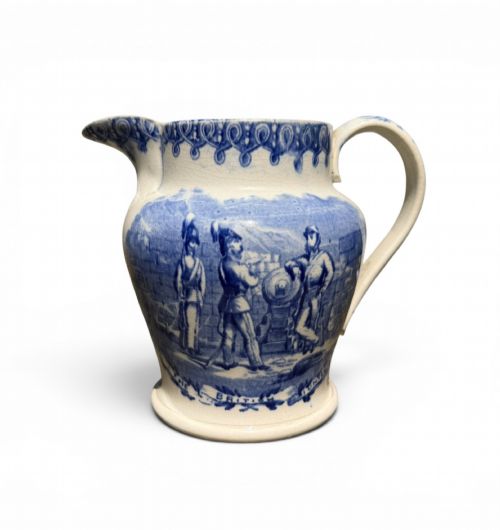
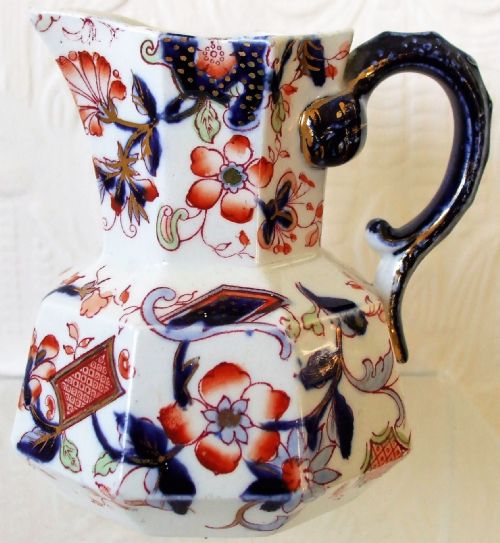
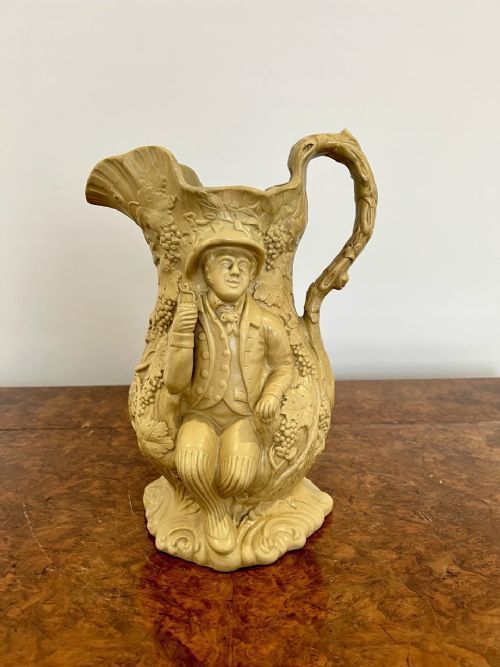
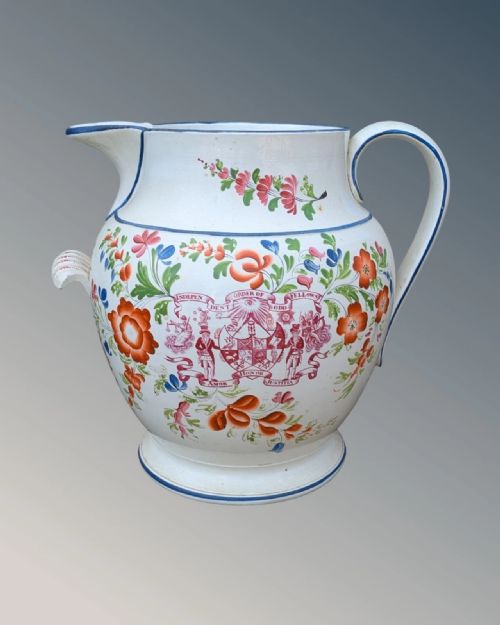
The pieces appearing on this page span the Georgian, Victorian, and later nineteenth-century periods. Forms include relief-moulded pitchers, transfer-printed earthenware, and character jugs featuring historical or patriotic scenes.
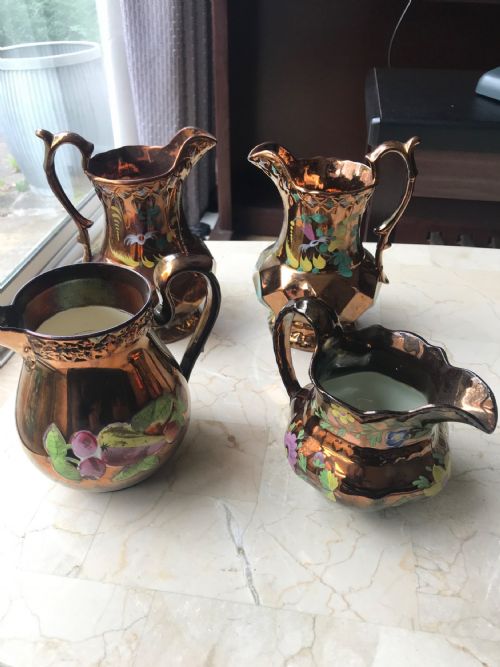
Makers and potteries utilised distinct bodies such as creamware and pearlware during the earlier periods, shifting towards porcelain and heavier glazed ceramics later on. Buyers encounter everything from blue and white transfer patterns to copper lustre and majolica finishes.
Materials and Methods
Potters shaped these vessels using earthenware, creamware, pearlware, and stoneware bodies, often forming them with cabbage leaf moulding or relief decoration. The raw clay was turned or pressed in moulds before receiving its initial firing.
Decoration relied heavily on enamel colours, hand-painted details, and transfer printing to apply intricate designs like the Boston State House or British Volunteers motifs. A clear or coloured glaze was then applied to seal the ceramic surface before a final kiln firing.
Old bull baiting scenes and Admiral Lord Nelson rub shoulders with cheerful poppy designs on these sturdy kitchen tables.
Assessing Quality and Execution
Quality rests upon the crispness of the relief moulding and the registration of the transfer print across the ceramic body. Finer examples display clean lines without blurring in the blue and white pigments or enamel highlights.
The weight and balance of the handle, alongside the evenness of the glaze application, distinguish standard production pieces from master potter works. Superior jugs maintain sharp relief details and crisp hand-decorated fruit or figural elements.
Keeling And Co·Jones And Walley·George Jones
The Staffordshire Pottery Water Jug Glossary
- Creamware
- A fine earthenware developed in Staffordshire featuring a pale yellowish-buff glaze. This body was widely used during the Georgian period for domestic jugs.
- Pearlware
- An refined earthenware introduced in the late eighteenth century with a bluish tint in the glaze to mimic Chinese porcelain. It forms the base for many early transfer-printed jugs.
- Transfer-printed
- A decoration technique where an engraved copper plate transfers an inked design onto tissue paper, which is then pressed onto the ceramic body. This allowed intricate pictorial scenes to be produced rapidly.
- Relief-moulded
- A manufacturing method where raised decorative motifs such as leaves, figures, or scrolls are pressed directly into the body of the jug during formation. These designs are often highlighted with enamel colours.
- Majolica
- A colourful, heavy earthenware glazed with opaque tin enamels, popular in the Victorian era. It frequently employs naturalistic botanical themes like bullrushes and lily leaves.
Staffordshire Pottery Water Jug: Frequently Asked Questions
Were these jugs used for water?
Many large vessels served as water pitchers or footbath jugs in bedrooms before modern plumbing arrived in domestic homes.
Smaller examples functioned interchangeably for milk, water, or ale at the dining table depending on their capacity and shape.
How can I tell Georgian from Victorian pieces?
Georgian examples often utilise creamware or pearlware bodies with hand-painted or early transfer-printed historical subjects like the Boston State House.
Victorian pieces frequently display heavier relief moulding, copper lustre finishes, majolica glazing, or porcelain compositions.
What does relief-moulded mean?
Relief moulding describes raised decorative patterns pressed into the clay body during the initial forming stage rather than painted on the surface.
Potters often used this technique to create textured motifs such as cabbage leaves or architectural panels on the sides of jugs.