


Blue Transferware Pitcher
A blue transferware pitcher brings unmistakable depth and pattern to a room, holding centuries of ceramic history in a single, decorative vessel.

Blue Transferware Pitcher
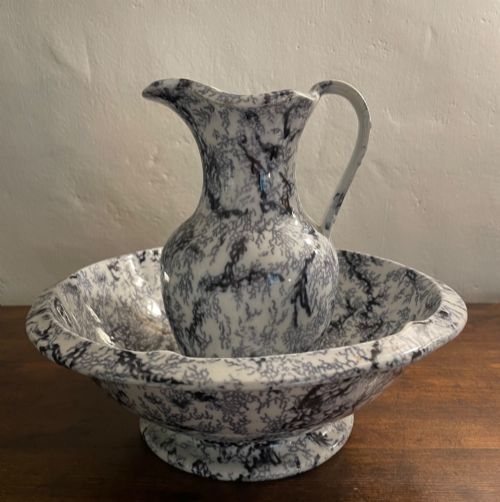
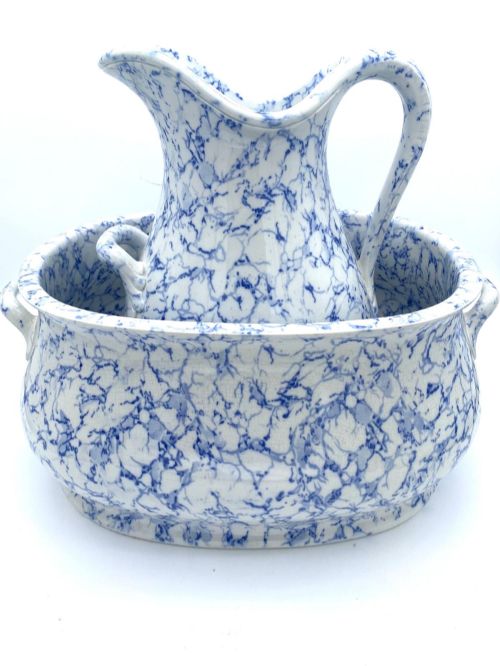
A blue transferware pitcher represents a rich tradition of ceramic production spanning the eighteenth, nineteenth, and early twentieth centuries. These vessels appear in forms such as water jugs, washstand sets, and large utilitarian pitchers designed for everyday household use.
Most examples originate from British potteries and span periods from the Georgian era through to Victorian and Edwardian times. Collectors encounter both standalone jugs and pieces that form part of larger wash basin sets.
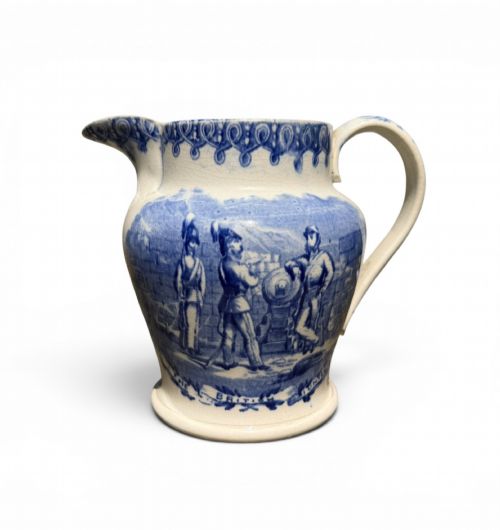
The decorative schemes range from pastoral scenes and architectural motifs to figurative designs like the Fisher Boys or historical views. Each blue transferware pitcher demonstrates the capability of transfer printing to apply intricate patterns onto ceramic surfaces.
Materials and construction
Potters constructed these pieces using earthenware, ceramic, and occasionally porcelain bodies, which were then coated in a smooth glaze. Cobalt glaze provided the deep blue colour for the transfer-printed patterns that define the style.
Manufacturers applied the printed design onto the biscuit ceramic using a paper transfer pulled from an engraved copper plate before glazing and firing. Selected pieces also incorporate gold leaf or gilt highlights applied over the glaze for added decoration.
The listings here span earthenware, porcelain, and glazed ceramic bodies decorated with cobalt glaze across Georgian, Victorian, and Edwardian periods.
Judging quality and execution
The clarity and registration of the transfer print dictate much of the visual success, where sharp lines and well-aligned patterns separate finer works from blurred impressions. Early pieces often show greater crispness in the engraved details.
The weight of the ceramic body and the evenness of the glaze application indicate the skill of the pottery. Subtle additions like moulded mask heads or applied gilt details elevate certain examples above standard utilitarian wares.
Minton·Caughley Coalport·Dr Christopher Dresser·Doulton Burslem
The Blue Transferware Pitcher Glossary
- Transferware
- Earthenware or porcelain decorated by printing a design from an engraved copper plate onto tissue paper, which was then transferred onto the clay body. This technique allowed potteries to produce complex, repeatable patterns efficiently.
- Flow blue
- A style of cobalt decoration where the blue colour deliberately blurred into the surrounding glaze during the kiln firing. This created a soft, hazy aesthetic highly popular in nineteenth-century ceramics.
- Mask head
- A sculptural face or head moulded into the spout or body of a jug, often taking the form of a mythological or grotesque figure. It served both a decorative and a structural function.
- Ewer
- A large pitcher with a wide spout and flared base, traditionally paired with a basin for washing. These vessels formed the centrepiece of nineteenth-century washstand sets.
- Biscuit
- Unglazed ceramic ware that has been fired once in the kiln and awaits the application of glaze and decoration. This porous state absorbs the tissue print during transferware production.
Blue Transferware Pitcher: Frequently Asked Questions
What are blue transferware pitchers made from?
These vessels are formed primarily from earthenware and ceramic bodies, finished with a glossy protective coating.
Cobalt oxide provides the characteristic blue pigment used in the transfer-printed patterns, while select examples incorporate additional gilt highlights.
How were these pitchers used historically?
They served practical functions in domestic settings, often holding water for washing at a bedroom basin or serving liquids at the table.
Many survived as part of larger washstand sets used before modern indoor plumbing became widespread.
How do I date a blue transferware pitcher?
Dating relies on examining the ceramic body, the style of the handle, and the characteristics of the transfer print.
Georgian and early nineteenth-century pieces often display distinct patterns and heavier potting techniques compared to later Victorian or Edwardian bathroom sets.
How should I display a pitcher at home?
These vessels work well on open shelving, sideboards, or mantels where their printed patterns can be easily appreciated.
They also accommodate dried florals or foliage when used as decorative vases in living spaces.