
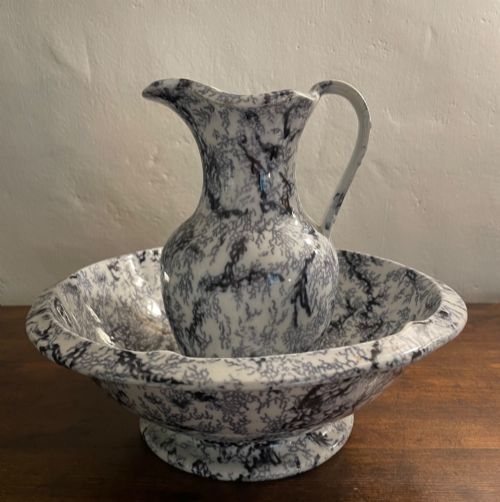
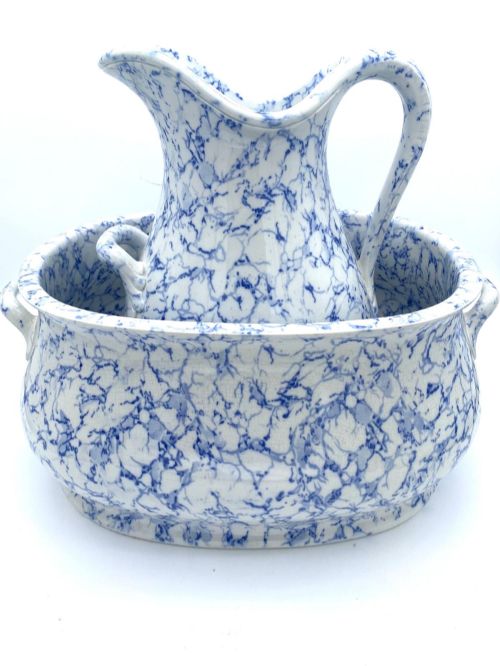
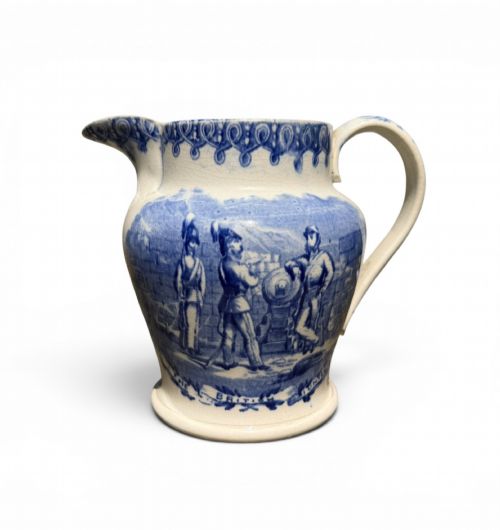


Blue White Transferware Pitcher
A blue white transferware pitcher brings deep cobalt scenes to your table or washstand, offering enduring pattern work from past centuries.
Blue White Transferware Pitcher
When you search for a blue white transferware pitcher, you encounter ceramic vessels produced across the eighteenth, nineteenth, and early twentieth centuries. These pieces appear in forms such as water jugs, washstand sets, and large Georgian pottery pieces.
You are most likely to meet nineteenth-century earthenware examples, often connected to broader bathroom sets or washware collections. Makers decorated these items with transfer-printed cobalt scenes ranging from classical Italian patterns to historical views.
The assortment spans Georgian, Victorian, and Edwardian periods, demonstrating how domestic tableware evolved from eighteenth-century porcelain and earthenware traditions into functional nineteenth-century washware.
Materials and production methods
Potters formed these pitchers using earthenware or ceramic bodies, finished with lead glaze or cobalt glaze to seal the surface. Cobalt oxide pigment created the distinctive blue imagery transferred from engraved copper plates onto the damp clay.
Certain vessels received additional detailing such as gold leaf highlights applied over the glazed ceramic surface. Potters shaped these pieces into jugs, ewers, and wash basin sets using traditional throwing and moulding techniques.
Some nineteenth-century makers accidentally let the blue ink bleed into the glaze, creating a hazy fog effect that Victorian buyers adored.
Distinctions in quality and execution
Quality rests upon the clarity of the transfer print and the precision of the cobalt glaze application. Crisp lines in intricate patterns like the Pine Cone decoration or historical scenes distinguish finer works from simpler production.
The artistic ambition of the form also shapes the standard, seen in pieces featuring mask heads or attributed designs. Heavier Georgian utility jugs differ in weight and presence from delicate Caughley or Worcester porcelain pieces.
Caughley Coalport·Dr Christopher Dresser·Minton·Staffordshire pottery·Worcester
The Blue White Transferware Pitcher Glossary
- Transferware
- Ceramic pottery decorated by transferring a printed design from an engraved copper plate onto the clay body. This technique allowed intricate pictorial scenes to be produced consistently.
- Cobalt glaze
- A blue glasslike coating fired onto pottery using cobalt oxide as the colouring agent. It provides the deep blue tone characteristic of these wares.
- Flow blue
- A nineteenth-century style where the cobalt blue pigment intentionally blurred into the surrounding glaze during firing. This created a soft, hazy aesthetic popular in Victorian interiors.
- Earthenware
- A porous ceramic body fired at lower temperatures than porcelain and typically glazed to ensure it held water. Most domestic pitchers utilised this accessible material.
- Ewer
- A large jug with a wide spout and flared base, traditionally used alongside a basin for washing. Many examples served as part of larger washstand sets.
Blue White Transferware Pitcher: Frequently Asked Questions
What is a blue white transferware pitcher?
A ceramic jug decorated with printed blue designs applied from engraved plates onto the clay body. These vessels served functional roles in homes during the Georgian, Victorian, and Edwardian eras.
They appear in various sizes, from compact jugs to large one-gallon vessels and components of complete washstand sets.
How were these pitchers used originally?
Households utilised these vessels for carrying water, serving liquids, or holding water within bedroom washstand sets alongside matching basins. Large examples held water for washing or bathing routines before modern indoor plumbing.
Smaller jugs functioned at the table or sideboard, while others remained decorative elements within domestic spaces.
How do I date a blue white transferware pitcher?
Dating relies on examining the ceramic body, glaze characteristics, and the style of the printed transfer pattern. Eighteenth-century pieces often display finer porcelain bodies, while nineteenth-century items typically use earthenware with distinct Victorian or Georgian motifs.
Maker marks, where present underneath the glaze, provide additional confirmation of the production period.
How do I clean and display my pitcher?
Wash the ceramic gently using warm water and mild soap, avoiding harsh scrubbing that might damage old glazes or gold leaf details. Display the piece safely on a stable surface away from heavy traffic.
Keep earthenware pitchers out of damp environments to protect the porous body and historic glaze from deterioration.