


Staffordshire Hearth Figurines
Staffordshire hearth figurines are ceramic canine mantelpiece ornaments that bring traditional English character into a room.
Staffordshire Hearth Figurines
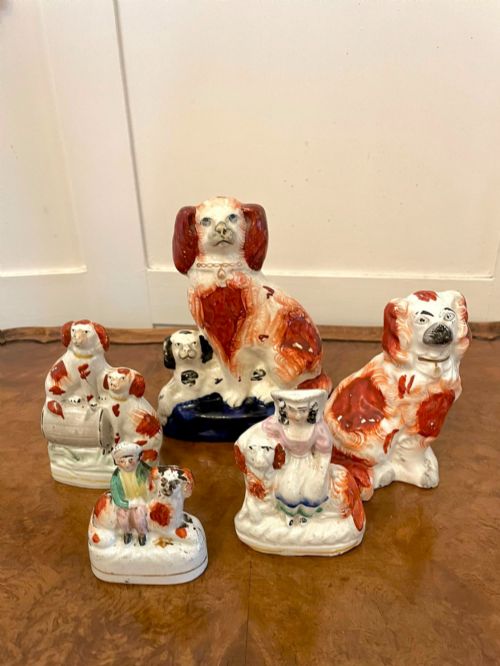
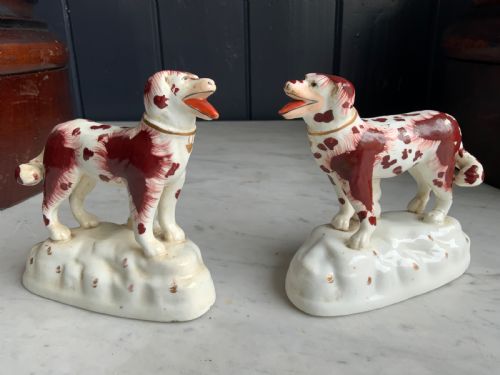
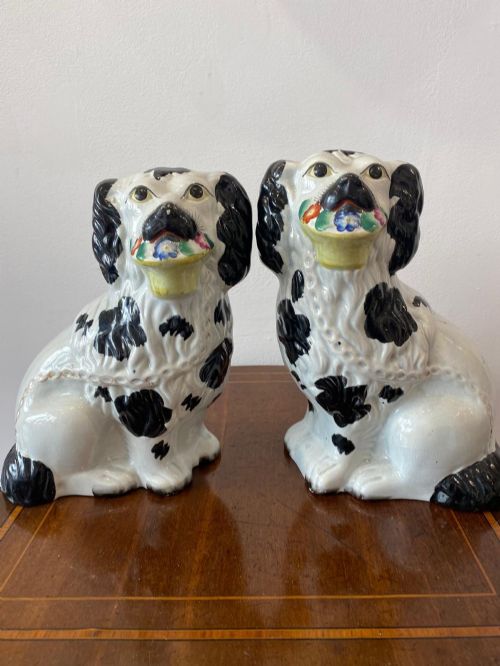
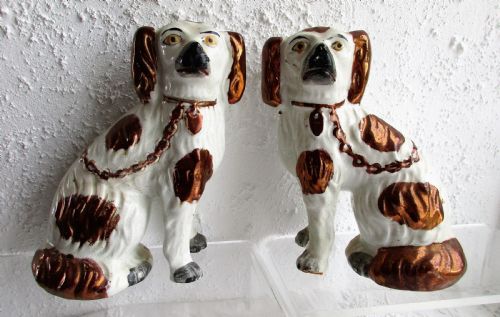
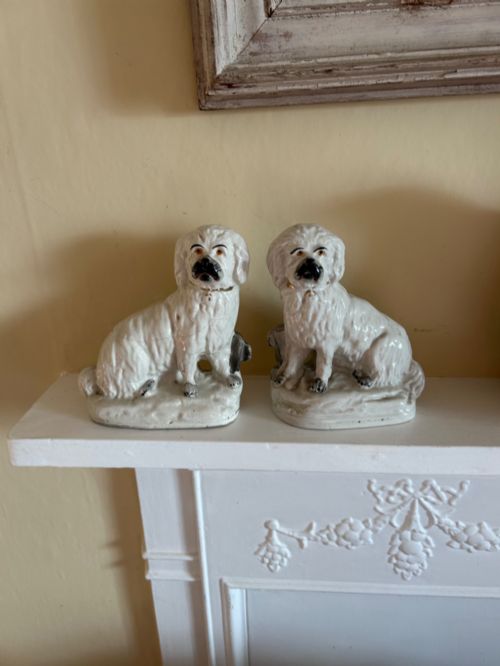
Staffordshire hearth figurines comprise decorative pottery animals modelled for display on mantels and shelves during the nineteenth century. Buyers searching for staffordshire hearth figurines most commonly encounter pairs of seated spaniels, often called comforter spaniels, originating from the Victorian period.
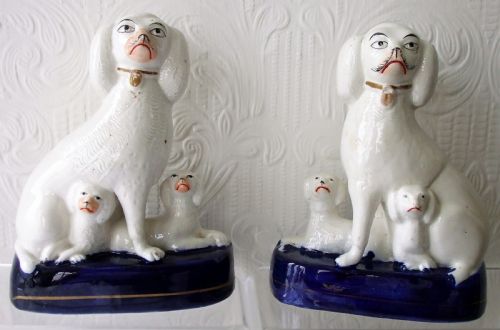
The selection includes poodles with pups, Maltese terriers, cats, lions, and figures of a Scottish Highlander on horseback. These pieces span production dates from the Regency era through to the late nineteenth century, predominantly taking the form of paired mantel ornaments.
Makers recorded in the listings include Beswick, reflecting the later continuation of this Staffordshire pottery tradition. The forms range from simple white and gilt glazed pottery to brightly coloured enamel-decorated earthenware.
Materials and production methods
Potters shaped these earthenware and ceramic figures using moulds before applying lead glazes to the surface. Many examples feature hand-painted enamel details, copper lustre finishes, or gold leaf highlights applied to the fired clay.
Current listings feature earthenware ceramics spanning the Regency period through the Victorian era to 1900.
Distinctions in quality
The sophistication of the modelling separates standard decorative pottery from finer sculptural pieces, such as poodles with pups or figures on horseback. Matched pairs with uniform glaze tones and minimal firing imperfections command greater attention from collectors.
Beswick
The Staffordshire Hearth Figurines Glossary
- Comforter spaniels
- Staffordshire pottery spaniels modelled as pairs to sit on either end of a mantelpiece. They traditionally guarded the hearth in Victorian homes.
- Flatback figure
- A ceramic ornament moulded with a finished front and a flat, unglazed or plain back designed to stand flush against a wall. This technique saved clay and weight for large mantel figures.
- Lead glaze
- A glossy coating containing lead oxide applied to earthenware before firing to create a smooth, waterproof surface. It gives these nineteenth-century ceramics their characteristic shine.
- Enamel
- Opaque coloured glass fused to the ceramic surface during a secondary low-temperature firing. Potters used enamels to add red, black, and other bright details to the coats of the dogs.
- Copper lustre
- A metallic glaze finish containing copper that produces a reflective, coppery sheen. It appears on specific Staffordshire dog pairs from the mid-nineteenth century.
Staffordshire Hearth Figurines: Frequently Asked Questions
What are Staffordshire hearth figurines?
Staffordshire hearth figurines are nineteenth-century ceramic mantel ornaments modelled primarily as dogs, cats, and lions. They were produced in English potteries to decorate the domestic fireplace.
Most surviving examples take the form of paired spaniels, poodles, or terriers. Potters used earthenware and applied lead glazes or enamel colours to finish each piece.
How were they displayed?
Owners placed these figures in symmetrical pairs on either end of the mantelpiece above the fireplace hearth. They faced inward toward the centre of the room.
Larger flatback figures stood flush against the wall on shelves or mantel ledges. Smaller groups, such as poodles with pups, occupied similar prominent domestic spaces.
How do I date a Staffordshire dog?
Dating relies on stylistic clues, manufacturing techniques, and the type of glaze or enamel used. Mid-nineteenth-century pieces often feature copper lustre, rich red markings, or gold leaf highlights.
Later nineteenth-century and turn-of-the-century examples, including works by makers like Beswick, exhibit different clay densities and painting styles. Flatback construction generally points to the Victorian period.
Are these figures waterproof?
These ceramic pieces feature a porous earthenware body beneath a lead glaze. They were created purely for indoor decorative display rather than utility.
Exposing them to moisture or placing them outdoors risks damaging the underlying clay and flaking the enamel or gilt decoration.
How should I clean my figurine?
Dust the ceramic surface gently with a soft, dry brush or cloth. Avoid using water, detergents, or abrasive cleaners on antique glazes and enamel paint.
Water can penetrate unglazed areas on the base or lift fragile hand-painted details and gold leaf highlights.