



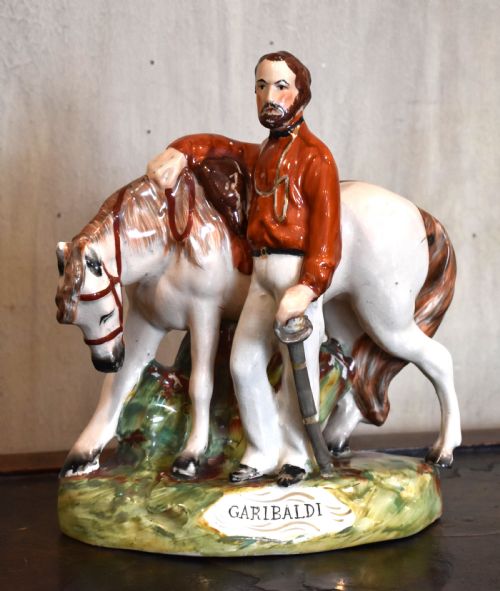


Staffordshire Flatback Horse Figure
A Staffordshire flatback horse figure brings the bold, naïve character of nineteenth-century ceramic art directly onto your mantelpiece.
Staffordshire Flatback Horse Figure
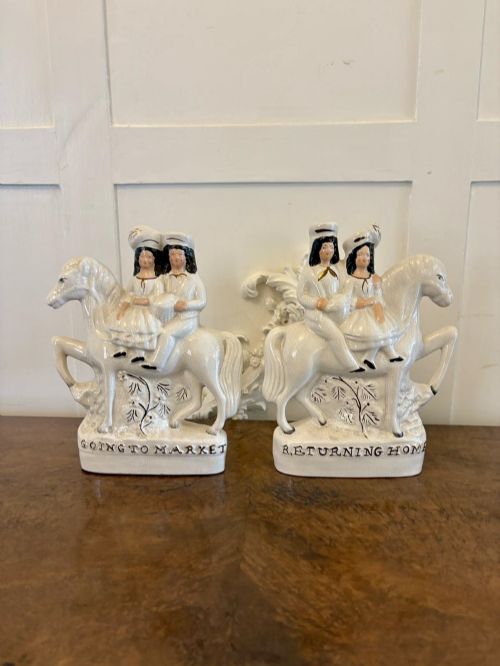
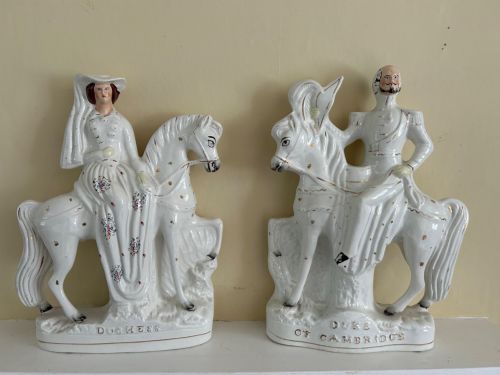
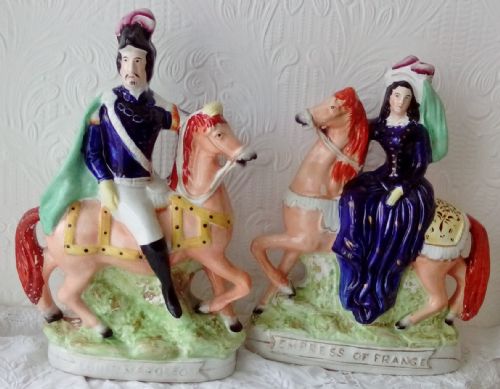
When you search for a staffordshire flatback horse figure, you find nineteenth-century earthenware objects modelled with unpainted backs designed to face a wall. These decorative ceramics depict subjects ranging from equestrian figures and mounted jockeys to historical personalities and Scottish highlanders on horseback.
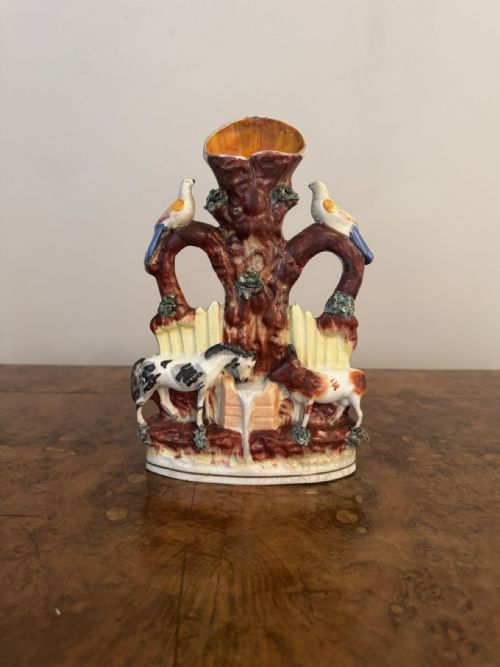
The form spans individual spill vases and substantial pairs of pottery figures, capturing the Victorian appetite for both romanticised storytelling and domestic display.
Methods and materials
Potters shaped these pieces using earthenware clay, forming the hollow flatback body through press moulding before applying a smooth lead glaze to seal the surface. The unglazed undersides and hollow interiors reveal the practical construction methods used in Victorian potteries.
Staffordshire Flatback Horse Figure Retail Price Guide 2026
Typical asking prices for staffordshire flatback horse figure among the pieces listed under this phrase on Sellingantiques today, from the lower quarter to the upper quarter. They describe what is for sale here now, not the wider market.
Materials recorded across these pottery figures include earthenware, lead glaze, enamel paint, and gilt.
Judging the work
The success of a flatback horse figure rests entirely on the clarity of the moulding and the crispness of the hand-painted enamel decoration. Stronger examples retain sharp facial expressions and clean application of gilt, whereas lesser pieces suffer from blurred details and careless brushwork.
Pairs show variation in how closely the two figures match in scale, posture, and palette, reflecting the individual hand of the decorator in the pottery.
The Staffordshire Flatback Horse Figure Glossary
- Flatback
- A ceramic figure modelled with a finished front and sides while the reverse remains largely unpainted and flat, intended to stand against a wall.
- Earthenware
- A porous clay body fired at lower temperatures, forming the structural base for nineteenth-century Staffordshire pottery.
- Enamel paint
- Coloured vitreous material fused to the glazed surface during firing, providing the bright palette seen on Victorian figures.
- Spill vase
- A hollow cylindrical container incorporated into a ceramic figure, designed to hold wooden spills for lighting fires or pipes.
Staffordshire Flatback Horse Figure: Frequently Asked Questions
Where were these figures placed in a Victorian home?
Homeowners typically displayed these colourful earthenware pieces on mantelpieces in parlours and drawing rooms, where the flat backs could rest securely against the wall.
Because the figures were decorative rather than practical, they served as talking points and displayed the owner's interest in current events and historical personalities.
How do I identify a flatback piece?
A flatback piece is easily recognised by its unpainted, hollow reverse side, which distinguishes it from figures modelled fully in the round.
The front and sides display detailed moulding and enamel painting, while the back remains plain to save time and material during production.
What subjects besides horses appear on these figures?
Makers modelled these ceramics after a wide range of popular subjects, including royal figures, military heroes, literary characters, and performers.
Equestrian themes frequently paired riders such as jockeys, highwaymen, and highlanders alongside figures of monarchs and political leaders.
How should I clean my Staffordshire figure?
Dust these ceramic pieces gently with a soft, dry brush to avoid disturbing the fragile enamel paint and gilt highlights.
Water and chemical cleaning agents can damage the nineteenth-century glaze and should be avoided entirely.