

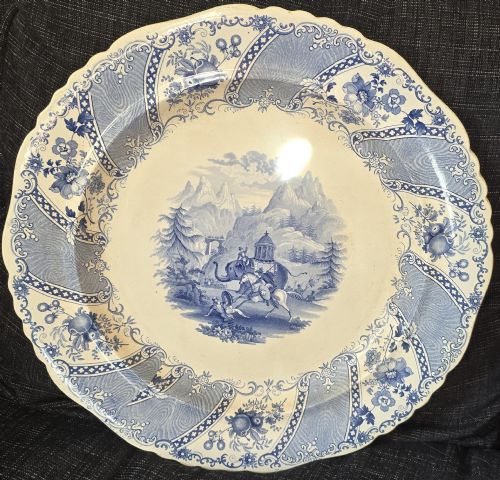
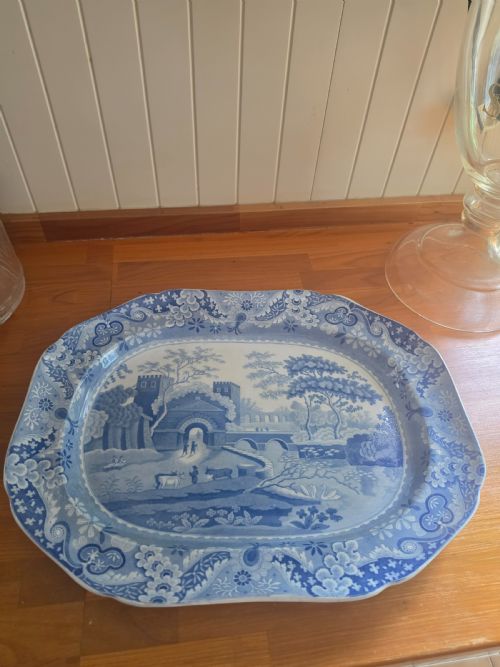

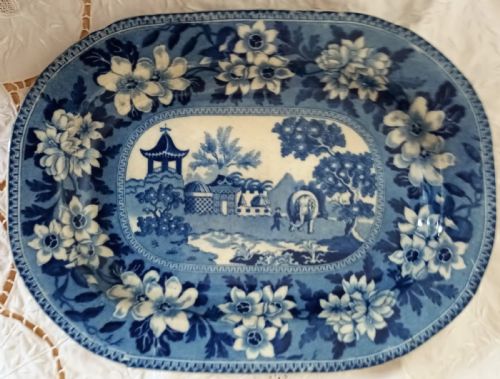
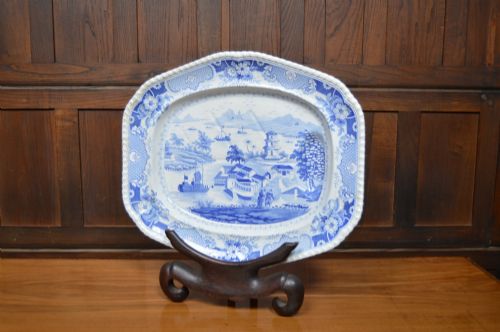
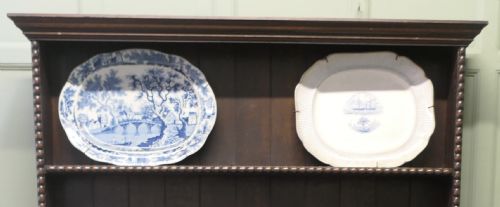
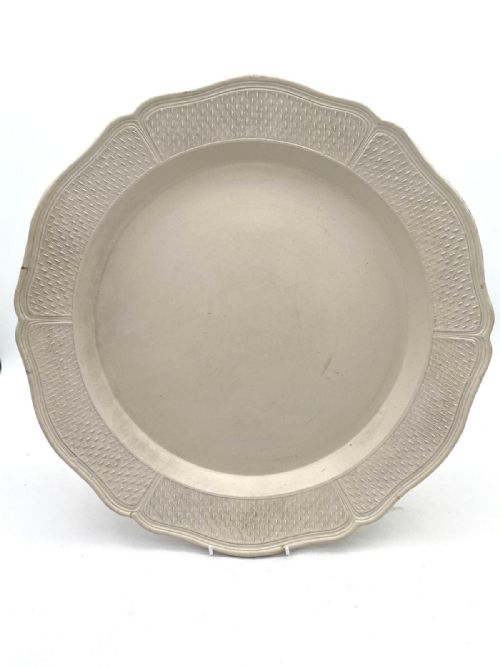


Staffordshire Ceramic Charger
These Staffordshire ceramic charger pieces bring robust 18th-century and 19th-century earthenware and ironstone into modern interiors as striking wall plates or serving dishes.
Staffordshire Ceramic Charger
When you search for a Staffordshire ceramic charger, you are looking at large earthenware, ironstone, and saltglazed stoneware plates produced across the 18th century, the Regency period, and the Victorian era. These generous serving platters and decorative dishes range from early saltglazed examples to mid-19th-century meat plates.
You are most likely to meet blue and white transferware chargers featuring printed topographical scenes, historical narratives, and exotic landscapes. Forms vary from deep chargers and meat dishes to large decorative bowls.
The material evidence shows pieces spanning Georgian utility through to Art Deco earthenware production. Makers stamped, impressed, or left their transfer-printed marks on the undersides of these substantial plates.
Materials and Techniques
Potters shaped these large chargers from earthenware, ironstone, and saltglazed stoneware bodies before firing them in kilns. Earthenware formed the base for most transferware plates, while ironstone provided a denser, more durable matrix for large meat dishes.
Makers applied intricate blue and white transfer-printed designs using copper plate engravings transferred onto the biscuit ware beneath a transparent glaze. Saltglazing involved throwing salt directly into the hot kiln to produce a characteristic pitted, orange-peel texture on stoneware.
Staffordshire Ceramic Charger Retail Price Guide 2026
Typical asking prices for staffordshire ceramic charger among the pieces listed under this phrase on Sellingantiques today, from the lower quarter to the upper quarter. They describe what is for sale here now, not the wider market.
Listings feature earthenware, ironstone, and saltglazed stoneware spanning the 18th century, Regency, Victorian, and Art Deco periods.
Judging Quality
Quality rests upon the crispness of the transfer-printed detail and the depth of the blue pigment against the white ceramic ground. Early saltglazed chargers rely on the purity of the potting and the even distribution of the salt glaze across the broad surface.
Substantial weight, balanced proportions, and clear maker stamps or impressed marks elevate certain meat plates and platters above standard utility wares.
William Smith & Co·John Rogers & Son·Minton·William Adam·Charlotte Rhead Bursley Ware
The Staffordshire Ceramic Charger Glossary
- Charger
- A large decorative plate or serving platter historically used at grand dining tables or displayed on sideboards. They measure significantly larger than standard dinner plates.
- Transferware
- Pottery decorated by pulling a printed design from an engraved copper plate onto tissue paper, then transferring the ink onto the ceramic body before glazing. Blue and white is the most common colourway.
- Ironstone
- A heavy, durable type of earthenware patented in the early 19th century to imitate porcelain. It resists chipping and forms the base for many large meat dishes.
- Saltglazed Stoneware
- Pottery fired at high temperatures where salt is thrown into the kiln chambers to react with the silica in the clay. This creates a glossy, slightly textured surface finish.
- Pearlware
- A refined earthenware developed in the late 18th century featuring a bluish glaze that pooled in recesses to make the ceramic appear whiter. It bridges the gap between creamware and later white ironstone.
Staffordshire Ceramic Charger: Frequently Asked Questions
How were these chargers used?
These large ceramic pieces served functional roles as meat dishes and serving platters at large dining tables during the Georgian and Victorian periods. Their substantial surface area accommodated joint meats and heavy courses.
Over time, many transitioned into decorative wall plates and display chargers within domestic interiors, celebrated for their pictorial blue and white transfer scenes.
How do I hang a heavy charger?
Displaying large earthenware and ironstone chargers securely requires strong brass or coated wire plate hangers designed to distribute the weight evenly across the rim. Ensure the wall fixing engages directly with solid masonry or a stud.
Avoid spring-loaded clips that exert excessive localized pressure on older saltglazed or pearlware bodies.
How do I tell Victorian pieces apart from earlier ones?
Victorian chargers frequently display complex transfer-printed borders, crisper registration, and heavier ironstone bodies stamped with registry marks or specific pottery names. They date from the mid-19th century onwards.
Earlier 18th-century and Regency pieces often feature softer blue tones, hand-painted touches, saltglazed finishes, or unmarked earthenware bodies with potting flaws typical of earlier kilns.
Can I use these antique plates for serving food?
Using these antique earthenware and ironstone platters for serving dry foods is generally acceptable, provided the glaze remains intact and stable. Historic glazes may contain trace impurities, so avoid acidic foods.
Hand washing in warm water preserves the ceramic body and prevents crazing from worsening over time.