
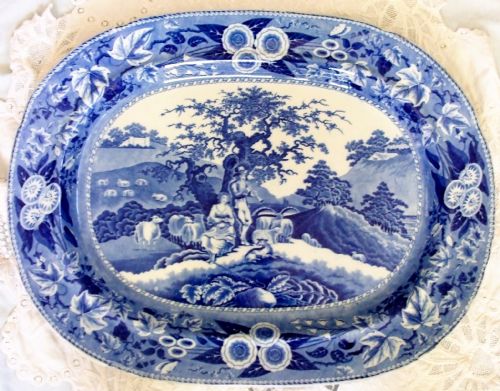


Staffordshire Blue Transferware Platter
A Staffordshire blue transferware platter brings bold 19th-century pictorial scenes to the dining table through rich blue ceramic printing.
Staffordshire Blue Transferware Platter
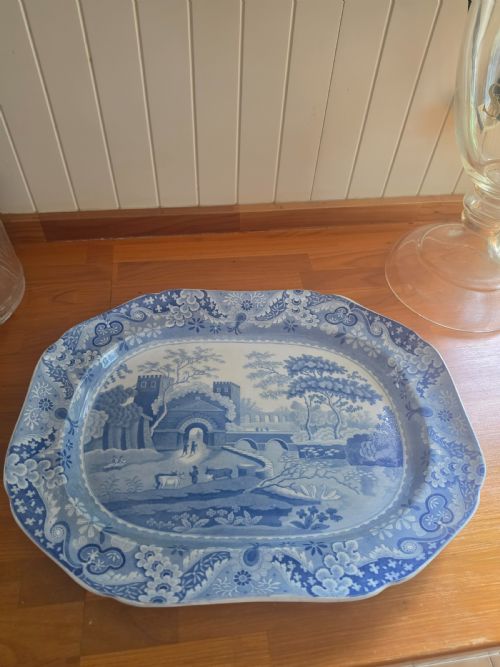
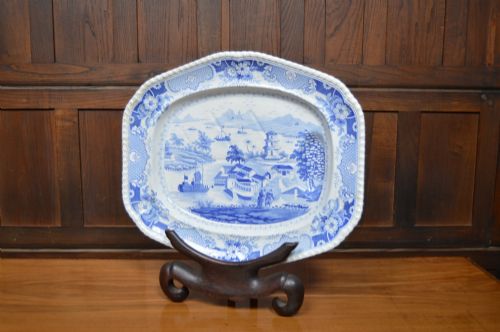
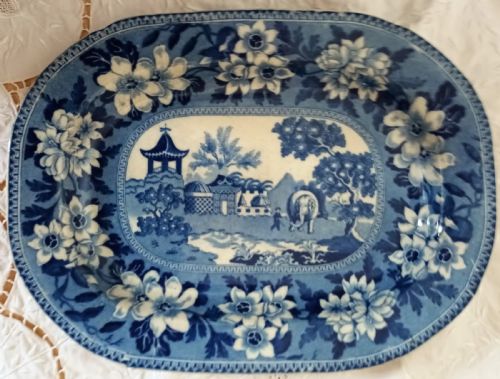
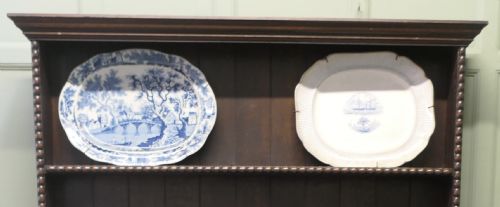
When searching for a staffordshire blue transferware platter, a buyer encounters large serving dishes produced across the nineteenth century during the Georgian and Victorian eras. These items display intricate printed scenes ranging from architectural ruins and foreign landscapes to pastoral animal subjects.
Makers in this category utilised distinct regional names like Spode, Minton, and Mason's Ironstone alongside patterns such as India Temple and Elephant. These platters reflect the sweeping British taste for exotic and domestic topographical imagery during the industrial expansion of ceramics.
Materials and Techniques
Potters formed these serving vessels using earthenware, pearlware, or ironstone bodies, coated subsequently in a glossy ceramic glaze. Cobalt pigment provided the deep blue colour for the printed designs.
Workers applied the decoration using transfer printing, a technique where an engraved copper plate transferred a paper impression of the pattern onto the bisquefired clay body before glazing and firing. Enamel highlights sometimes augmented the blue monochrome design on select pieces.
The inventory records pieces from the Georgian and Victorian periods, including specialised forms like meat drainers and gravy wells.
Variations in Quality
Quality rests upon the crispness of the transfer print and the registration of the cobalt pigment against the ceramic glaze. Superior platters display deep, even blue tones without blurred edges or smudged ink lines.
The refinement of the clay body, whether standard earthenware or high-grade pearlware and ironstone, also dictates the desirability of the dish. Well-modelled mouldings on borders and complex, clear topographical scenes separate exceptional pieces from basic utilitarian wares.
Spode·John Rogers and Son·John Ridgway·Brameld and Co·Elkin Knight and Bridgwood·Mason·Minton·Stubbs
The Staffordshire Blue Transferware Platter Glossary
- Transferware
- Pottery decorated by printing a design from an engraved copper plate onto tissue paper, which was then transferred onto the clay body. This method allowed intricate pictorial scenes to be produced rapidly.
- Pearlware
- A refined earthenware developed in the late eighteenth century with a bluish-white glaze that pooled in recesses. It served as a popular base for early blue and white printing.
- Meat Drainer
- A perforated ceramic insert placed inside a platter to keep roast meat elevated above accumulated juices. These removable pieces match the pattern of the main dish.
- Flow Blue
- A style of blue and white transfer printing where the cobalt pigment intentionally bled into the surrounding glaze during firing. This created a hazy, soft-edged artistic effect popular in the mid-nineteenth century.
- Ironstone
- A heavy, durable type of feldspathic stoneware patented in the early nineteenth century. It provided a robust alternative to standard earthenware for large serving vessels.
Staffordshire Blue Transferware Platter: Frequently Asked Questions
How do I date a staffordshire blue transferware platter?
Dating relies on combining the ceramic body type, such as early pearlware versus later ironstone, with clues from the printed pattern name and backstamp. Stylistic shifts from Georgian neoclassical borders to Victorian floral framing also help narrow the decade of production.
Makers often registered specific patterns or utilised specific company marks that correspond to active working dates. Comparing the subject matter to known historical events, such as early railway expansion or specific architectural builds, provides additional chronological markers.
How should I clean my antique platter?
Antique ceramics require gentle hand washing in warm water with mild detergent using a soft cloth. Harsh scrubbing or automated dishwashers can damage the historic glaze and weaken the earthenware body.
Soaking should be avoided, particularly if the piece has old hairline cracks or historical repairs that moisture could compromise. Thorough drying with a soft towel preserves the ceramic surface safely.
What is the difference between earthenware and ironstone?
Earthenware is a porous, lower-fired pottery body that requires a complete glaze to remain waterproof. It forms the foundation for many early nineteenth-century printed domestic wares.
Ironstone is a denser, vitrified stoneware developed to resist chipping and heavy wear. It offers greater weight and durability compared to standard earthenware, making it ideal for large serving platters.