



Stacking Library Cabinet
A stacking library cabinet offers practical modular storage, and these early twentieth-century examples combine functional sectional design with classic oak or mahogany construction.
Stacking Library Cabinet
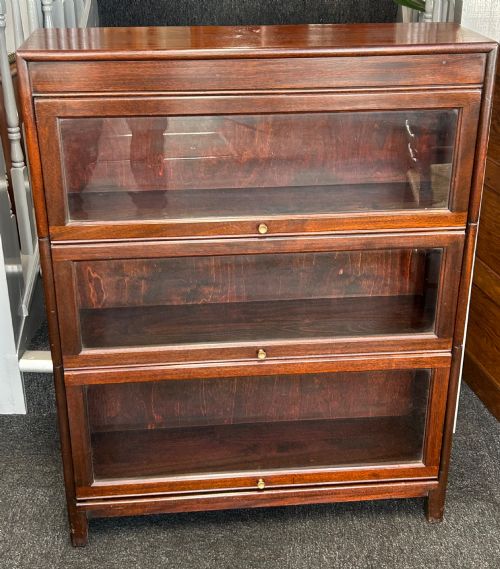
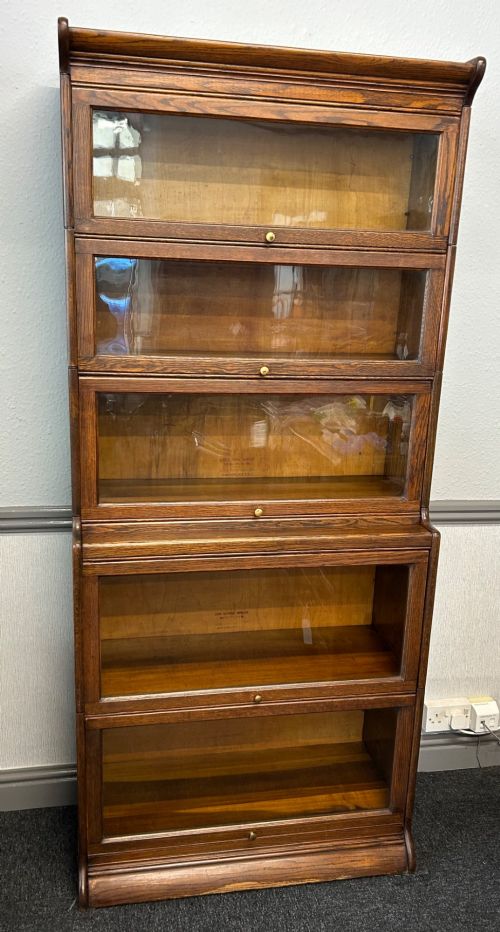
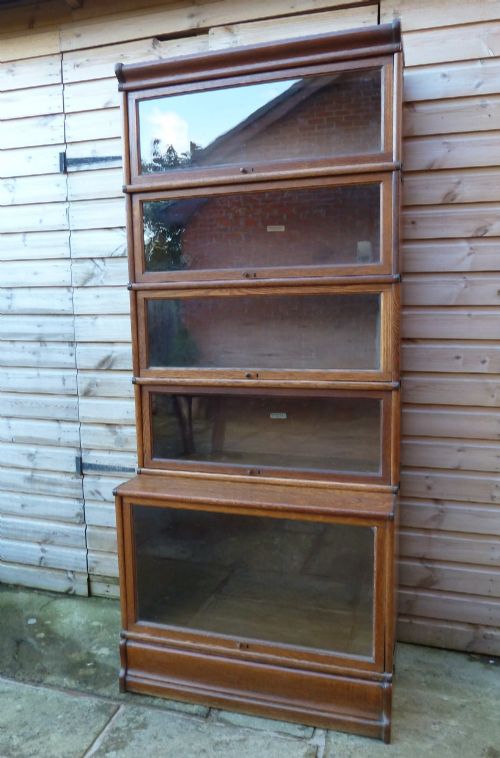
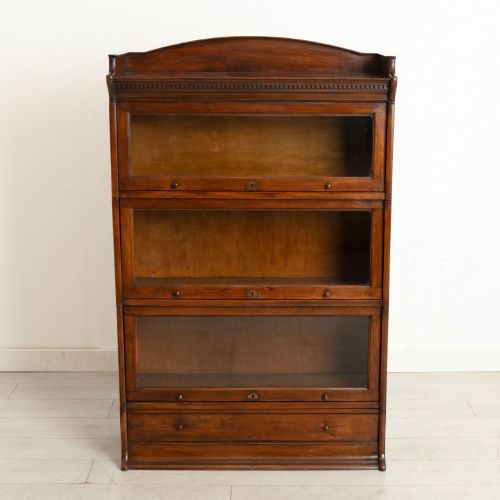
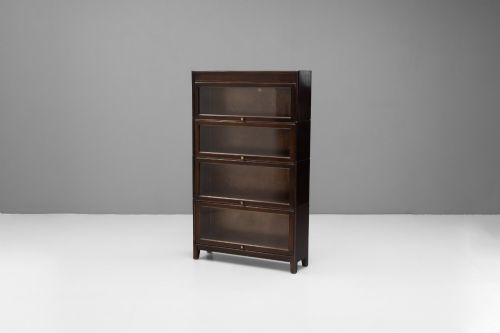
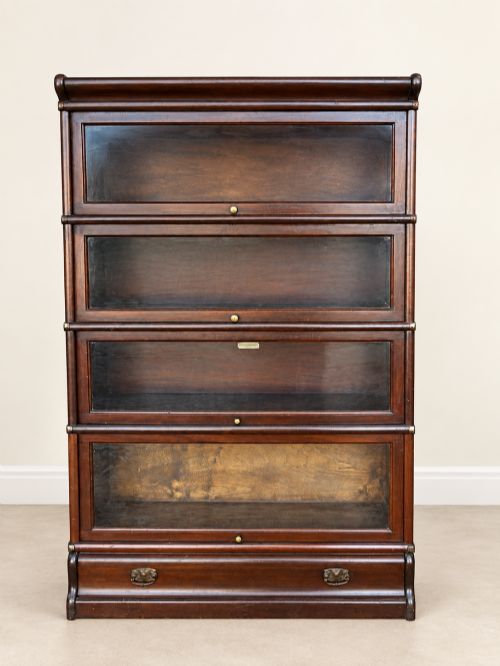
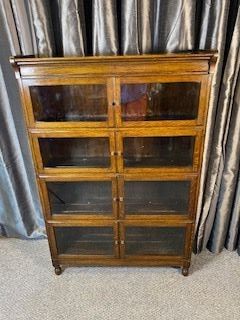
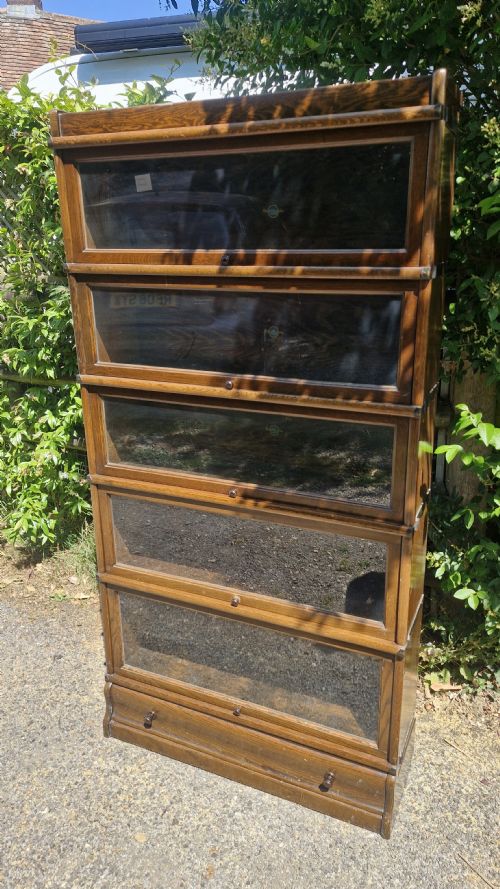
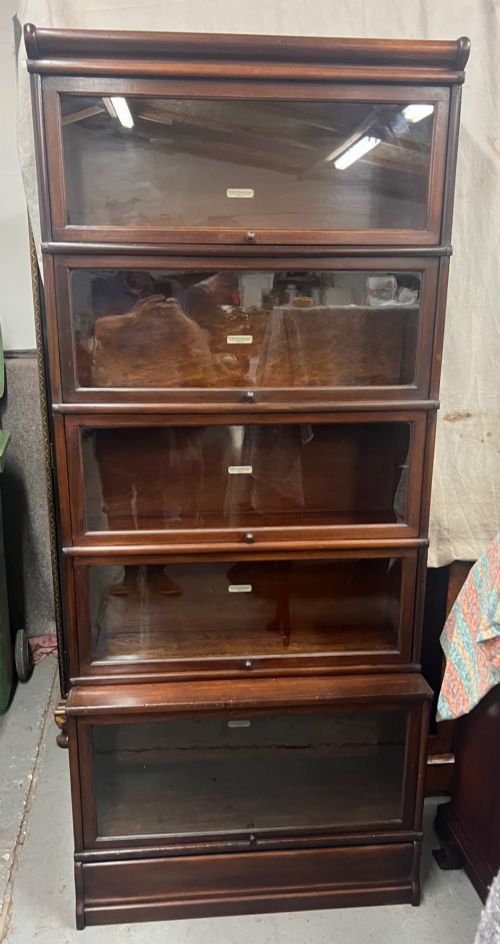
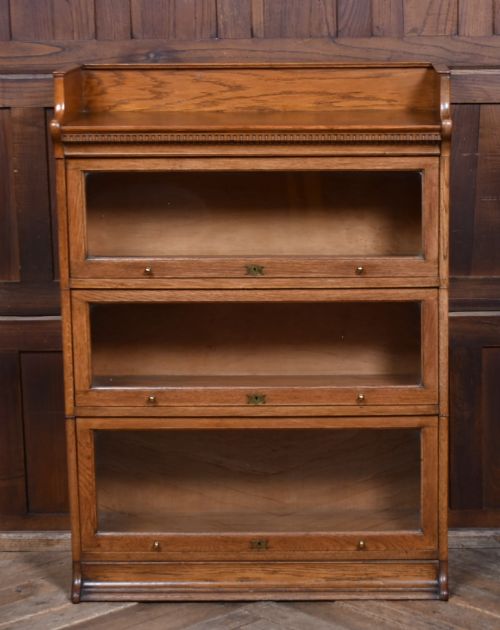
A stacking library cabinet, frequently termed a barrister bookcase, consists of modular tiers that stack vertically to house collections of books. When searching for a stacking library cabinet, buyers encounter modular office and domestic bookcases dating primarily from the early twentieth century, including the Edwardian period and the decades spanning 1900 to 1930.
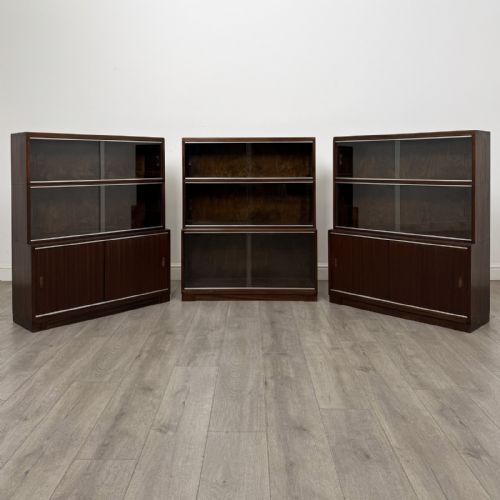
The most common variants on this page are oak and mahogany sectional bookcases featuring glazed doors. Makers such as Globe Wernicke, Lebus, Minty, Gunn, and Heal's dominate the offerings, appearing in configurations ranging from tall four-tier stacks to pairs and three-section sets.
These pieces originated as functional office and study furniture designed to protect valuable volumes behind glass sections while allowing the shelving system to expand as libraries grew. Buyers select them for their adaptable modular format and period character.
Materials and construction
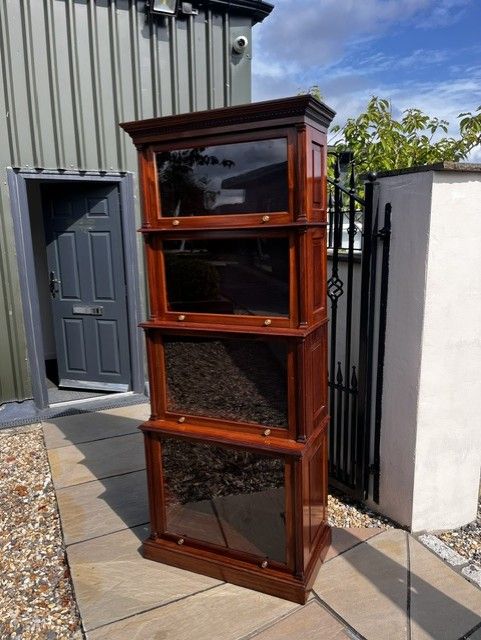
Construction relies heavily on solid oak and mahogany, sometimes enhanced with wood inlay and supported by brass hardware. The modular tiers are engineered to fit together securely, utilising separate glazed sections for each shelf.
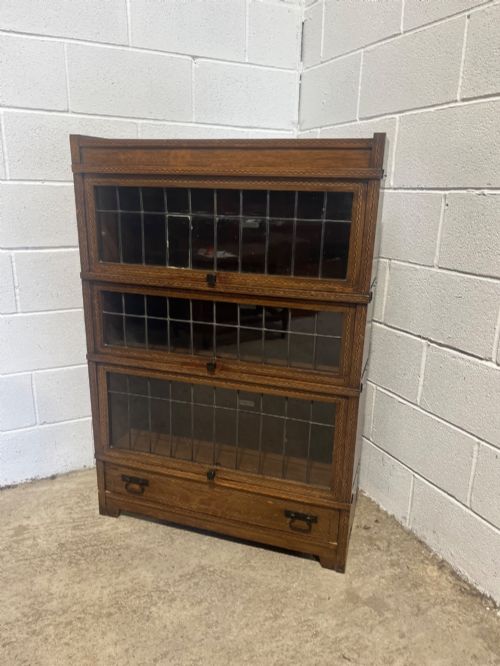
Glass is paired with wood and occasionally lead in the door construction, allowing contents to remain visible while protected from dust. Individual sections incorporate sliding mechanisms or pivoting glass doors that lift and recess into the tier above.
Stacking Library Cabinet Retail Price Guide 2026
Typical asking prices for stacking library cabinet among the pieces listed under this phrase on Sellingantiques today, from the lower quarter to the upper quarter. They describe what is for sale here now, not the wider market.
Listings feature oak and mahogany predominantly, spanning the Edwardian period through the 1930s with makers like Globe Wernicke and Lebus.
Distinctions in quality
Quality differences emerge in the choice of timber and the execution of the modular mechanism, with select pieces utilising solid mahogany or figured oak alongside refined brass fittings. Maker attribution to established firms like Globe Wernicke, Lebus, or Heal's often denotes superior cabinetmaking standards and more robust stacking integration.
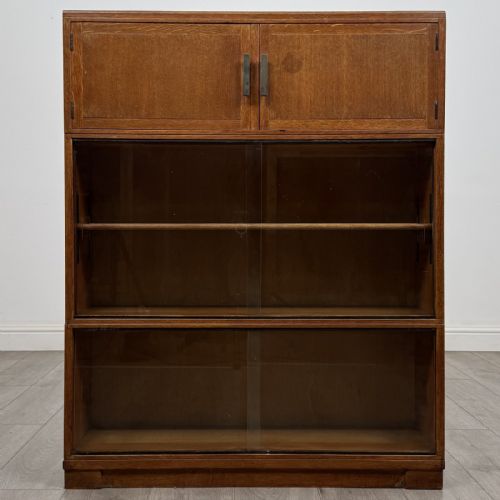
The sophistication of the glazing, such as leaded glass panels or smooth sliding and tilting door actions, separates standard utility furniture from finer library editions. Original finishes and intact hardware preserve the integrity of the modular design.
Gunn Furniture·Lebus·Globe Wernicke·Heals·Minty·AMYL
The Stacking Library Cabinet Glossary
- Sectional bookcase
- A shelving unit composed of independent modular tiers that stack upon a base and beneath a top cornice. This design allows the bookcase to be disassembled or expanded vertically.
- Globe Wernicke
- A prominent early twentieth-century maker and style associated with modular barrister bookcases. Their patented stacking system set the standard for office and library storage.
- Barrister bookcase
- A specialised stacking cabinet traditionally used by legal professionals to transport and house law books. The glazed tiers protect volumes while remaining accessible through lifting or sliding doors.
- Cornice
- The decorative moulding piece that sits at the very top of a stacking cabinet. It caps the modular tiers and finishes the architectural profile of the bookcase.
- Leaded glass
- Glass panes held together by lead cames within the cabinet doors. This technique adds decorative geometric patterns to the front of the bookcase.
Stacking Library Cabinet: Frequently Asked Questions
How do the glass doors work?
The glass doors on these cabinets usually lift upwards and slide inward into the recess above the books. This mechanism allows each tier to open independently while keeping the front flush.
Some variations utilise sliding glass panels or leaded glass windows, depending on the maker and the specific model.
Who made these bookcases?
Prominent manufacturers of these modular cabinets include Globe Wernicke, Lebus, Minty, Gunn, and Heal's. Many of these firms produced sectional office and library furniture during the early twentieth century.
Each maker often utilised distinct hardware and proportions while adhering to the standard stacking format.
How do I date a stacking cabinet?
Dating relies on identifying the maker's mark, patent stamps, and characteristic design details associated with periods like the Edwardian era or the 1920s and 1930s. Oak was particularly popular around 1900, while mahogany and Art Deco influences appeared slightly later.
Examining the construction methods and the style of the brass hardware also helps narrow down the decade of production.