

Stacking Glass Bookcase
A stacking glass bookcase offers modular versatility and glass-fronted protection, making it an essential choice for housing a growing library.
Stacking Glass Bookcase
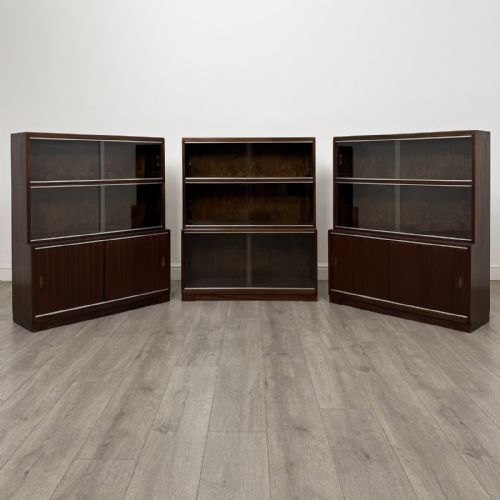
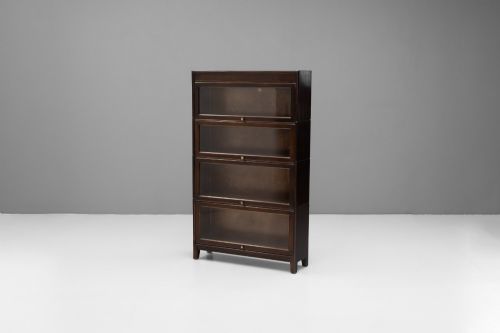
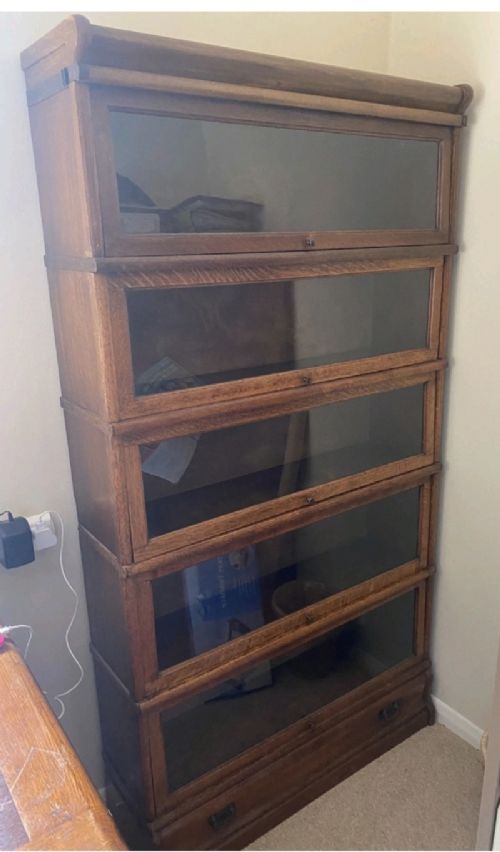
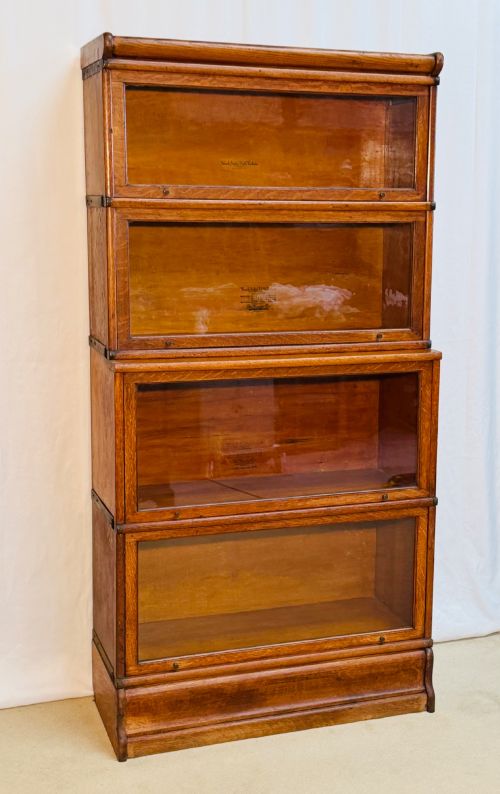
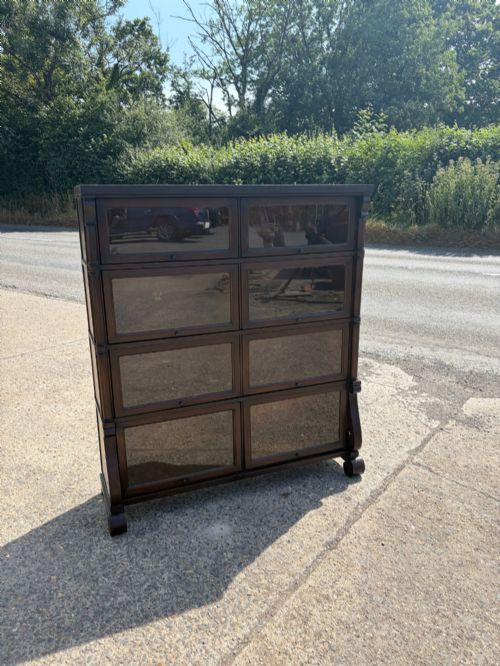
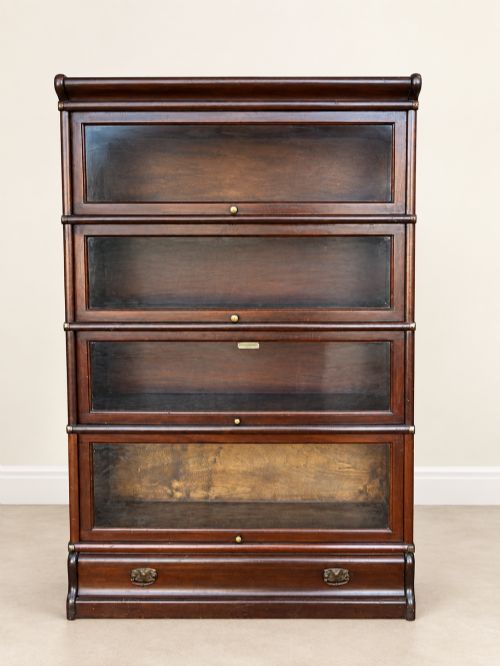
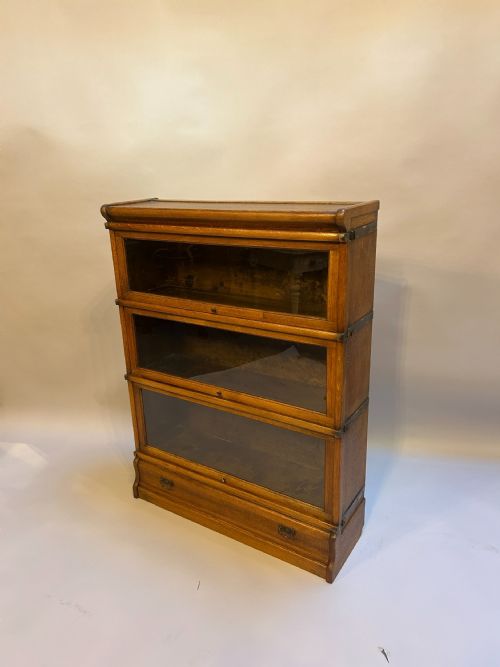
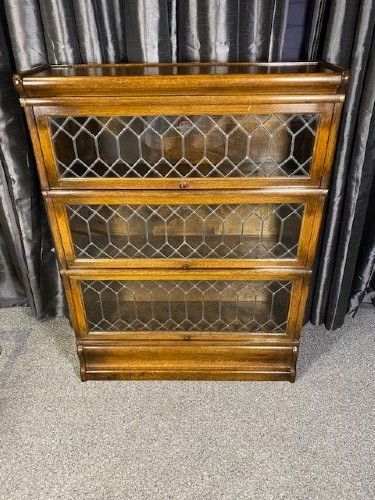
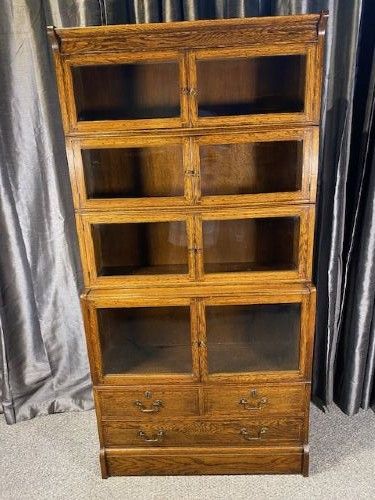
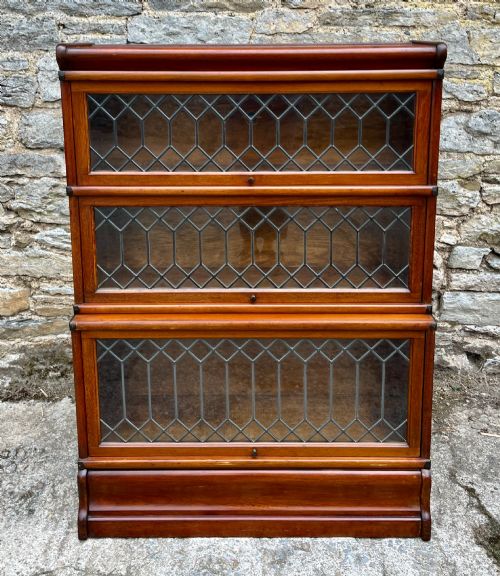
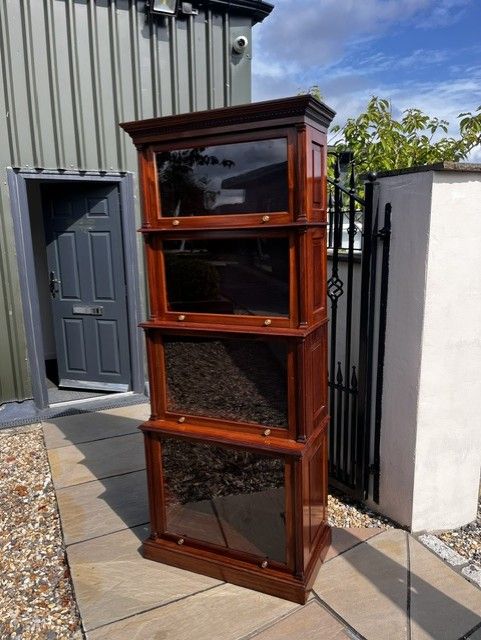
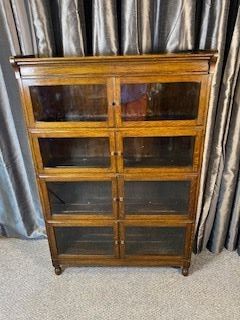
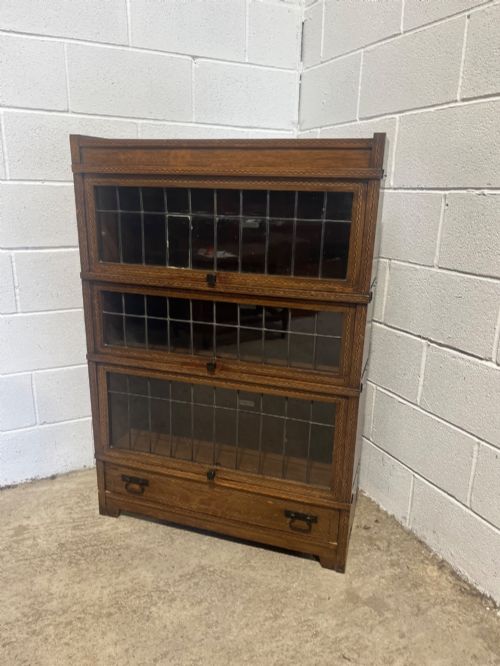
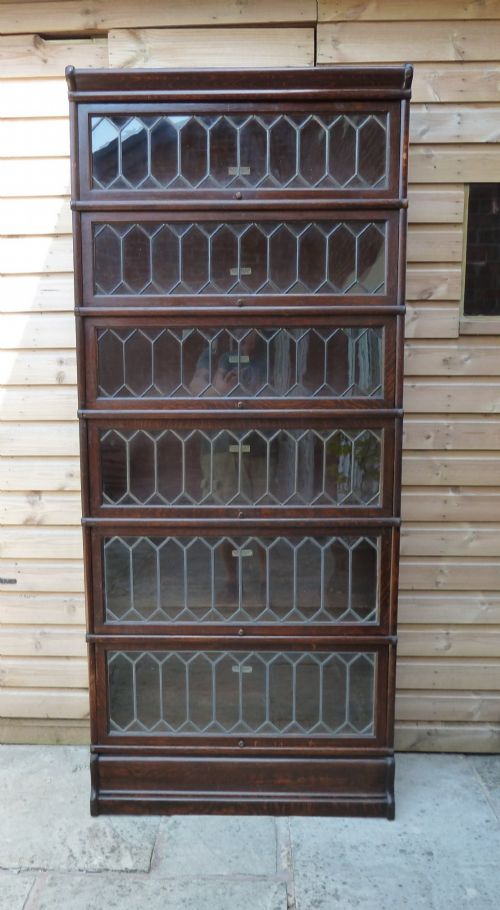
A stacking glass bookcase consists of individual modular tiers that sit one upon another, allowing collectors to build tall storage units section by section. These pieces often appear as barristers or sectional bookcases originating from the Edwardian period through to the 1930s. The most common examples encountered on this page are oak and mahogany tier cabinets equipped with glass-fronted doors.
Makers such as Globe Wernicke, Minty, Lebus, Macey, Gunn, and AMYL dominated production, creating functional office and domestic furniture. Styles range from Arts & Crafts and Edwardian designs to 1920s commercial models and Art Deco variations. Buyers select these units to protect valuable books behind glazed panels while retaining the flexibility to reconfigure or expand the stack.
Materials and Construction
Constructed predominantly from solid oak, mahogany, and walnut, these sectional units rely on durable timber frames to support heavy rows of books. Many examples incorporate golden or limed oak finishes alongside inlaid details, showing the varied aesthetic preferences of early twentieth-century cabinet makers. Brass hardware frequently secures the modular sections together or operates the mechanical door actions.
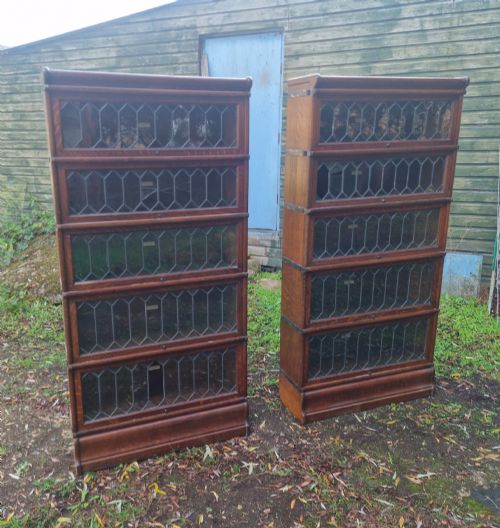
Glazing takes the form of plain glass or leaded glass panels set within individual lifting doors. These up-and-over doors slide smoothly into the cabinet cavity above the books, a mechanical innovation that protects volumes from dust while saving exterior space.
Early lawyers loved these cases because they could pack their entire legal library into stacked boxes and flee a collapsing courtroom.
Assessing Quality and Build
The distinction between standard commercial production and finer work rests heavily on timber selection and mechanical execution. Solid mahogany or quarter-sawn golden oak with careful grain matching elevates a piece above utility office grades. Smooth operation of the lifting door mechanism, combined with original brass hardware, signals superior workshop origin.
Makers known for branded systems, such as Globe Wernicke or Minty, typically demonstrate tighter joinery and more robust internal carcases across their tiers. The presence of matching cornices, functional base drawers, and intact leaded glass further separates exceptional examples from standard multi-tier stacks.
Globe Wernicke·Minty·Lebus·Macey·Gunn·AMYL·Heal s
The Stacking Glass Bookcase Glossary
- Barrister bookcase
- A modular sectional bookcase featuring glass doors that lift and slide into the cabinet above each shelf. Lawyers historically utilised these units to transport and protect their law libraries easily.
- Sectional bookcase
- A modular shelving unit built from separate stacking tiers that can be added to or rearranged. Each tier contains its own shelf and glass door.
- Leaded glass
- Glass panes held together with lead cames to form geometric or decorative patterns. This technique appears frequently on Edwardian and Arts & Crafts era cabinets.
- Quarter-sawn oak
- Timber cut radially to the growth rings, producing a distinctive decorative figure often termed medullary rays. Cabinet makers favoured this cut for stability and appearance.
- Up-and-over door
- A pivoting glass door mechanism that swings outward and slides horizontally into the upper recess of the bookcase tier. This design allows users to browse books without swinging doors blocking the aisle.
Stacking Glass Bookcase: Frequently Asked Questions
How do sectional bookcases work?
Each tier operates as an independent wooden box with its own glass door and a specialised track system. The sections simply stack on top of a base plinth and sit beneath a top cornice.
Buyers can separate the tiers to move the furniture easily or add extra shelves over time as a book collection expands.
Were these units used in offices?
Commercial offices and legal practices relied heavily on these modular cabinets to store large volumes of reference files and law books securely. The glass fronts kept papers clean while allowing clerks to identify titles quickly.
Eventually, domestic buyers adopted the design for home libraries and studies because of the neat, space-saving footprint.
How do I date an oak stacking bookcase?
Examining the hardware, timber finish, and manufacturer stamp helps establish the period of production. Pieces dating to the Edwardian era often display Arts & Crafts influences or leaded glass panels.
Later models from the 1920s and 1930s tend toward simpler commercial designs, sometimes incorporating limed oak or Art Deco touches.
Can I separate the tiers for moving?
The modular construction means the top cornice, individual glass tiers, and base drawer unit all lift apart independently. This design makes transporting heavy wooden bookcases up stairs or through narrow doorways much simpler than moving a single fixed cabinet.
When reassembling, ensure the stack sits level on the floor so the glass doors slide smoothly along their tracks.