

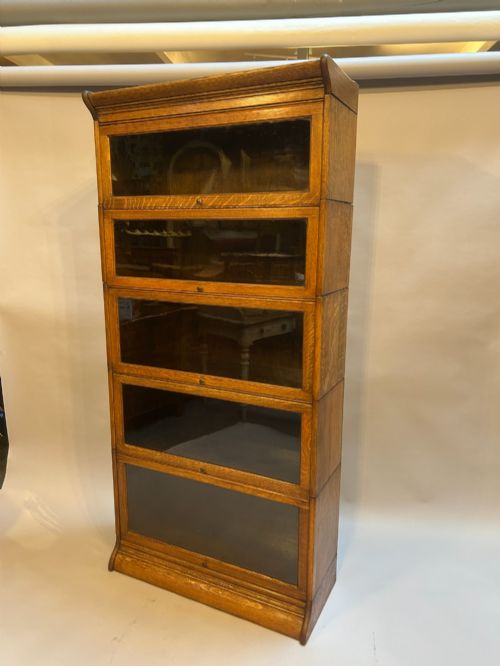
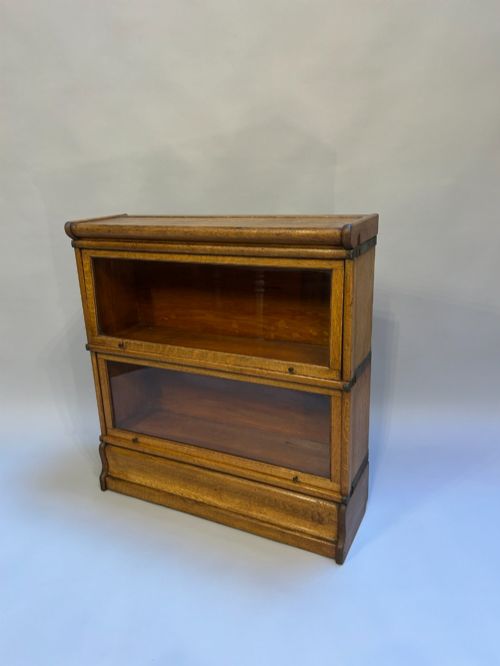
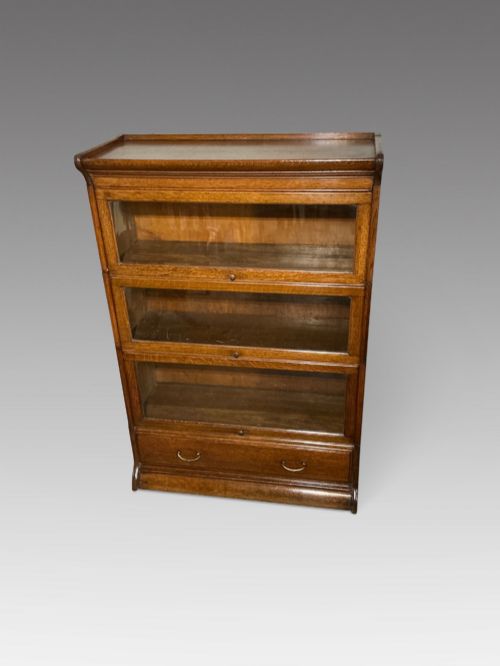
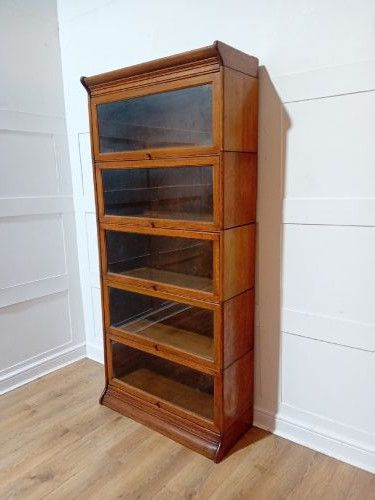
Stacking Bookcase Cabinet
A stacking bookcase cabinet offers modular versatility, protecting volumes behind individual glazed lifting or sliding doors while rising to fit any room.
Stacking Bookcase Cabinet
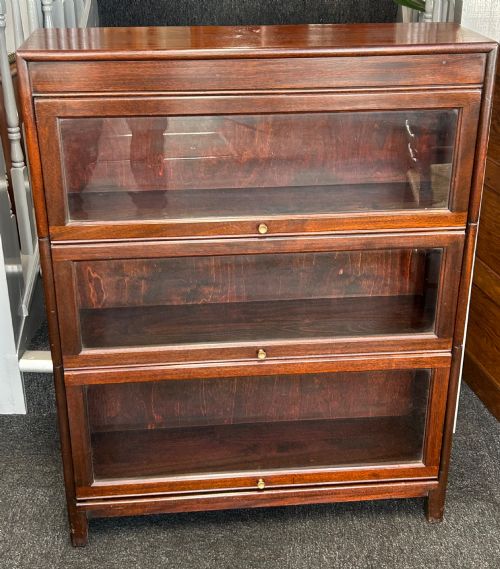
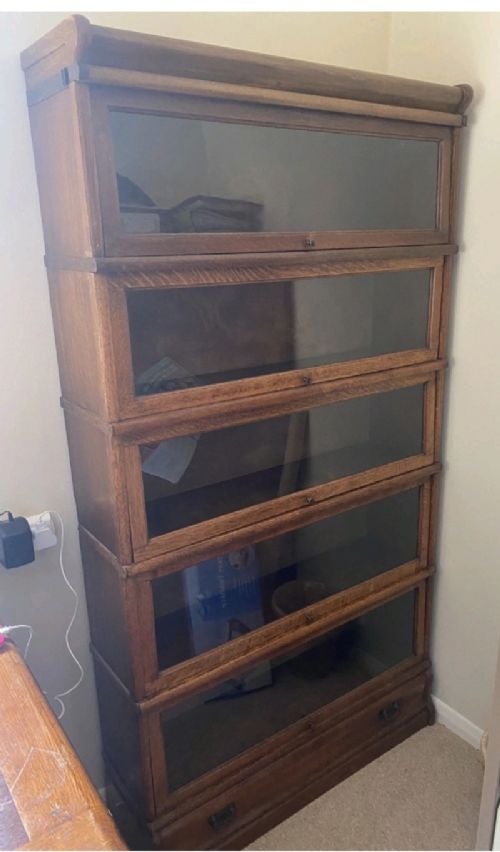
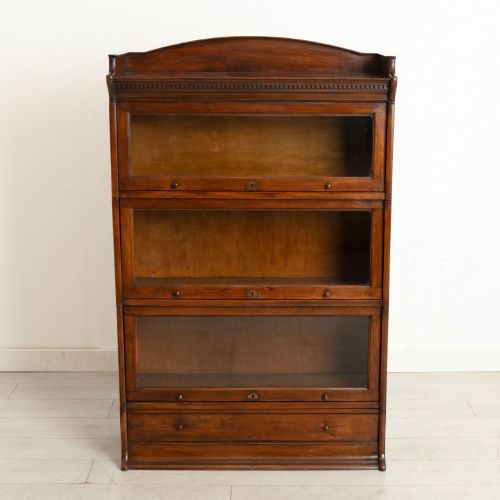
A stacking bookcase cabinet is a sectional piece designed to house books in individual tiers that can be added to or rearranged as a library grows. These modular units appear across the Edwardian period and the early twentieth century, spanning decades from nineteen hundred to nineteen fifty.
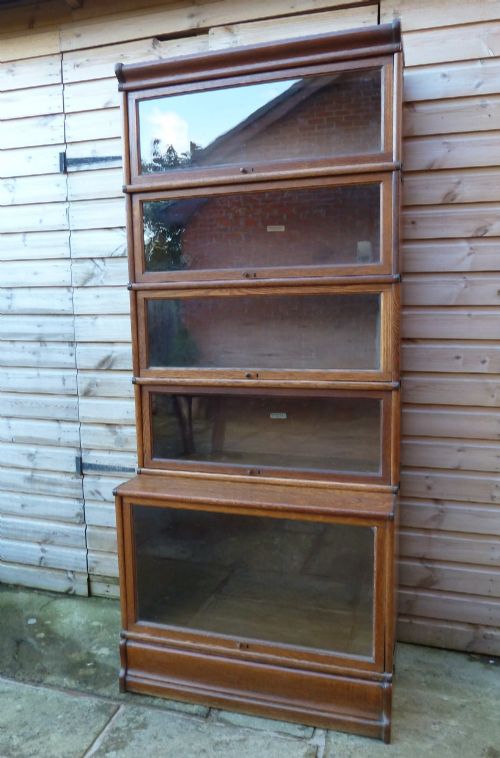
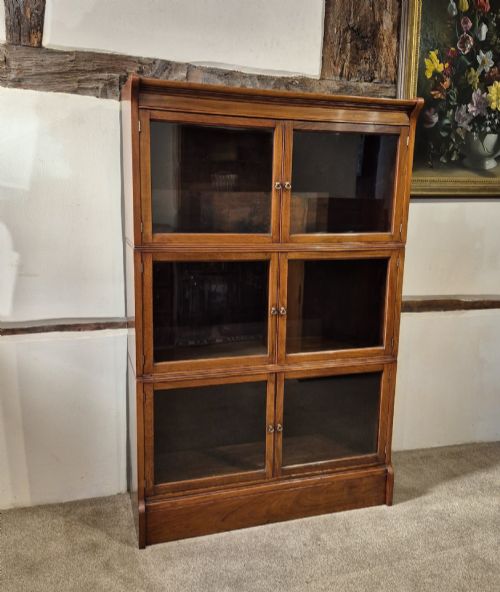
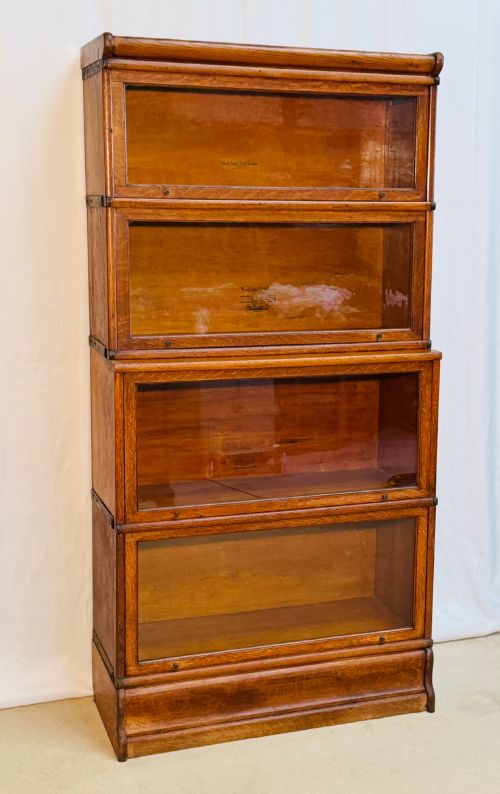
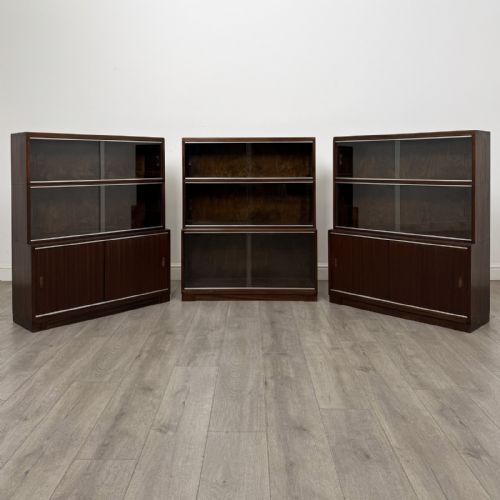
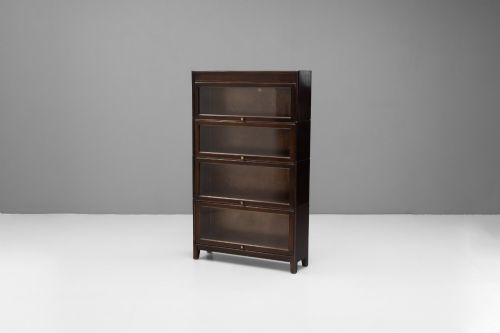
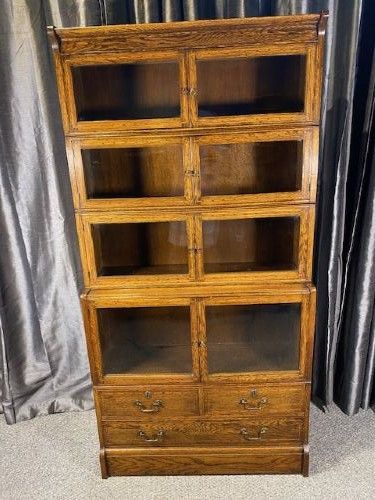
The form relies on individual glazed sections sitting one atop another, often topped with a cornice and finished with a base drawer. Makers such as Globe Wernicke, Gunn, Minty of Oxford, and Lebus produced these utilitarian office and domestic pieces in oak, mahogany, and walnut.
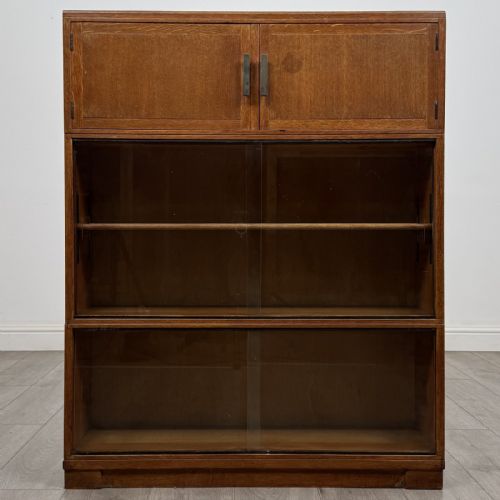
Buyers encounter stacking bookcase cabinets in configurations ranging from two tiers up to six or seven tiers. Styles cover Edwardian Arts and Crafts, Art Deco, and Mid-Century Modern interpretations of the original elastic bookcase system.
What varies in quality
The standard of timber selection and original finish sets examples apart, with solid mahogany and figured golden oak sitting above plain utility pieces. Maker attribution also influences standing, as stamped pieces from established firms command greater interest.
Integrity of the mechanical lifting hardware and the clarity of the original leaded or plain glass panels affect the overall execution. Completeness of matching cornices and drawer bases determines the visual harmony of a multi-tier stack.
Stacking Bookcase Cabinet Retail Price Guide 2026
Typical asking prices for stacking bookcase cabinet among the pieces listed under this phrase on Sellingantiques today, from the lower quarter to the upper quarter. They describe what is for sale here now, not the wider market.
Modular heights span from compact two-tier units up to expansive six-section configurations equipped with base drawers.
Gunn·Minty of Oxford·Globe Wernicke·Lebus·Heal's·AMYL
The Stacking Bookcase Cabinet Glossary
- Barrister bookcase
- A sectional cabinet with glass doors that lift and slide back into the tier above. This design kept legal volumes dust-free in chambers.
- Elastic bookcase
- A proprietary term used by manufacturers for modular shelving units that expand by adding tiers. It represents the interchangeable nature of stacking sections.
- Leaded glass
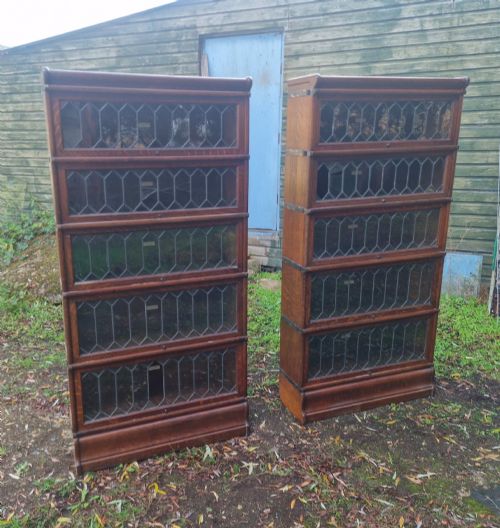
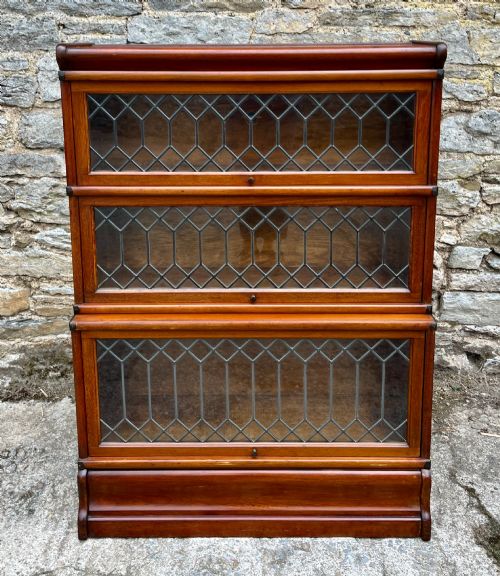
- Small panes of glass held together by strips of lead, often seen in geometric patterns on Edwardian cabinet doors. This technique adds decorative weight to the front elevation.
- Cornice
- The moulded architectural projection sitting at the very top of the bookcase stack. It caps the uppermost tier to provide a finished look.
- Sectional cabinet
- Furniture built in discrete horizontal modules that stack independently without permanent fixings. This allowed offices to transport and expand their shelving easily.
Stacking Bookcase Cabinet: Frequently Asked Questions
How do stacking bookcase cabinets work?
Each tier operates as an independent wooden box with its own glass door that lifts on a metal scissor mechanism and slides into the shelf space above the books. The modular sections simply rest on top of one another between a moulded base and a top cornice.
This interlocking design allows the entire assembly to be pulled apart for moving or built taller by purchasing additional matching sections as a library expands.
What periods do these bookcases come from?
The majority of stacking bookcase cabinets date from the Edwardian era through the nineteen twenties and nineteen thirties. Production spans from nineteen hundred up to mid-century modern examples from nineteen fifty.
Early twentieth-century pieces predominantly reflect Arts and Crafts or utilitarian office aesthetics, while later decades introduce Art Deco influences from makers like Heal's.
Are all sections removable?
Yes, every tier lifts off the section beneath it once the books are cleared and any internal locking pins or side clips are disengaged. The top cornice and bottom drawer base are also separate components in standard Globe Wernicke and Minty systems.
This modular construction means you can reconfigure a tall six-tier cabinet into two smaller units if ceiling height requires it.
What woods were used in these cabinets?
Oak is the most common timber found on these cabinets, appearing in golden oak finishes, quarter-sawn figure, and occasional inlaid variations. Mahogany is also prevalent, alongside occasional examples rendered in walnut.
Hardware components incorporate brass for pulls and fittings, while doors feature plain glass, sliding glass panels, or leaded glass panes.