




Stackable Wood End Tables
Stackable wood end tables are nests of tables offering tiered surfaces for compact rooms, combining utility with distinct period craftsmanship.
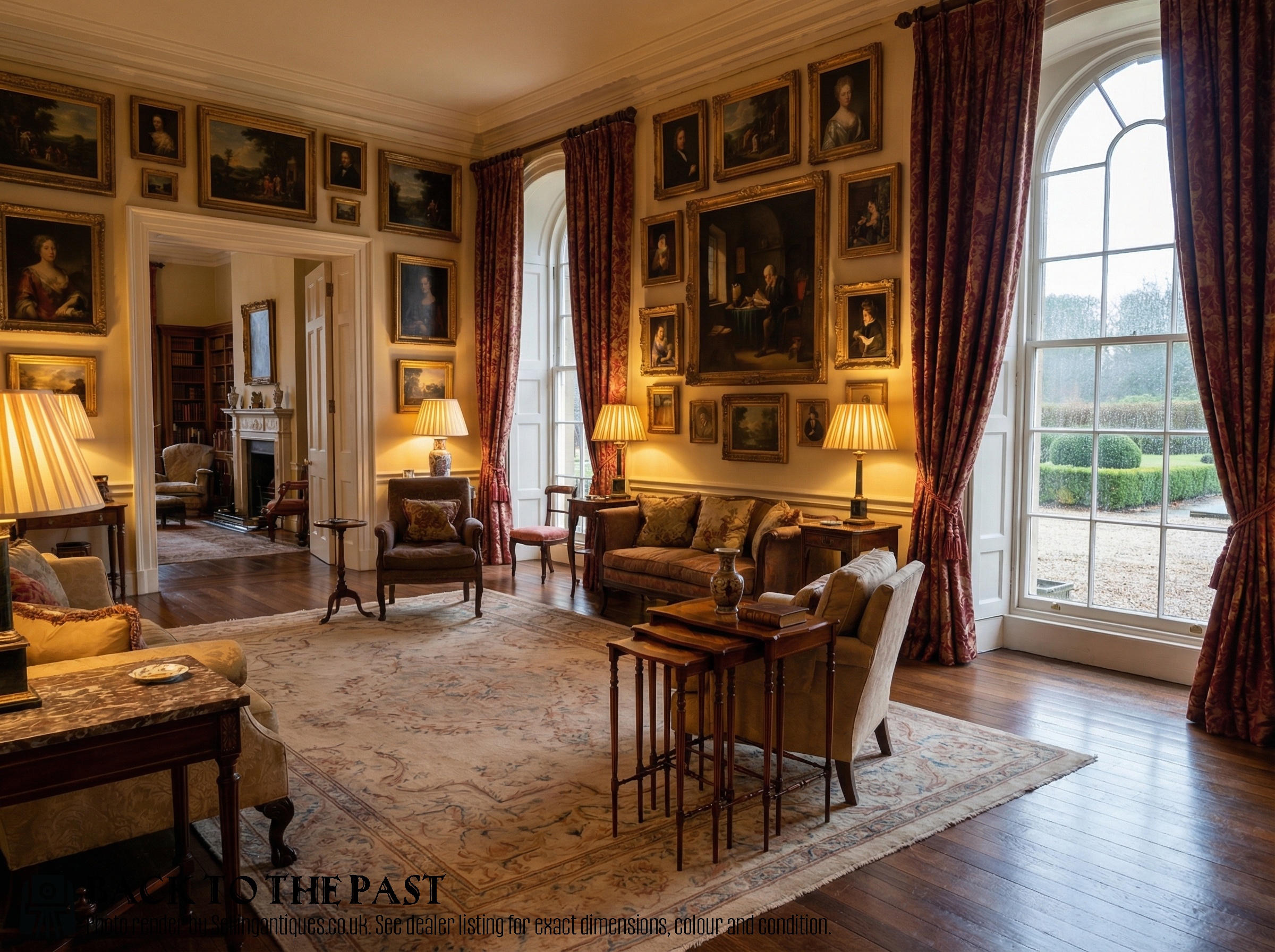
Stackable Wood End Tables
When buyers search for stackable wood end tables, they encounter nests of tables designed to slide neatly beneath one another to save floor space. These pieces range from British Edwardian and 1920s iterations to Chinese export examples from the nineteenth century.
The most common formats on this page are sets of three or four tables. They appear in styles running from Queen Anne and Art Deco to Qing Dynasty Chinoiserie.
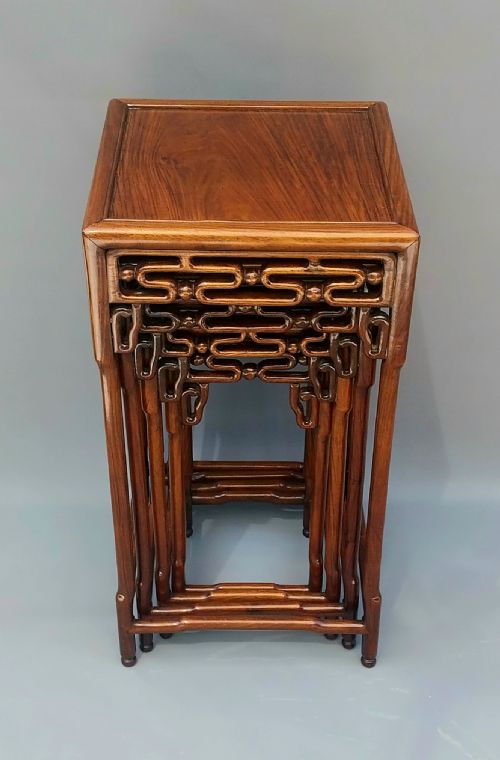
Origins span British workshops utilising mahogany and satinwood alongside Chinese craftsmen working in hongmu, rosewood, and lacquered hardwoods. The form adapts readily to both formal drawing rooms and casual reception spaces.
How they were made
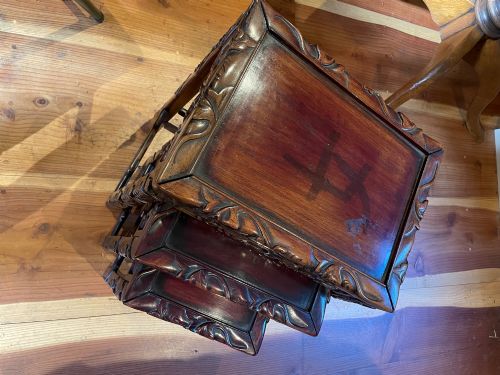
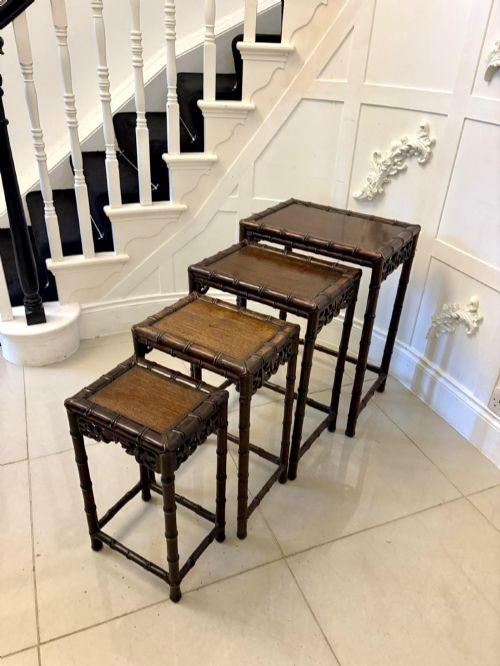
Cabinetmakers constructed these frames from dense timbers such as mahogany, Indian rosewood, and Chinese hongmu, often enhancing surfaces with delicate boxwood stringing or intricate hand-carved motifs. Faux bamboo turning appears on nineteenth-century bamboo-imitation pieces, showing careful woodworking skill.
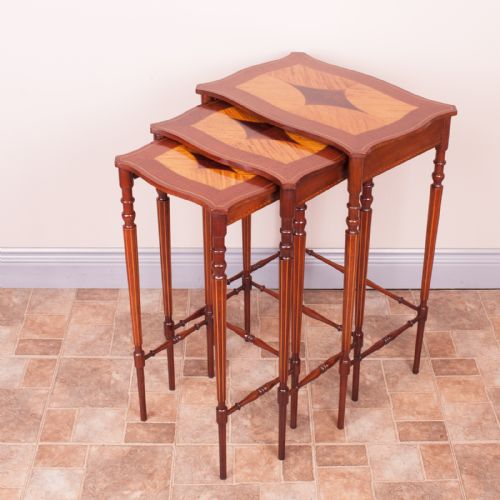
Export pieces from the late Qing period incorporate lacquer and gold leaf finishes applied over hardwood bases. Edwardian and Art Deco examples rely on clean geometric lines, polished veneers, and precise inlay work to define the table tops.
Stackable Wood End Tables Retail Price Guide 2026
Typical asking prices for stackable wood end tables among the pieces listed under this phrase on Sellingantiques today, from the lower quarter to the upper quarter. They describe what is for sale here now, not the wider market.
The furniture styles range from Queen Anne and Art Deco to Qing Dynasty and Chinoiserie designs.
What varies in quality
Quality rests upon the selection of timber and the precision of the joints that allow the smaller tables to nest flush within the larger frame. Finer examples display continuous grain patterns across matching sets and crisp, deep carving rather than shallow moulding.
The sophistication of decorative techniques distinguishes standard production from exceptional work. Hand-applied Chinoiserie lacquer and subtle satinwood inlay demand greater artisan effort than plain mahogany surfaces.
The Stackable Wood End Tables Glossary
- Nest of tables
- A set of graduated tables designed to stack sequentially underneath the largest one. This arrangement provides multiple surfaces while occupying the floor space of a single small table.
- Hongmu
- A traditional Chinese term designating dense, durable hardwoods used in fine furniture. These reddish-brown timbers take a high natural polish and resist warping.
- Chinoiserie
- European decorative style reflecting Chinese artistic motifs and techniques. Artisans applied these designs to furniture using lacquer, gilding, and painted scenes.
- Satinwood
- A luminous, yellowish timber prized for its smooth grain and reflective quality. Cabinetmakers used it primarily for stringing and decorative inlay work.
- Faux bamboo
- Wood turned and carved to imitate real bamboo stalks. This technique was popular in nineteenth-century European furniture inspired by Asian imports.
Stackable Wood End Tables: Frequently Asked Questions
What is a nest of tables?
A nest of tables is a set of graduating surfaces designed to slide underneath the largest table when not in use. They provide flexible surface space without cluttering a room.
Historically used for serving tea or holding small decorative items, they remain practical for modern living spaces.
How do I identify the period?
Period identification relies on matching wood types, construction methods, and decorative styles like Art Deco or Edwardian inlay. Nineteenth-century Chinese export pieces often feature carved hardwood or lacquer work.
Examining the underside and joints provides further clues regarding age and workshop origin.
Where should I place them?
These tables fit easily beside armchairs, sofas, or in corners where surface space is needed intermittently. Because they stack together, you can deploy individual tables across a room when guests arrive.
They work well in both traditional period rooms and contemporary interiors.
What woods were commonly used?
Cabinetmakers utilised a variety of timbers depending on the region and style. British makers favoured mahogany and satinwood, occasionally adding boxwood inlay.
Chinese workshops employed denser Asian hardwoods such as hongmu and rosewood, sometimes finishing surfaces with lacquer and gold leaf.