

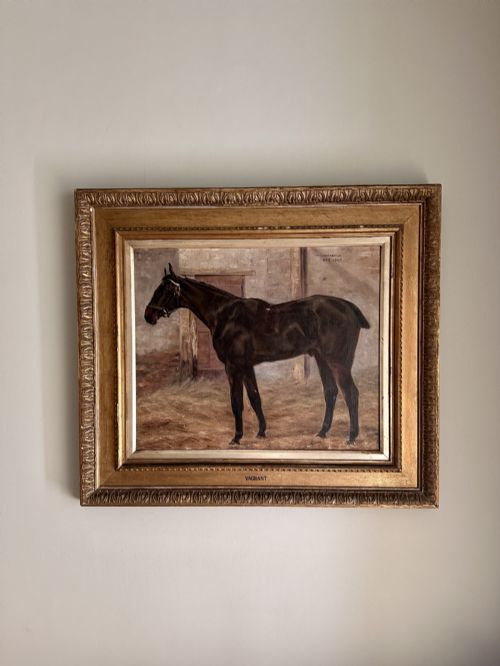
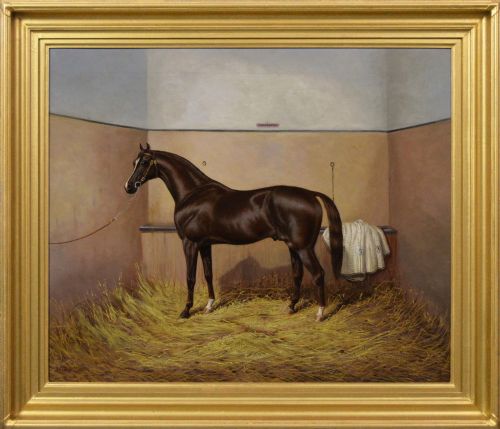
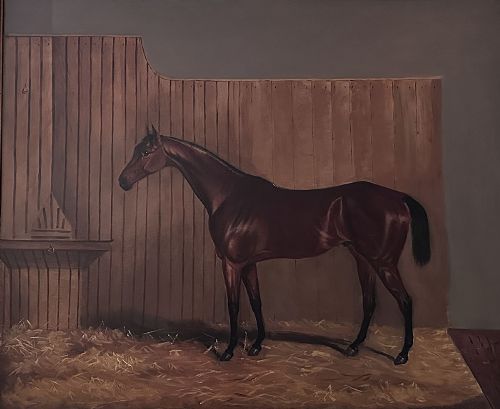
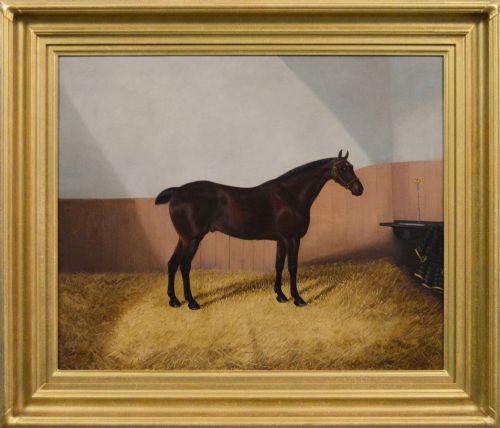
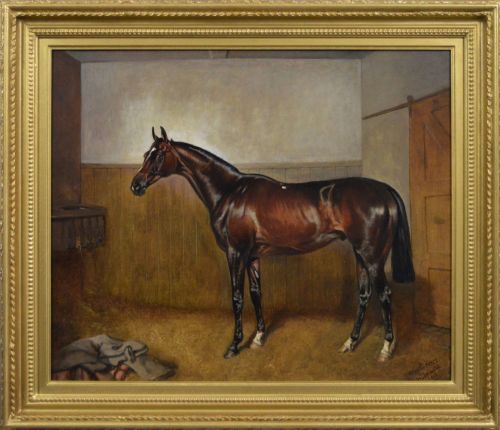
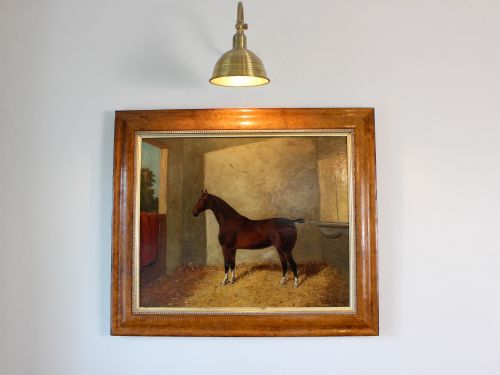
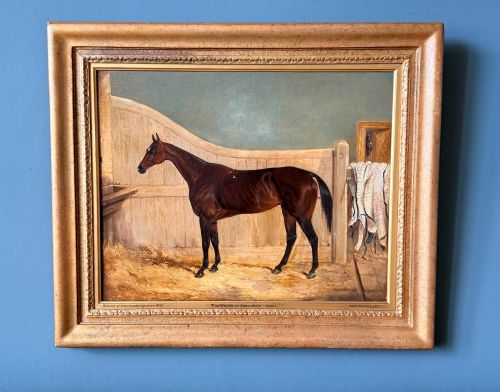
Stable Portrait Oil Painting
These stable portrait oil painting examples capture prized equine subjects and rural settings across the nineteenth and early twentieth centuries.
Stable Portrait Oil Painting
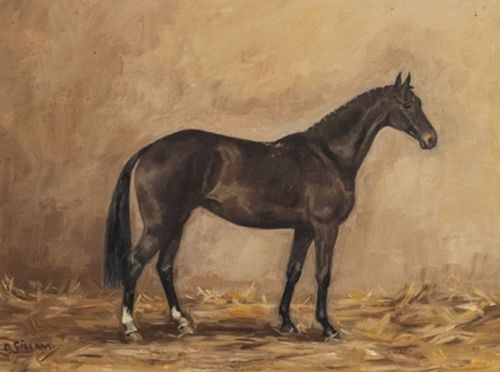
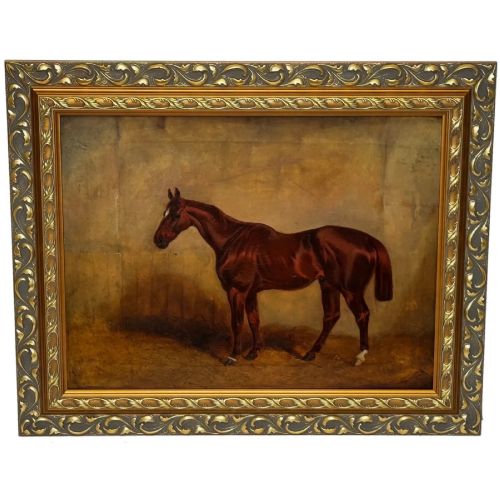
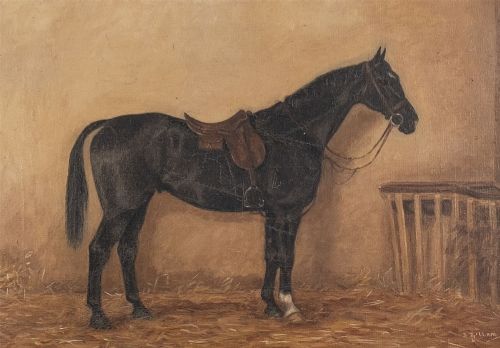
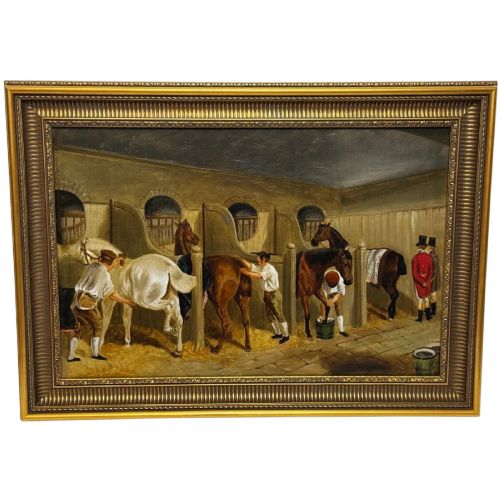
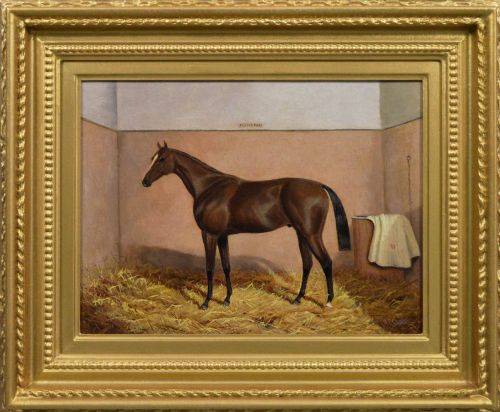
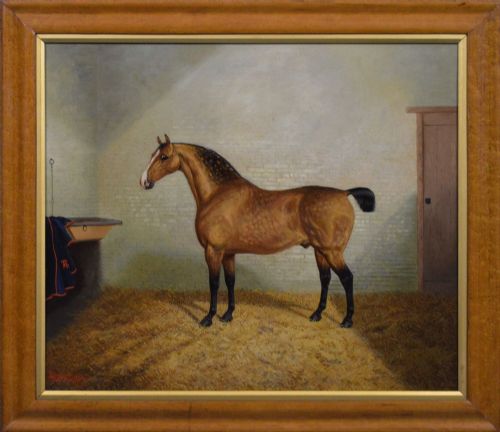
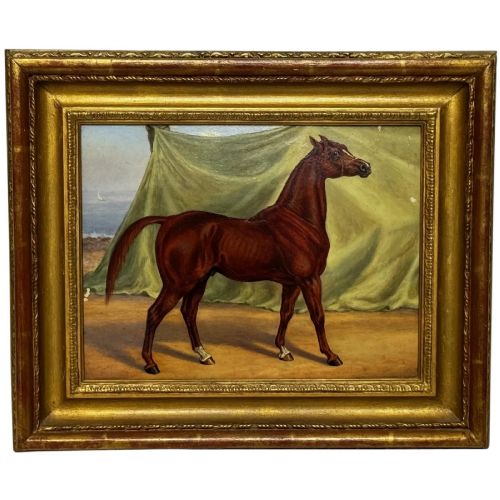
A stable portrait oil painting centres on horses, hunters, and racehorses depicted within rural or stable environments. Buyers encounter Victorian sporting art and nineteenth-century equestrian works featuring named animals alongside regional hunters.
Most pieces date from the nineteenth century into the early twentieth century, spanning Victorian and Edwardian periods. Subjects range from solitary bay horses and racehorse winners to detailed compositions involving grooms and stable interiors.
What varies in quality
Quality rests on the anatomical accuracy of the horse and the handling of light within the stable interior. Masterful works convey distinct musculature, expressive eyes, and convincing spatial depth behind the animal.
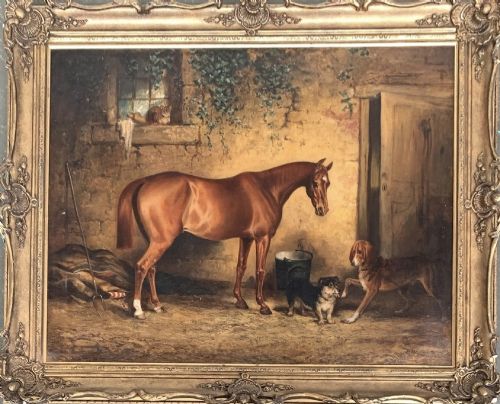
Provenance and attribution to recorded equine painters elevate individual pieces. Compositional complexity, such as the inclusion of grooms, stable accessories, or detailed architectural backgrounds, distinguishes higher tier examples.
Stable Portrait Oil Painting Retail Price Guide 2026
Typical asking prices for stable portrait oil painting among the pieces listed under this phrase on Sellingantiques today, from the lower quarter to the upper quarter. They describe what is for sale here now, not the wider market.
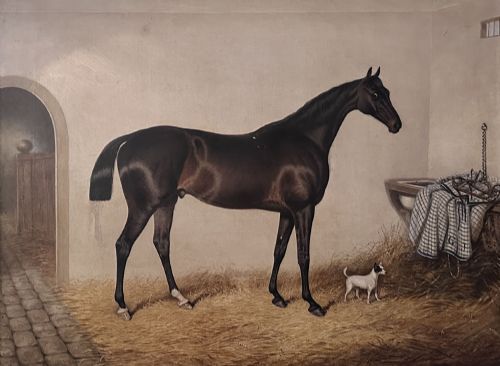
Several canvases squeeze an observant terrier into the stable straw alongside the heavily muscled hunter.
Henry Barraud·Albert Clark·Fred Fitzpatrick·John Alfred Wheeler·Thomas Walker Bretland·George E Sharpe·Samuel Spode·Benjamin Cam Norton·Edwin Frederic Holt·Alfred Moginie Bryant·Alfred Grenfell Haigh·Charles Bilger Spalding RA·John Nost Sartorius·John Ferneley Jnr·William Shayer Snr
The Stable Portrait Oil Painting Glossary
- Oil on Canvas
- Pigment mixed with drying oil applied to a woven fabric support. This traditional medium forms the primary surface for nineteenth-century animal portraits.
- Giltwood
- Wood carved and covered with a thin layer of gold leaf or metallic gold powder. Many period frames utilise this finish to complement the warm tones of the oil painting.
- Victorian Sporting Art
- A genre of painting depicting horses, hounds, and rural field sports popular during the reign of Queen Victoria. These works record prized livestock and famous racehorses of the era.
- Equine Portrait
- A specialised painting focused on the likeness and conformation of an individual horse. Owners commissioned these likenesses to document celebrated hunters, studs, and race winners.
Stable Portrait Oil Painting: Frequently Asked Questions
What is a stable portrait oil painting?
A stable portrait oil painting is an equestrian artwork depicting a horse inside a stable or rural enclosure. These works frequently celebrate specific hunters, racehorse winners, and prized studs.
Created primarily during the nineteenth and early twentieth centuries, they serve as historical records of notable animals, estates, and sporting traditions.
Where were these paintings displayed?
Original owners hung these canvases in country houses, estate offices, and stable block tack rooms. They reflected the owner's status as a breeder, hunter, or patron of the turf.
Today, collectors place them in studies, libraries, and living spaces where traditional equestrian art complements period interiors.
Who painted these works?
Specialised animal painters and Victorian artists produced these portraits, often working on commission for estate owners and racing stables. Many painters concentrated exclusively on horses and rural sporting subjects.
Signatures or inscriptions on the canvas reverse frequently record the artist's name and the identity of the horse portrayed.