
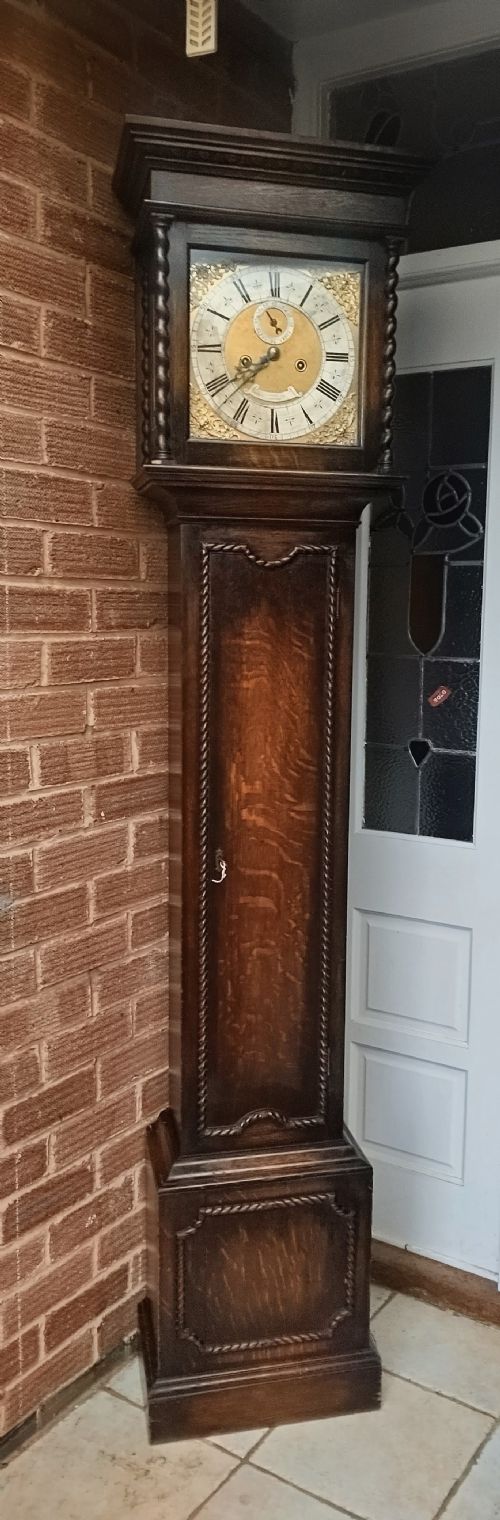


Square Dial Longcase Clock
A square dial longcase clock brings the steady rhythm of past centuries into a room, combining brass and timber with precision movement.
Square Dial Longcase Clock
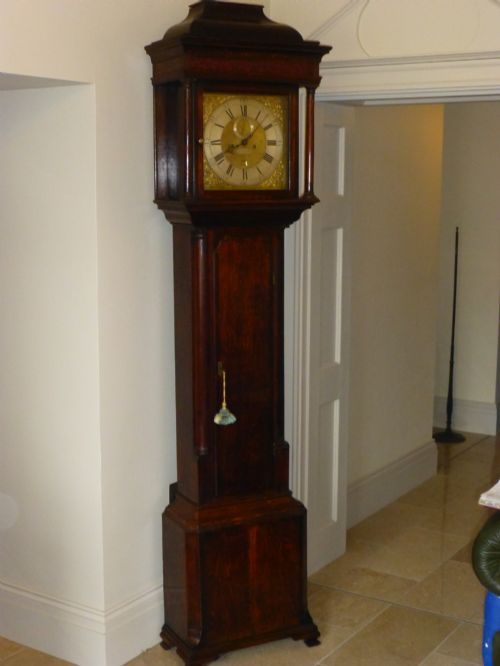
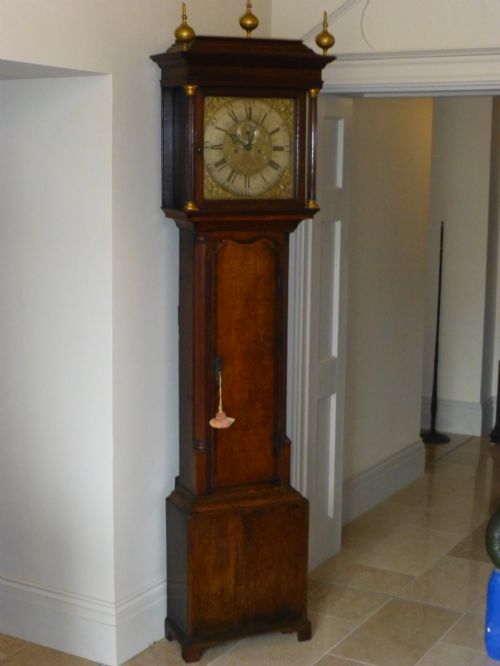
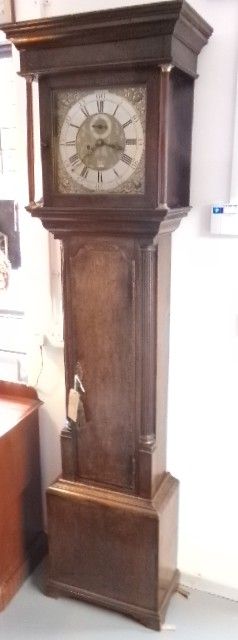
A square dial longcase clock stands as a traditional timepiece, uniting a brass or painted face with a tall timber case made to house the falling weights and swinging pendulum. These clocks appear most frequently in 18th century oak and walnut, though examples stretch from the 17th century through the Georgian period and into the 19th century in pine, mahogany, and maple.
The objects listed range from complete 30-hour and 8-day floor-standing clocks down to individual dial faces and movements. Regional makers from Stockport, Chester, Preston, London, Leicester Square, Haversham, Sherborne, and Bicester stamped their names across these faces, recording centuries of provincial and metropolitan clockmaking.
Materials and construction
Cabinetmakers built these tall enclosures primarily using solid oak, walnut, and mahogany, often pairing denser woods with pine carcases for internal framing. Panels were fitted into heavy frames to accommodate the seasonal movement of timber in houses heated by open fires.
Dial faces combined cast brass plates, engraved chapter rings, and steel hands, driven by brass and iron wheel trains within weight-driven mechanisms. Glass protected the dial face behind the hood door, while painted finishes appeared on later regional variants.
The listings span the 17th, 18th, and 19th centuries, featuring oak, walnut, mahogany, pine, and brass across city and country origins.
Assessing quality and proportion
Quality rests in the harmony of the timber case and the crispness of the engraved or cast brass dial work. Finer examples display well-figured walnut veneers, precise dial engraving by named makers, and substantial movements designed for eight-day operation.
Proportion dictates visual balance, where the height of the waist and the shape of the hood frame the square dial properly. Simpler thirty-hour pine and oak country clocks offer honest utility, while sophisticated London examples show more intricate cabinetwork and advanced movement engineering.
Richard Corless of Stockport·Smith of Chester·Fisher Of Preston·John Rainsford·Herbert of Haversham·John Drew·John Bishop of Sherborne Dorset·Ed Hemmins of Bicester
The Square Dial Longcase Clock Glossary
- Longcase clock
- A tall pendulum clock enclosed in a wooden case standing directly on the floor. These tall floor clocks are frequently referred to as grandfather clocks.
- Thirty-hour movement
- A clock mechanism designed to run for just over a single day before requiring manual winding by pulling the chains or cords. Such movements typically use a simpler gear train than their eight-day counterparts.
- Eight-day movement
- A clock mechanism that requires winding once a week, utilising two weights suspended on lines or chains. This heavier duty setup demands more robust internal gearing.
- Chapter ring
- The circular ring fixed to the dial face that bears the hour numerals. On brass dials, this ring is often a separate engraved plate pinned to the dial background.
- Regulator
- A precision pendulum clock built for extreme timekeeping accuracy. These movements often feature separate dials for hours, minutes, and seconds.
Square Dial Longcase Clock: Frequently Asked Questions
How do I wind a longcase clock?
Winding involves pulling the chain or winding the barrel using a crank key, depending on whether the clock uses weights or springs. Care must be taken not to pull the weights up too high against the seat board.
Most traditional movements require this attention either daily or weekly, maintaining the tension that drives the pendulum and escapement.
Where should I place a longcase clock?
A dry interior wall away from direct sunlight and strong draughts provides the most stable environment for solid wood cases. Consistent room temperatures prevent the timber from warping and protect the delicate internal movement.
The floor beneath must be level to ensure the pendulum swings with an even beat, which keeps the timekeeping accurate.
What is the difference between oak and walnut cases?
Oak was the standard timber used by country cabinetmakers for its strength and availability, resulting in sturdy, honest proportions. Walnut offered a finer grain and richer colour, often utilised for more decorative London commissions.
Both materials require normal household humidity control to preserve their structural integrity over the centuries.
How do I tell an 18th-century dial from a later one?
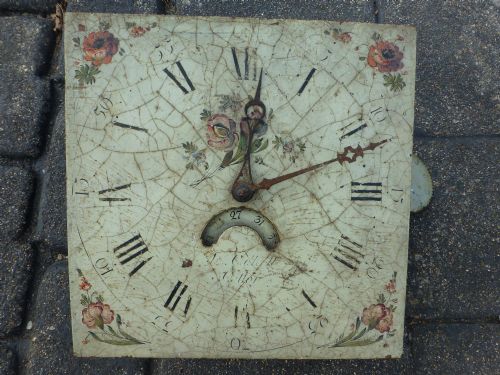
Early brass dials feature hand-engraved numerals and corner spandrels cast in brass, screwed directly onto a heavy movement plate. Later 19th-century variants often introduced painted iron faces with floral motifs or regional scenes.
The weight of the brass plate and the style of the engraving help identify the working period of the maker.