




Square Art Deco Table
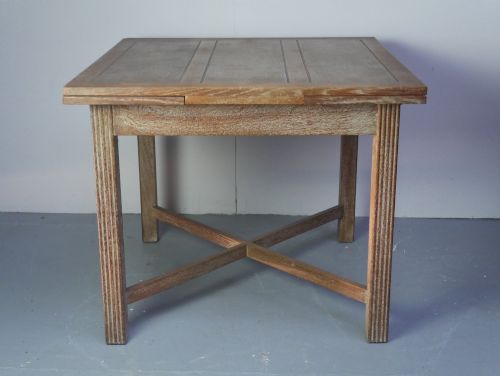
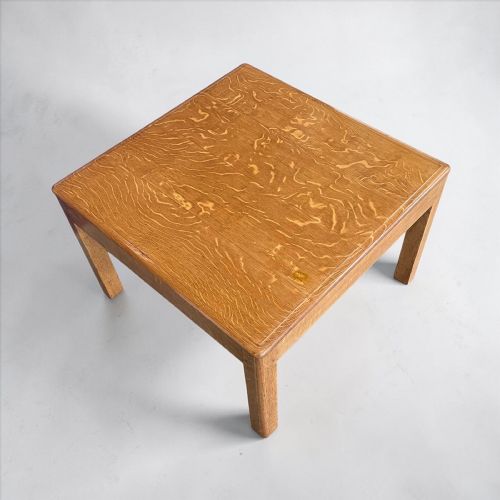
A square art deco table brings geometric clarity and rich walnut veneers into a room, offering both surface utility and period presence.
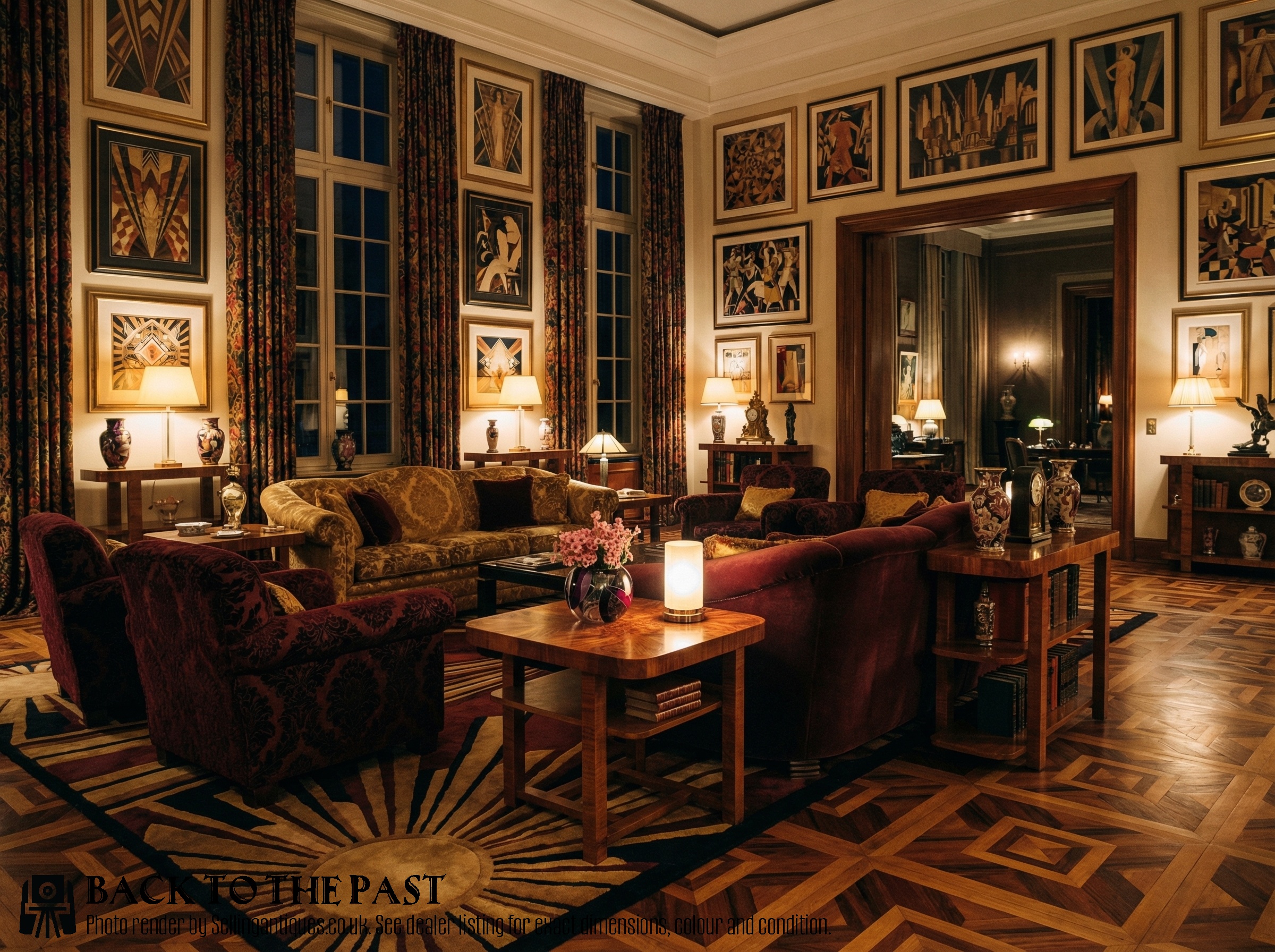
Square Art Deco Table
When buyers search for a square art deco table, they encounter items shaped by the design movements of the 1920s, 1930s, and 1940s. These pieces include coffee tables, occasional tables, and side tables built with straightforward geometric forms.
The most common versions on this page are two-tier occasional or coffee tables made from figured veneers, oak, or walnut. They often feature stepped tiers, pedestal bases, or simple square tops suited to period interiors.
Materials and construction methods
Cabinet makers utilised solid timbers alongside highly figured veneers such as walnut and oak to build these tables. Grain patterns were deliberately matched and arranged to create striking visual movement across the square surface.
Metals like chrome and brass appear alongside glass and bakelite, reflecting the industrial influences of the period. Joinery combined traditional woodworking techniques with modern metal framing to achieve sturdy, clean-lined structures.
Materials documented across the inventory include oak, walnut, chrome, brass, glass, metal, and bakelite.
Judging quality in construction and finish
Quality rests upon the selection and application of the timber veneers, where superior examples exhibit symmetrical grain patterns and meticulous surface preparation. The depth of the polish and the integrity of the underlying wood determine the longevity of the finish.
Construction standards show in the stability of the lower tiers, the precision of the joints, and the integration of any metal or glass elements. Stronger pieces maintain rigid alignment across multiple tiers without relying on excessive structural bulk.
Heals·Betty Joel·Smiths Clockmakers·Elliott of London
The Square Art Deco Table Glossary
- Veneer
- A thin layer of figured wood applied to a stable core timber to create decorative surfaces. This technique allowed makers to utilise expensive woods economically.
- Occasional table
- A small, movable table designed for specific, intermittent use within a room. These formats include side, coffee, and pedestal tables.
- Pedestal table
- A table supported by a single central column rather than traditional corner legs. This construction maximises legroom and focuses attention on the central pillar.
- Bakelite
- An early synthetic plastic utilised for dials, trim, and decorative accents during the period. It provides a durable, smooth finish with distinctive tactile qualities.
Square Art Deco Table: Frequently Asked Questions
What defines a square art deco table?
These tables are characterised by their square tops, geometric silhouettes, and the use of materials popular during the interwar decades.
They frequently incorporate layered tiers, contrasting veneers, or metallic accents that reflect the design language of the era.
How do I care for walnut veneer surfaces?
Protect the timber from direct sunlight and excessive moisture by using coasters and placing the item away from heat sources.
Regular dusting with a soft cloth preserves the polish, while occasional application of appropriate furniture wax maintains the sheen.
Are these tables suitable for daily use?
Their sturdy construction and practical surface areas make them well-suited for holding drinks, books, or lamps in contemporary living spaces.
Care should be taken to avoid dragging heavy objects across the veneered surfaces to prevent scratching.
How can I tell the period of a table?
Dating relies on examining the combination of materials, such as the presence of chrome or specific timber veneers characteristic of the 1920s and 1930s.
Construction methods and any remaining maker marks or stamps also offer clear indicators of manufacture date.