




Geometric Veneer Table
A geometric veneer table brings striking patterns and period character to a room.
Geometric Veneer Table
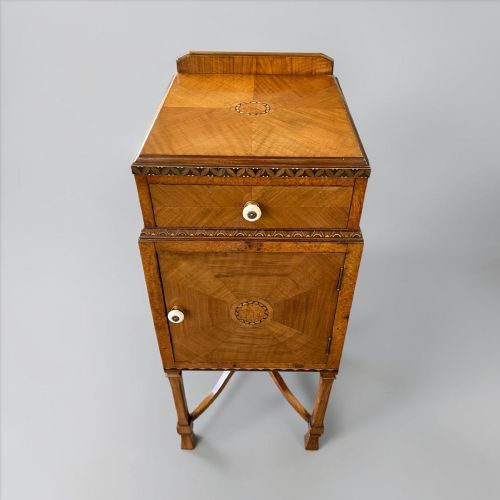
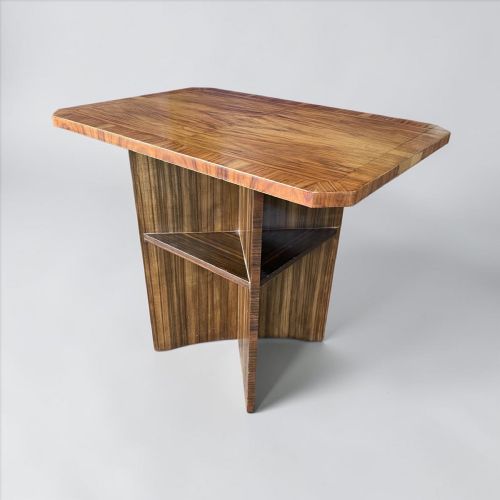
A geometric veneer table represents the distinctive aesthetic of nineteen-thirty design, showcasing patterned wood surfaces across various small furniture forms. Buyers searching for a geometric veneer table typically encounter occasional tables, side tables, coffee tables, and bedside tables dating from nineteen-thirty.
The selection includes pieces constructed as two-tier occasional tables, octagonal occasional tables, and centre tables. These items display the characteristic styling of the Art Deco period, often executed in walnut veneers.
How they were made
Craftsmen applied thin slices of wood, principally walnut and highly figured veneers, to solid wood carcases to create striking surface patterns. This technique allowed makers to arrange the grain in geometric compositions across tabletops.
Makers occasionally combined these wood elements with glass and chrome, integrating modern industrial materials alongside traditional timber construction during the nineteen-thirty period.
Materials documented across these tables include walnut, oak, bone, glass, and chrome, demonstrating the varied palette of nineteen-thirty makers.
What varies in quality
The complexity and execution of the veneer work largely determine the distinction between standard examples and finer pieces. Highly figured veneers arranged in deliberate geometric patterns demand greater skill in selection and placement than plain surfaces.
The choice of secondary timbers and the overall structural integrity of the frame also separate ordinary production from superior workshop output of the nineteen-thirty era.
Hille·Pfeilkreuz Junghans
The Geometric Veneer Table Glossary
- Veneer
- A thin layer of wood applied to a base material to provide a decorative surface. In nineteen-thirty furniture, contrasting grains were often arranged in geometric patterns.
- Art Deco
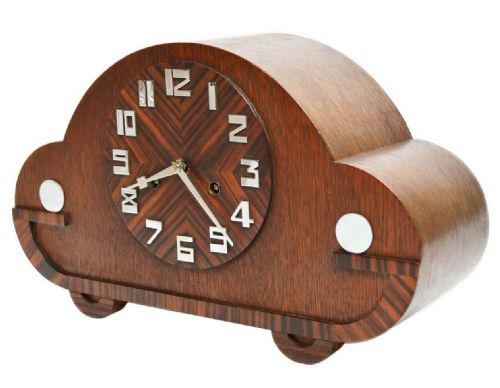
- A design style spanning the nineteen-twenties and nineteen-thirties characterised by sleek lines, geometric shapes, and modern materials. It heavily influenced furniture and clock design of the period.
- Two-tier table
- A small table featuring an additional lower shelf supported by legs or uprights. This form maximised surface area for display in domestic interiors.
- Occasional table
- A small, movable table designed for specific, intermittent use in a room. These pieces served as lamp tables, side tables, or coffee tables.
Geometric Veneer Table: Frequently Asked Questions
What is a geometric veneer table?
A geometric veneer table is a piece of furniture from the nineteen-thirty period featuring patterned wood surfaces arranged in deliberate shapes. These tables typically include occasional, coffee, and side tables.
The use of walnut and highly figured veneers creates distinct visual patterns across the tabletop, defining the Art Deco style of the era.
How do I date a geometric veneer table?
Dating these tables relies on construction methods, materials, and stylistic markers characteristic of the nineteen-thirty period. The presence of walnut veneer, chrome, and specific Art Deco forms helps establish the timeline.
Comparing the specific wood grain arrangements and hardware to documented examples from the same decade provides further confirmation.
Where should I place a geometric veneer table?
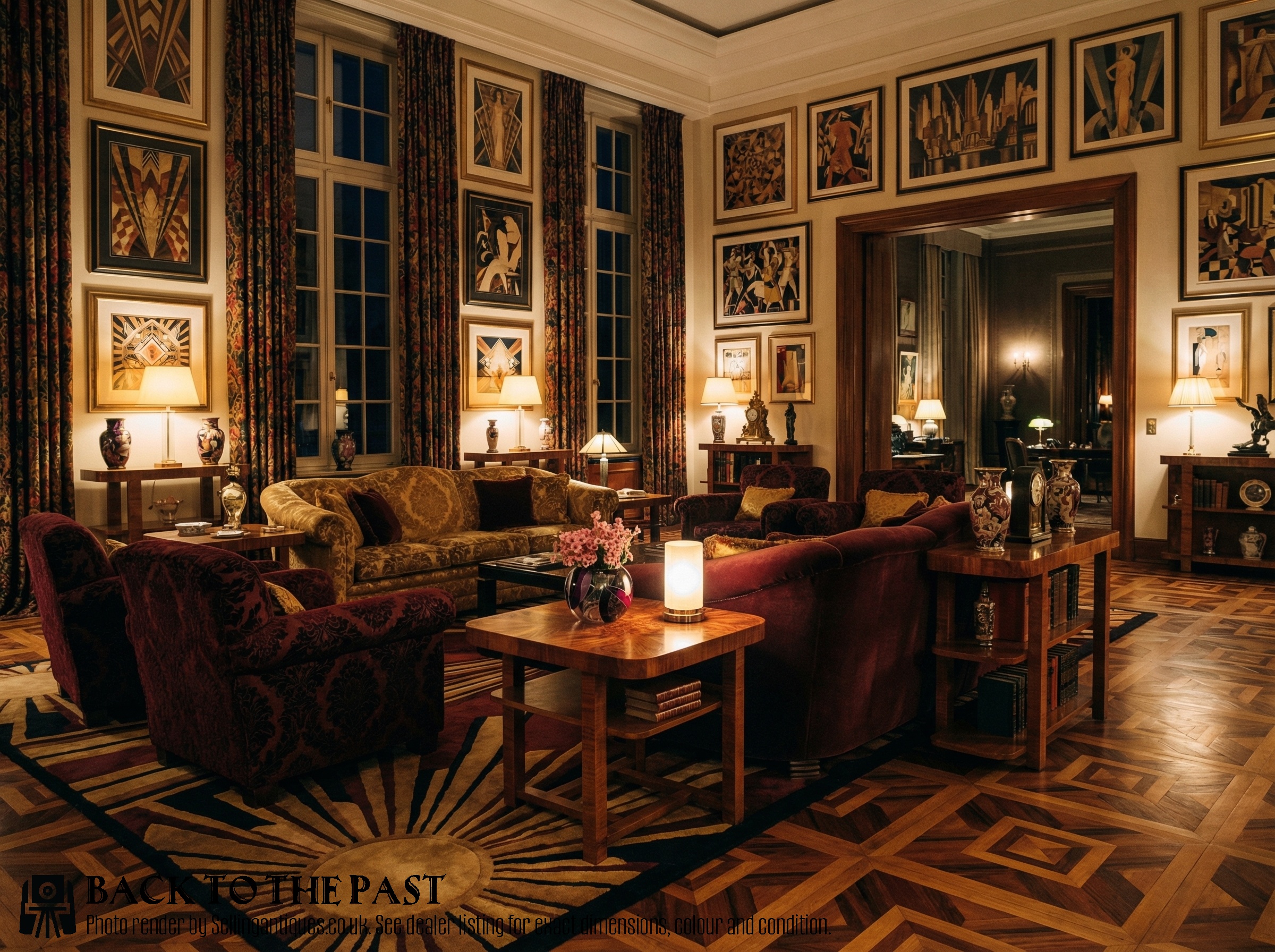
These small tables suit living rooms, bedrooms, and hallways as occasional, bedside, or lamp tables. Their compact forms allow them to function effectively alongside seating or against walls.
Placing them away from direct heat sources helps protect the delicate veneer surfaces from drying out or splitting.
How do I care for walnut veneer?
Maintaining walnut veneer involves dusting regularly with a soft, dry cloth and avoiding excessive moisture. Direct sunlight can fade the figured grain over time, so positioning the table thoughtfully matters.
Applying appropriate wood waxes occasionally helps preserve the sheen of the polished surface without building up residue.