
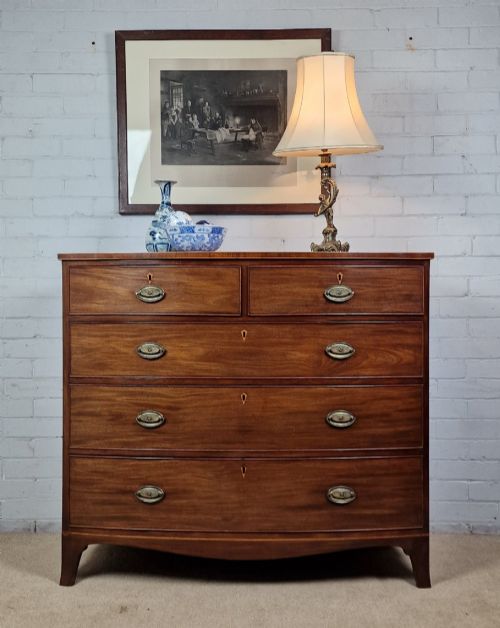
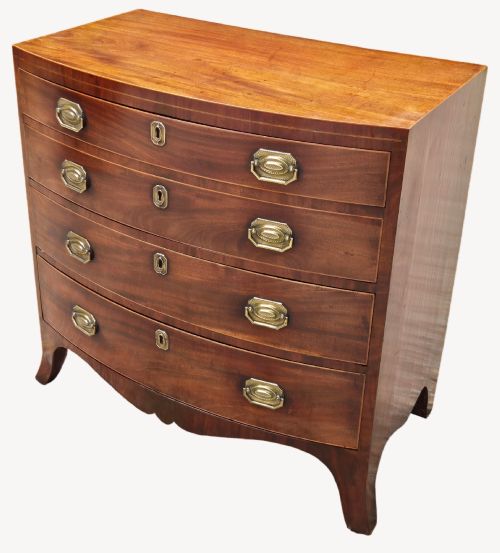
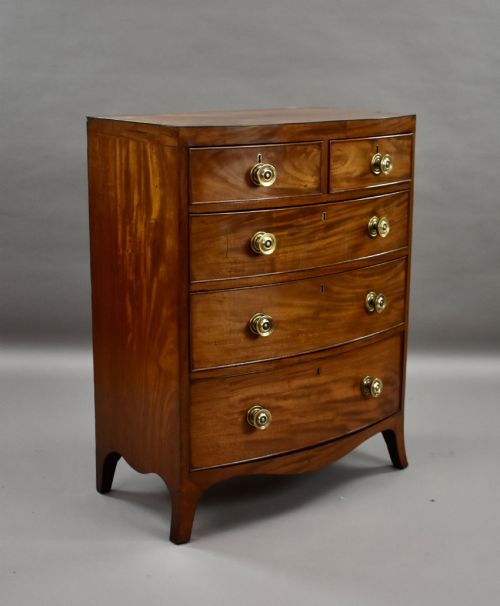

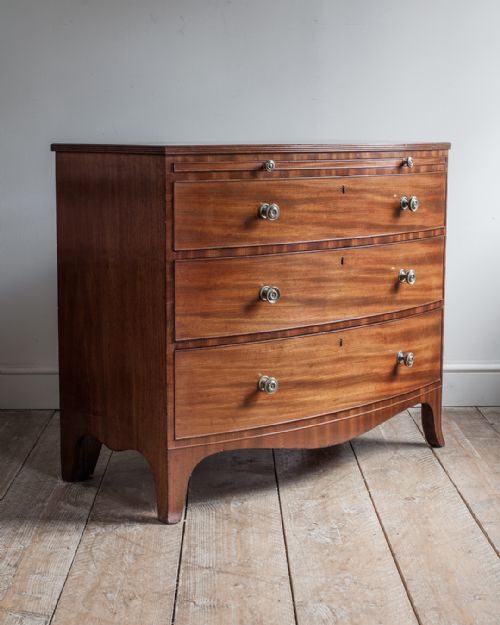
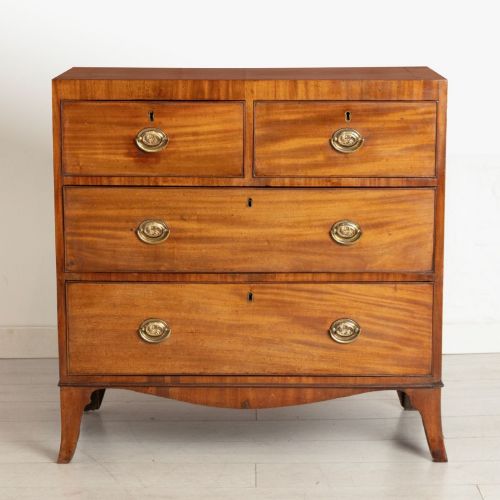
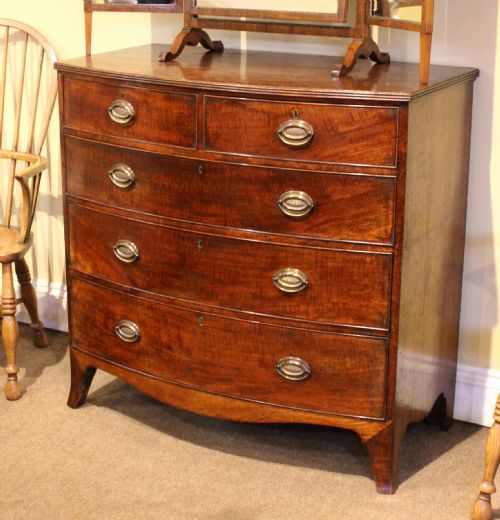

Splayed Foot Chest Drawers
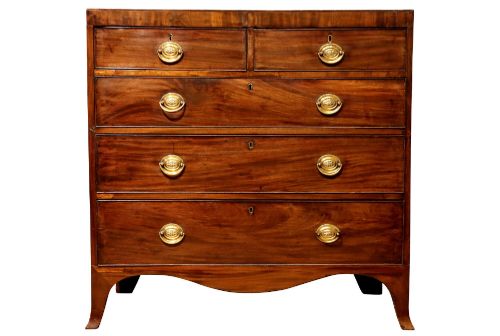
A splayed foot chest drawers offers practical storage with distinct architectural lines that ground a period interior.

Splayed Foot Chest Drawers
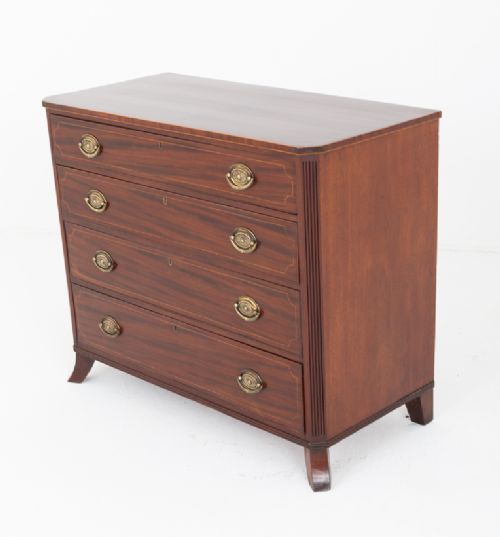
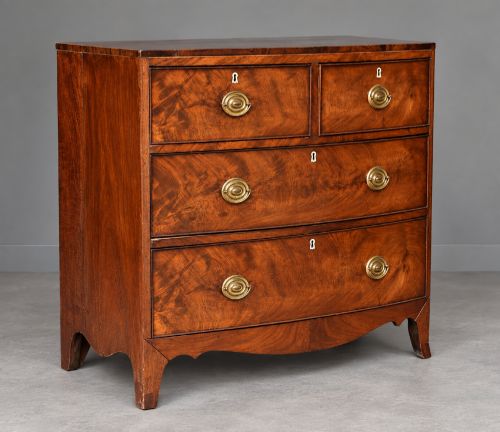
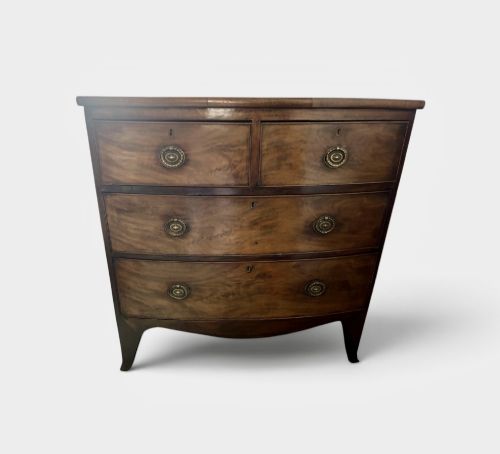
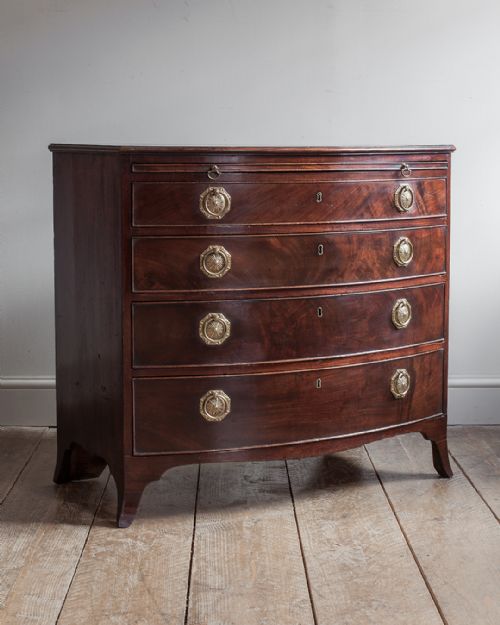
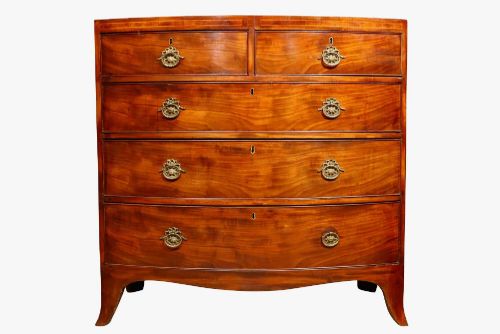
A splayed foot chest drawers is a storage piece defined by legs that angle outward, providing a stable base and a lighter visual profile than standard bracket feet. These pieces primarily date from the Georgian and Regency eras, spanning the eighteenth and nineteenth centuries.
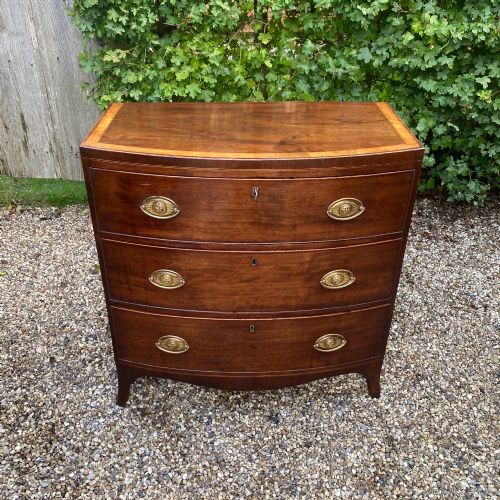
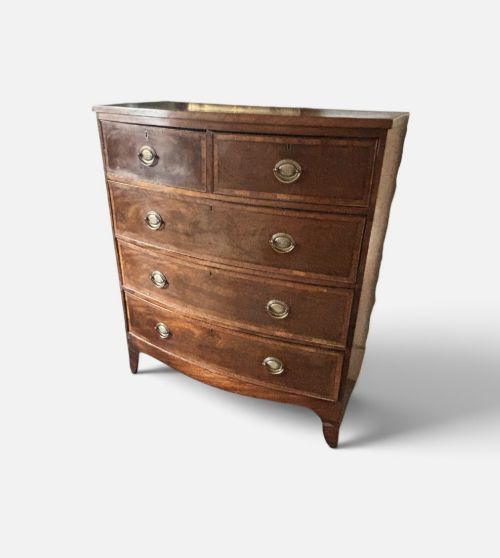
The most common form encountered on this page is the bow front chest of drawers, often constructed in mahogany with multiple graduating drawers. Variations include tallboys, narrow proportions, and serpentine commodes featuring satinwood or boxwood inlay.
Factors of quality
Quality rests upon the crispness of the cabinetwork and the selection of timber veneers. Pieces utilising dense, highly figured mahogany with precise crossbanding and harmonious proportions sit at the upper end of the range.
The integrity of the splayed feet and the precision of the drawer dovetails determine the overall structural success of the piece. Subtle details like fine stringing and original brass handles distinguish superior examples from simpler utilitarian versions.
Makers occasionally tucked tiny bone escutcheons into keyholes to save ivory for grander commissions.
The Splayed Foot Chest Drawers Glossary
- Splayed foot
- A foot that spreads outward from the vertical axis of the furniture. This form lightened the appearance of heavy case pieces during the Georgian and Regency periods.
- Bow front
- A convex curved front to a chest of drawers. This styling became popular in the late eighteenth century to soften room angles.
- Crossbanding
- A strip of veneer applied perpendicularly to the grain of the main surface. It creates a framed border effect around drawer fronts and top surfaces.
- Tallboy
- A tall chest of drawers consisting of one chest stacked upon another. These pieces maximise vertical storage capacity while maintaining a compact footprint.
Splayed Foot Chest Drawers: Frequently Asked Questions
How do I place this in a room?
These chests work well in bedrooms or hallways where floor space is measured. Their curved fronts and angled feet prevent them from appearing overly massive against flat walls.
Pair them with neutral backgrounds to let the timber grain and inlay details stand out without visual competition.
Are these pieces suitable for daily use?
Solid construction and deep drawer capacities make them practical for storing clothing and household linens. The internal timber runners ensure drawers glide smoothly when maintained properly.
Routine dusting and occasional wax application keep the polished surfaces protected against everyday wear.
How do I identify the period?
Period attribution relies on timber selection, foot style, and decorative stringing. Georgian and Regency examples often feature mahogany solids and veneers paired with bracket or splayed feet.
Later Victorian and Edwardian interpretations tend to show different internal construction methods and standardised hardware.