



Spindle Turned Cabinet
A spindle turned cabinet offers distinct character, bringing tangible history and practical storage into a room through decorative wooden framing.
Spindle Turned Cabinet
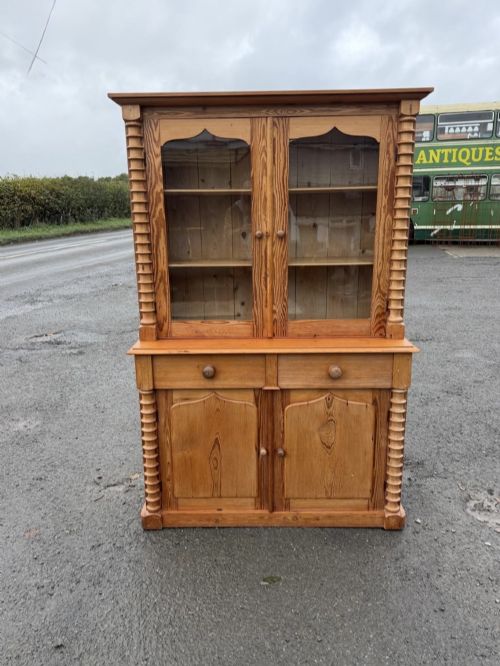
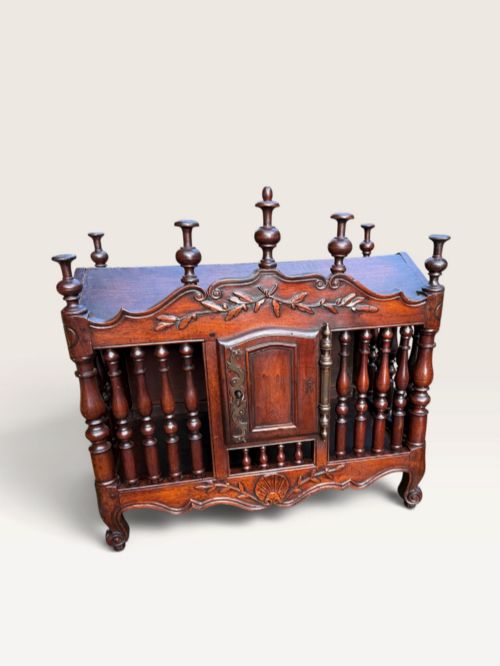
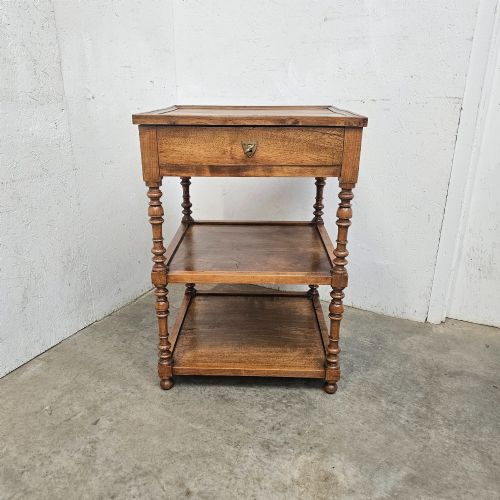
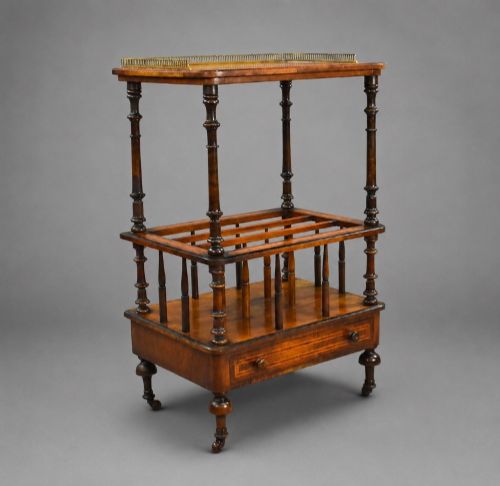
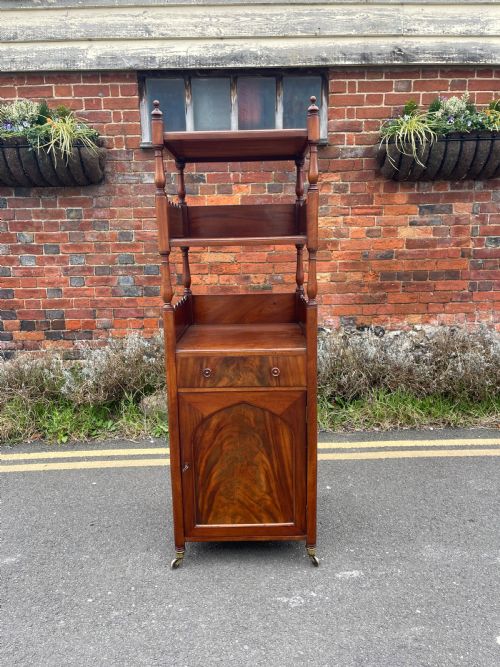
A spindle turned cabinet draws attention through its characteristic turned wooden members, which impart a lighter architectural rhythm than flat-sided furniture. When exploring the category of spindle turned cabinet designs, collectors encounter forms ranging from glazed dressers and wall cupboards to lower storage bases and multi-tiered shelving units.
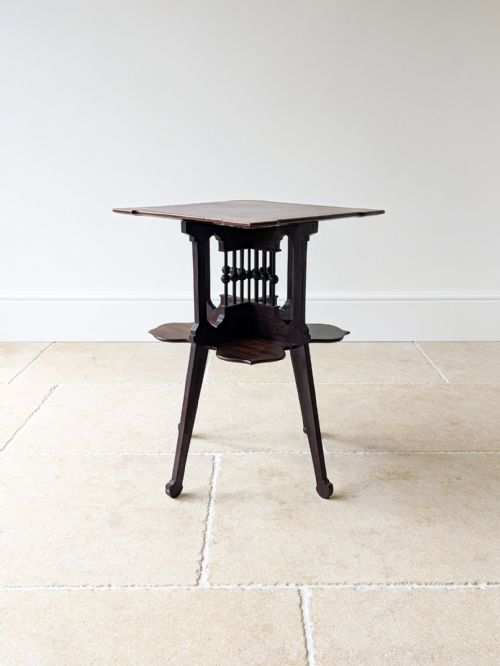
The pieces appearing in this selection reflect Victorian craftsmanship, the Aesthetic Movement, and earlier 18th century traditions, though the Victorian interpretation remains the most frequently encountered style. These items frequently merge display space with enclosed storage, utilising glass panels, drawers, or cupboard bases to balance utility with visual ornamentation.
Makers and workshops of the nineteenth century applied these turned supports liberally to mahogany, walnut, rosewood, and pine pieces, often combining them with inlay or ebonised finishes. Such a cabinet functions as both a functional repository and a decorative focal point, rooted firmly in historical domestic interiors.
Materials and construction
Makers constructed these cabinets using hardwoods such as mahogany, walnut, and rosewood, alongside softer timbers like pine, often enriching surfaces with burr walnut veneers or boxwood stringing. Selected pieces incorporate brass hardware and glass inserts to accent the timber frames.
Lathe-turned spindles and bobbin elements form the structural and decorative skeleton of the work, requiring precise carpentry to secure each repeating turned wooden component. The joinery combines traditional framing techniques with careful turning to achieve stable, load-bearing legs, galleries, and supports.
Spindle Turned Cabinet Retail Price Guide 2026
Typical asking prices for spindle turned cabinet among the pieces listed under this phrase on Sellingantiques today, from the lower quarter to the upper quarter. They describe what is for sale here now, not the wider market.
Some nineteenth-century makers evidently believed that if a piece of furniture could possibly support another tier of turned spindles, it simply must have one.
Judging quality and craftsmanship
Quality rests upon the crispness of the spindle turnings and the selection of figured timbers, where well-matched burr walnut veneers or rich rosewood indicate a higher grade of manufacture. Finer examples display meticulous attention to secondary details such as boxwood inlay, flush drawer construction, and integrated brass fittings.
The structural integrity of the turned members dictates longevity, as uniform turning and tight joints separate superior cabinet work from more hurried production. A successful piece maintains balanced proportions between the dense ornamentation of the spindles and the functional storage compartment beneath or within.
Liberty and Co
The Spindle Turned Cabinet Glossary
- Bobbin turned
- A style of woodturning characterised by a succession of rounded, bead-like shapes resembling spools of thread. This technique gained immense popularity during the Victorian era for decorative framing.
- Canterbury
- A low piece of furniture featuring partitions, originally designed for holding sheet music and folios. Frequently incorporated into multi-tiered stands alongside turned supports.
- Whatnot
- An open shelving unit designed for displaying ornaments, books, or knick-knacks. These stands often feature multiple tiers supported by turned columns.
- Etagere
- A French term for a piece of furniture consisting of a set of open shelves for displaying small objects. They are commonly constructed with slender turned legs and uprights.
Spindle Turned Cabinet: Frequently Asked Questions
What is a spindle turned cabinet?
A spindle turned cabinet is a storage or display piece featuring decorative turned wooden columns or balusters. These turned elements provide both structural support and distinct visual texture.
Such cabinets often combine enclosed cupboards with open shelving, drawing on Victorian and nineteenth-century design traditions to accent domestic interiors.
How were these cabinets used historically?
Historically, these pieces served multiple domestic functions, from storing table linens and books to displaying decorative ornaments and ceramics. Versions with internal partitions or drawers accommodated specific items like sheet music or tableware.
Their versatile sizing allowed them to sit comfortably in parlours, dining rooms, or hallways as both utility furniture and decorative statements.
How do I style a spindle turned cabinet at home?
Integrating a turned cabinet into a modern interior works best when the piece acts as a focal point against neutral walls. The intricate woodwork pairs naturally with simple, contemporary furnishings that allow the historical detailing to stand out.
Use the display surfaces for books or ceramics, keeping the surrounding space uncluttered to highlight the turned wooden architecture.
How can I tell a Victorian piece from an 18th-century one?
Differentiating periods relies on examining timber selection, construction methods, and the specific style of the turning. Eighteenth-century examples often exhibit simpler, heavier proportions and different primary woods compared to later Victorian revivals.
Looking closely at drawer linings, backboards, and secondary timbers helps establish the likely manufacturing era alongside stylistic markers like Aesthetic Movement details.