


Spindle Leg Tables
Spindle leg tables combine slender turned supports with compact surfaces, bringing a lightness of form to period interiors.
Spindle Leg Tables
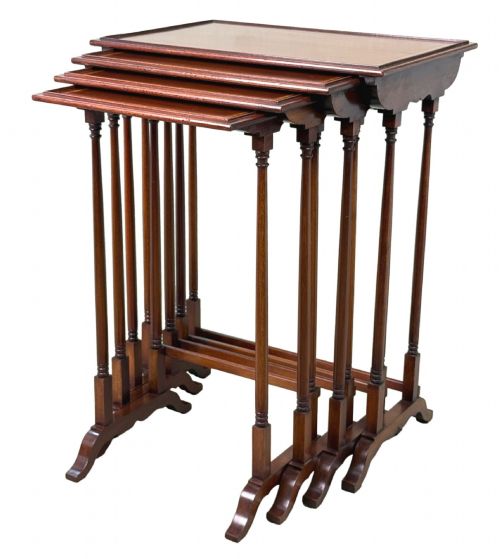
Spindle leg tables encompass side tables, occasional tables, nests of four, and two-tier étagères appearing across the eighteenth, nineteenth, and early twentieth centuries. These pieces serve practical functions in domestic spaces while introducing delicate architectural profiles through their slender supports.
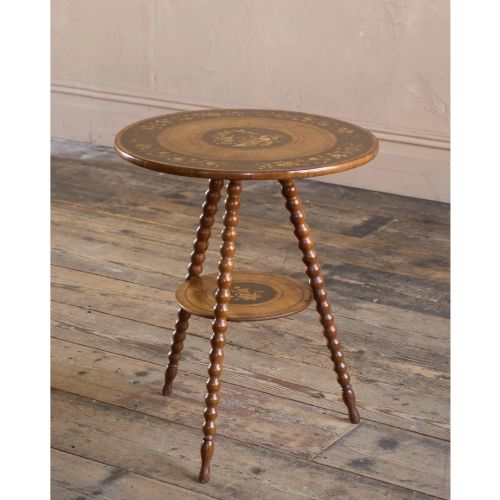
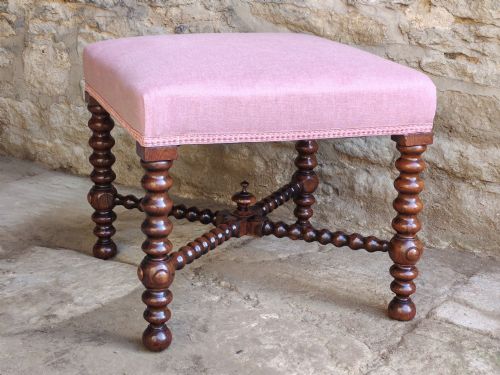
The versions most frequently encountered on this page date from the Victorian and Edwardian eras, spanning walnut, oak, and mahogany timbers. These later iterations often adapt earlier forms like the bobbin leg or gate-leg construction to suit compact drawing rooms and halls.
How they were made
Makers utilised native and imported hardwoods including oak, walnut, mahogany, and rosewood, frequently applying ebonised finishes or black lacquer to mimic more costly oriental surfaces. Tops incorporated solid timber panels, book-matched veneers, and intricate marquetry or inlaid wood details.
Structural turning on a lathe produced the characteristic bobbin and spindle legs, joined by stretchers for stability in side and occasional tables. Brass fittings, ceramic elements, and serpentine gallery rims occasionally completed the construction of finer examples.
Listings feature oak, walnut, mahogany, and rosewood alongside ebonised wood and ceramic elements across the eighteenth and nineteenth centuries.
What varies in quality
The refinement of the turning work distinguishes standard production from superior pieces, with crisp, evenly spaced spindles indicating skilled craftsmanship. Timber selection also dictates grade, separating plain surfaces from richly figured walnut veneers or complex marquetry.
Structural integrity relies on tight joinery in the legs and stretchers, ensuring the slender frames remain rigid under daily use. Original surface patination and intact lacquer or ebonisation preserve the authentic character of the period.
The Spindle Leg Tables Glossary
- Bobbin leg
- A turned furniture support shaped to resemble a series of wooden bobbins or reels stacked end to end. This style appears frequently on seventeenth-century and nineteenth-century revival pieces.
- Etagere
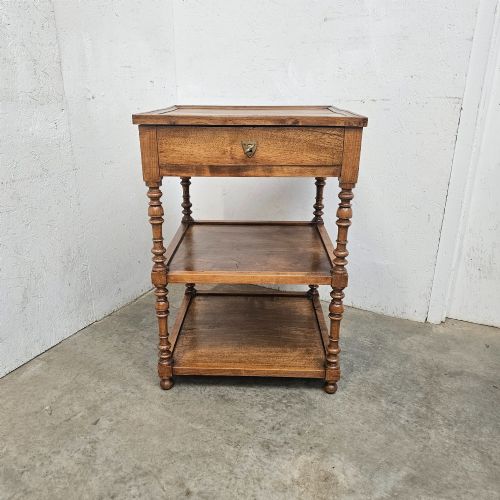
- A piece of furniture consisting of a set of open shelves for displaying small objects. These often feature slender turned supports and multiple tiers.
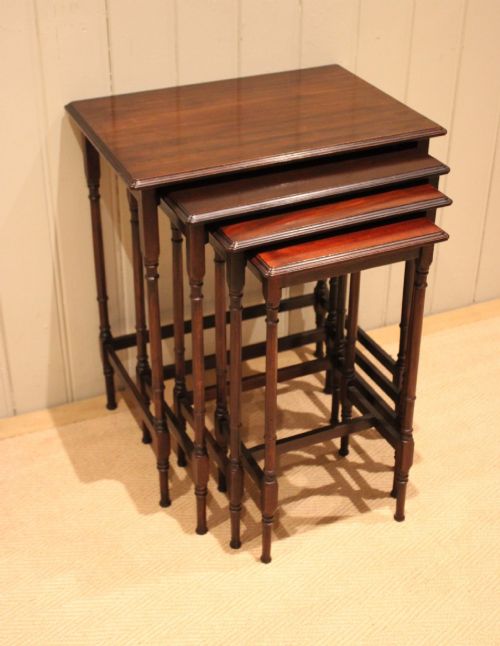
- Quartetto nest
- A set of four graduating tables designed to slide neatly beneath one another. They gained popularity during the Victorian and Edwardian periods for flexible entertaining.
- Marquetry
- Decorative veneer work formed by fitting together small pieces of wood, shell, or ivory to create pictorial designs. It decorates the top surfaces of select side and occasional tables.
- Serpentine gallery
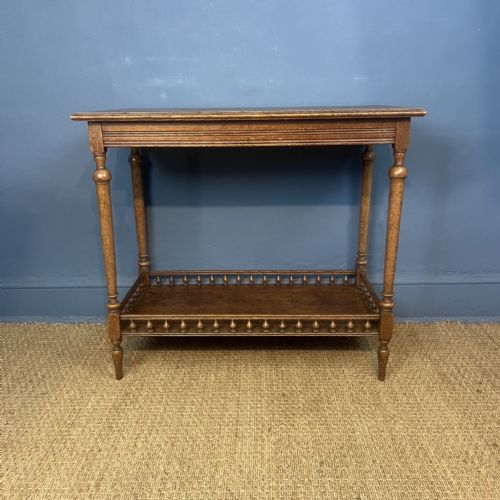
- A raised decorative border with a wavy outline running along the edge of a table top. It helps prevent items from sliding off the surface.
Spindle Leg Tables: Frequently Asked Questions
What is a spindle leg table?
A spindle leg table is a small occasional, side, or nested table supported by thin, lathe-turned legs. These pieces range from seventeenth-century oak examples to Victorian and Edwardian walnut or ebonised designs.
They provide functional surface area without dominating a room visually, relying on slender vertical lines for their decorative impact.
How do I date a spindle leg table?
Dating relies on timber choice, construction methods, and stylistic cues present in the piece. Oak and heavy turnings typically point to earlier centuries, while mahogany, walnut, and ebonised finishes often indicate nineteenth-century or later manufacture.
Secondary woods, nail types, and wear patterns on the feet offer further clues to the actual age of the furniture.
Were nests of tables common in the Victorian period?
Nests of tables, particularly quartetto sets of four, became increasingly popular during the nineteenth and early twentieth centuries. They offered space-saving versatility for drawing rooms where surface space was needed temporarily.
Cabinetmakers produced them in mahogany and walnut, often featuring slender turned legs that allowed the smaller tables to slide smoothly into position.
How do I care for an antique wood table?
Antique wood tables require gentle maintenance to preserve their finish and structural stability. Keeping them away from direct heat sources and strong sunlight prevents timber shrinkage and fading.
Regular dusting with a dry cloth and occasional application of appropriate wax maintains the natural lustre of the wood without building up heavy residues.