






Spelter Mantel Clock
A spelter mantel clock brings figurative sculpture and timekeeping together on the shelf, offering the distinct aesthetic of nineteenth and twentieth-century European interiors.

Spelter Mantel Clock
When you search for a spelter mantel clock, you encounter decorative timepieces that combine a metal alloy figure with marble, onyx, brass, and glass. These objects range from nineteenth-century French designs to later twentieth-century iterations.
The versions you are most likely to meet on this page include French Victorian and Rococo Revival models, alongside geometric Art Deco and flowing Art Nouveau pieces. Many are accompanied by matching garnitures to form a three-piece set.
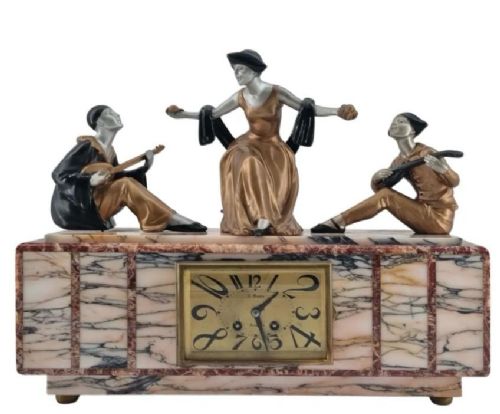
Makers and sculptors such as Auguste Moreau, Francois Moreau, Philippe H. Mourey, and Sega frequently appear in these listings. Their works depict mythological figures, animals, and theatrical characters like Pierrot and Columbine.
How they were made
These clocks utilise spelter, a zinc-based alloy, cast into figurative and decorative components that were often given a gilt or bronze-toned finish. This material allowed for intricate sculptural detail at a scale suitable for domestic interiors.
Foundations and plinths incorporate natural stones such as marble and onyx, paired with brass bezels, glass dials, and enamel face plates. Wood and mixed metals occasionally form the structural bodies of the later twentieth-century variants.
Spelter Mantel Clock Retail Price Guide 2026
Typical asking prices for spelter mantel clock among the pieces listed under this phrase on Sellingantiques today, from the lower quarter to the upper quarter. They describe what is for sale here now, not the wider market.
Pierrot and Columbine occasionally share shelf space with migrating elephants.
What varies in quality
The degree of sculptural refinement separates standard production pieces from masterworks associated with known artists and foundries. Crisp casting detail in the spelter figure and harmonious integration with the marble or onyx base indicate superior craftsmanship.
The presence of matching garniture sets and legible enamel dials signed by established makers elevates the status of a clock. Original patination and the overall balance between the sculptural subject and the clock housing dictate the visual success of the piece.
Auguste Moreau·Francois Moreau·Sega
The Spelter Mantel Clock Glossary
- Spelter
- A zinc-based white metal alloy widely utilised as a substitute for bronze in decorative sculpture and clock cases during the nineteenth and twentieth centuries.
- Garniture set
- A clock accompanied by a matching pair of side ornaments, such as vases or urns, designed to be displayed together on a mantelpiece.
- Bezel
- The metal ring that holds the glass cover in front of the clock face, protecting the enamel dial and hands.
- Mystery clock
- A timepiece featuring an unusual or concealed mechanism that appears to drive the hands without conventional gear trains.
Spelter Mantel Clock: Frequently Asked Questions
What is a spelter clock made of?
These clocks are constructed primarily from a zinc alloy known as spelter, which is cast into figurative or decorative shapes. They are typically mounted on bases of marble, onyx, or slate, and feature enamel dials protected by glass and brass bezels.
The metal surface often received a bronze-like or gilt finish to mimic more expensive materials. This combination of cast metal and stone gave the clocks the substantial weight required for domestic mantels.
How do I identify an Art Deco mantel clock?
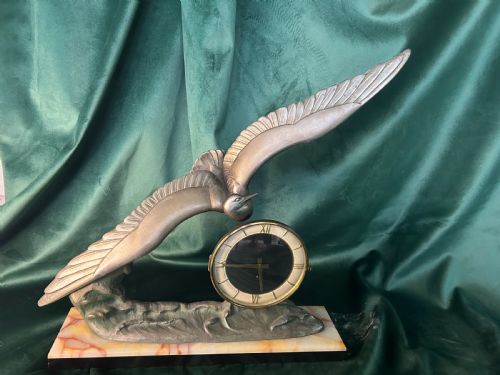
Art Deco examples feature geometric lines, stylised figures, and streamlined forms that depart from earlier ornate Victorian styles. You will frequently see motifs involving animals, dancers, or theatrical characters produced during the early twentieth century.
The materials often shift towards simplified marble or onyx bases paired with stepped cases and stylised numerals on the dial. These pieces reflect the modern industrial aesthetics popular between the wars.
What is a clock garniture?
A clock garniture is a matching set comprising a central mantel clock accompanied by two side ornaments, such as urns or vases. These sets were designed to create a symmetrical arrangement across a fireplace mantel or sideboard.
They share the same materials, decorative motifs, and stylistic period as the main clock housing. Finding a complete three-piece set preserves the original decorative intent of the maker.
Where were these clocks made?
The majority of the antique examples originate from France, spanning the nineteenth and early twentieth centuries. French foundries and sculptors dominated the production of figurative spelter clock cases and garnitures.
Stylistic movements such as French Rococo Revival, Art Nouveau, and Art Deco heavily influenced regional workshops. These pieces were exported widely across Europe and Britain for middle-class and elite homes.