




Spanish Walnut Side Table
A spanish walnut side table brings severe, architectural timber to a room through dense grain and straightforward joinery.
Spanish Walnut Side Table
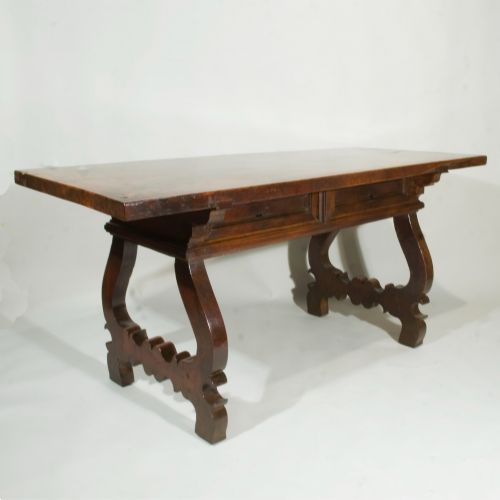
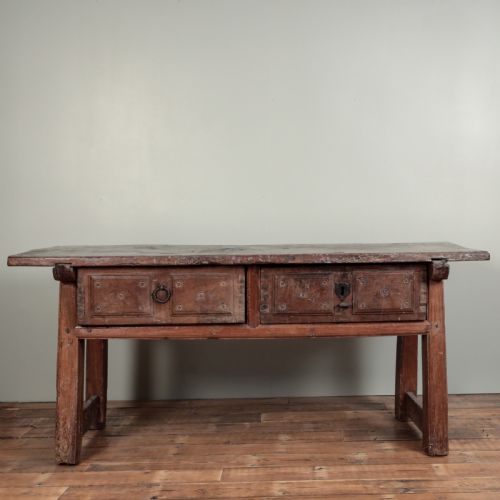
A spanish walnut side table provides a sturdy surface framed by seventeenth and eighteenth century proportions. These pieces arrive in forms ranging from simple console and tavern tables to larger serving and centre tables.
The most common examples on this page date from the seventeenth and eighteenth centuries, constructed in solid walnut alongside occasional fruitwood or oak. Their origins span Spanish Baroque and provincial continental workshops.
Buyers select these items for their architectural presence and the deep colour accumulated through centuries of use. Each surface records the marks of early cabinet making traditions.
Materials and construction
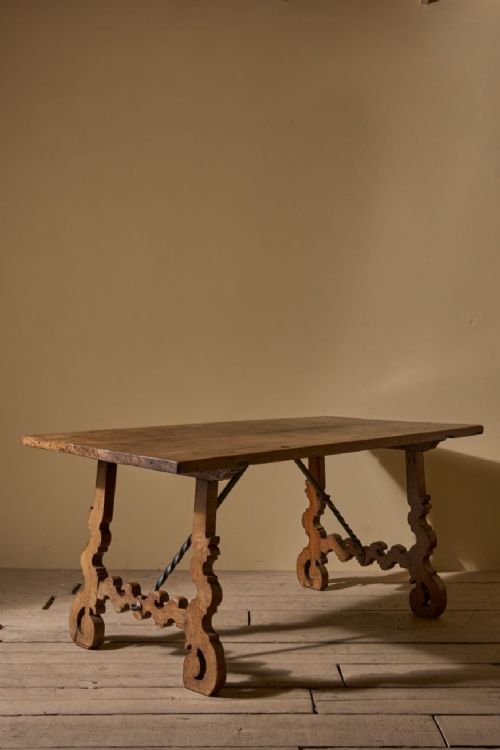
Solid walnut provides the primary structural timber, supplemented by fruitwood and oak in secondary framing. Wrought iron stretchers and braces frequently reinforce the legs for added rigidity.
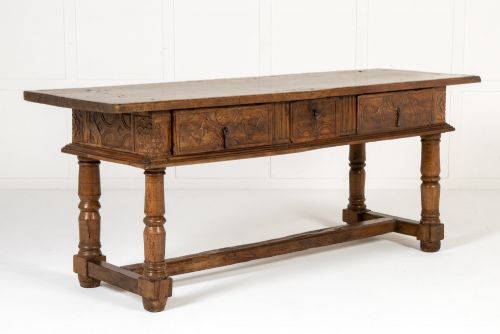
Construction relies on straightforward joinery suited to heavy timber, often featuring thick tops pegged to sturdy underframes. Bobbin turning and plain carved details appear across seventeenth century examples.
Some seventeenth century tables arrive with iron stretchers so stout they double as footrests for tired monks.
Assessing quality
Quality rests in the integrity of the timber and the depth of the original patina. Tables retaining honest surface wear display superior character compared to heavily restored surfaces.
Proportion and structural balance separate standard examples from finer pieces. Heavy walnut tops supported by well proportioned iron stretchers demonstrate the best craftsmanship of the period.
The Spanish Walnut Side Table Glossary
- Patina
- The surface sheen and colour developed by timber over centuries of handling and exposure. This layer distinguishes genuine early pieces from modern reproductions.
- Stretchers
- Horizontal wooden or iron braces connecting the legs of a table for stability. In continental pieces, wrought iron stretches often replace wooden rails.
- Fruitwood
- Dense timber harvested from fruit bearing trees, used alongside walnut in provincial furniture. It offers a contrasting grain and pale tone.
- Console table
- A table designed to stand against a wall, frequently secured with brackets. Early versions utilise iron supports or sturdy wooden legs.
- Spanish Baroque
- An ornate and heavy design style prevalent in the seventeenth century. It emphasises dramatic scale and dark, rich timbers.
Spanish Walnut Side Table: Frequently Asked Questions
How do I clean a walnut table?
Dust the surface regularly with a dry cloth to prevent dirt accumulation. Avoid modern chemical sprays that strip the historic finish.
Apply a traditional beeswax occasionally to nourish the timber. Buff gently to maintain the soft sheen developed over centuries.
Can I use these tables daily?
These pieces are structurally robust enough for daily use as side or console tables. The dense walnut timber withstands normal placement of lamps and decorative objects.
Protect the surface from excessive moisture and heat by using coasters or mats. Treat the antique joints with care by avoiding excessive weight or sudden impacts.
How do I date a spanish table?
Examine the construction methods, tool marks, and wood species visible beneath the top. Seventeenth century pieces typically feature hand sawn boards and pegged joints.
Compare the leg turnings and stretcher designs to known examples from the period. Wrought iron components and overall wear patterns also provide clues to age.
What rooms suit a side table?
A narrow console or side table fits well in entrance halls or corridors. Their shallow depth allows placement in confined spaces without blocking pathways.
They also function effectively in living rooms against blank walls beneath mirrors or artwork. The dark walnut tone anchors lighter interior colour schemes.