


Antique Spanish Writing Table
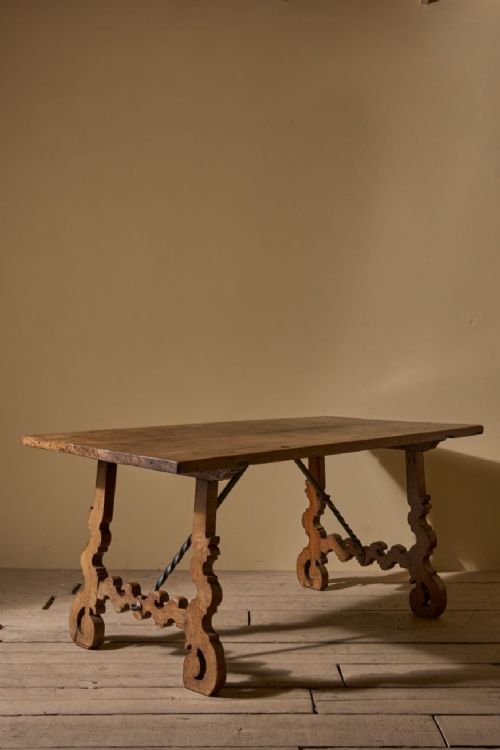
An antique spanish writing table offers sturdy walnut construction and wrought iron stretchers, bringing traditional Iberian craft directly into your study.
Antique Spanish Writing Table
An antique spanish writing table brings heavy timber construction and practical surface space into a room, drawing on centuries of domestic and official use across the Iberian Peninsula. When you search for an antique spanish writing table, you encounter forms ranging from austere seventeenth-century walnut boards to later nineteenth-century revivals and provincial oak pieces. The examples appearing here include side tables, centre tables, and specific desks built for writing and storage.
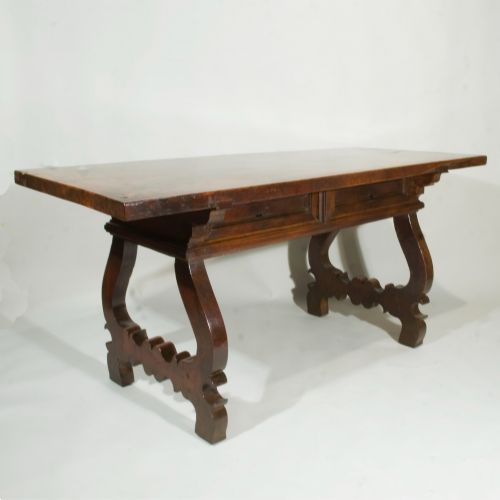
The seventeenth-century and eighteenth-century examples rely heavily on rich walnut timbers, often supported by wrought iron stretchers that provide structural rigidity without bulk. Alongside these early pieces, nineteenth-century revivals and early twentieth-century interpretations utilise light oak, ebonised wood, and fruitwood to echo earlier baroque aesthetics. You are most likely to meet walnut side tables and oak desks from the nineteenth and early twentieth centuries on this page.
How they were made
Joinery on these tables relies on solid timber construction, utilising walnut, oak, and fruitwood shaped by hand tools. Panels and tops are joined with traditional methods suited to dense hardwoods, ensuring long-term stability.
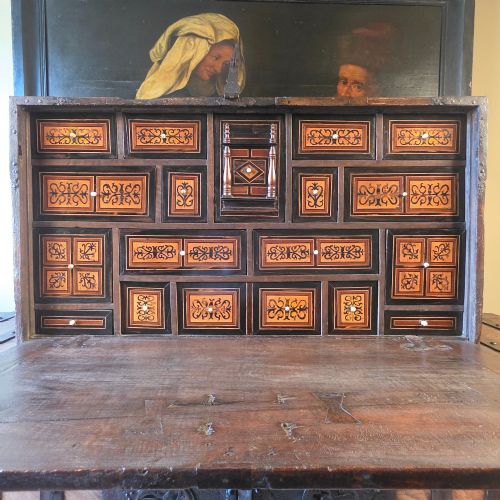
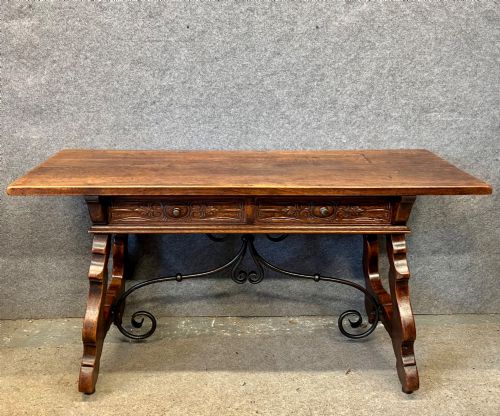
Metalwork forms an integral part of the construction, with wrought iron used for structural stretchers beneath the surface. Details occasionally incorporate bone inlay and ebonised wood to create contrast across the timber surfaces.
Several tables rely on iron stretchers so stubborn they have outlasted three different floors and at least four generations of paperwork.
What varies in quality
The grade of timber and the complexity of the joinery set pieces apart, distinguishing simple provincial production from workshop-built furniture. Early walnut boards show tighter grain and deeper patination than later revival pieces.
The integration of metalwork and secondary materials dictates refinement. Original wrought iron stretchers and precise bone inlay demonstrate superior craftsmanship compared to simpler replacement elements.
Whytock and Reid
The Antique Spanish Writing Table Glossary
- Walnut
- A dense, dark hardwood prized for its rich grain and stability, frequently utilised in seventeenth and eighteenth-century Iberian furniture. It takes a fine polish and darkens naturally over centuries of handling.
- Wrought iron
- Iron beaten and shaped by hand into structural stretchers or decorative braces. It provides essential bracing beneath heavy timber tabletops.
- Ebonised wood
- Timber treated to imitate ebony, creating a dense black surface often found on nineteenth-century tables. This technique offers a sharp visual contrast to lighter primary woods.
- Bone inlay
- Small pieces of animal bone set into carved recesses in the wood to form geometric or floral patterns. This decorative technique appears on seventeenth-century cabinets and tables.
Antique Spanish Writing Table: Frequently Asked Questions
What is an antique spanish writing table?
These pieces are traditional wooden tables and desks originating from or styled after Iberian furniture traditions, built primarily for domestic or administrative tasks. They feature solid timber construction, often accented with iron supports or inlay.
Surviving examples range from austere seventeenth-century walnut boards to decorative nineteenth-century revival pieces designed for modern domestic interiors.
How were these tables used originally?
They served as functional surfaces for correspondence, accounting, and reading in grand houses, monasteries, and administrative offices across Spain and its territories. The inclusion of drawers and sturdy underframes provided space for writing materials and stable support.
Over time, many transitioned from strictly utilitarian office furniture to decorative centre tables and side pieces in residential reception rooms.
How do I live with one?
Position the table away from direct heat sources and strong sunlight to protect the aged timber and prevent the dry wood from cracking. Treat the surface with mild wax rather than modern silicon polishes to maintain the natural patina of the walnut or oak.
Allow plenty of clearance around the base, as the wrought iron stretchers and heavy legs require space and dictate the placement of chairs.
How can I tell the periods apart?
Seventeenth and eighteenth-century pieces display dense walnut timbers, hand-cut joinery, and patination developed through centuries of use. They often feature simple, robust frames braced by wrought iron stretchers.
Nineteenth-century revivals and early twentieth-century pieces frequently utilise light oak, fruitwood, or ebonised finishes, often reflecting historical baroque styles with lighter overall construction.