




Spaniel Dog Portrait
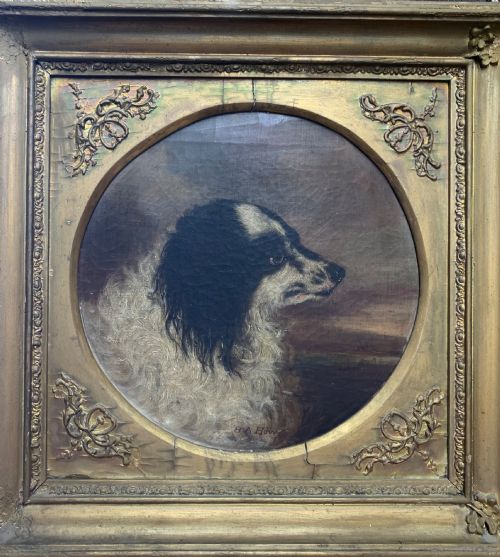
A spaniel dog portrait captures the character and loyalty of these dogs in oil, watercolour, and needlework across multiple centuries.
Spaniel Dog Portrait
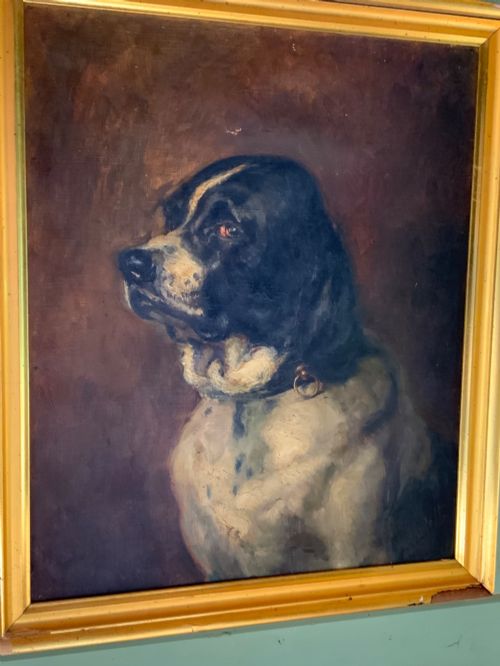
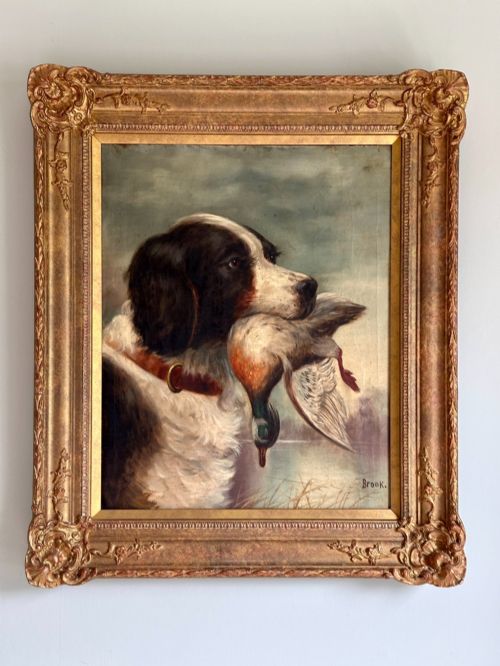
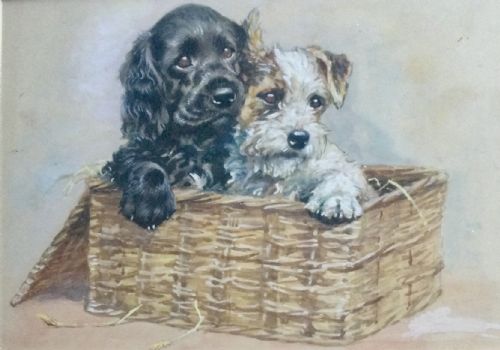
A spaniel dog portrait portrays specific dogs in oils, watercolours, pencil, and needlework, often reflecting the artistic conventions of their respective eras. These works range from naive depictions of country pets to formal academic studies set in interiors or landscapes.
The nineteenth century provides the largest share of these works, appearing frequently in oil on canvas, pencil, and needlework formats. Earlier examples from the seventeenth and eighteenth centuries depict spaniels alongside children or nobility in formal settings.
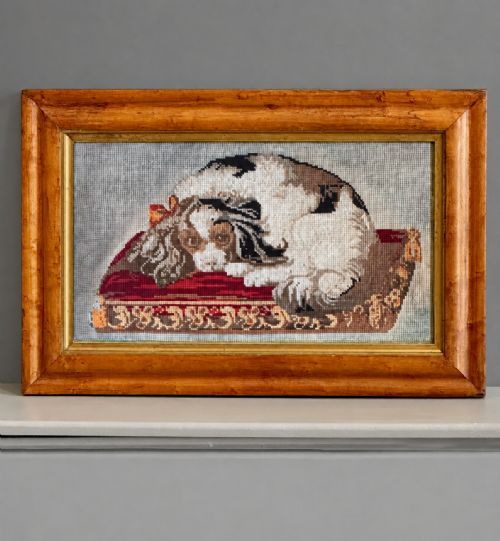
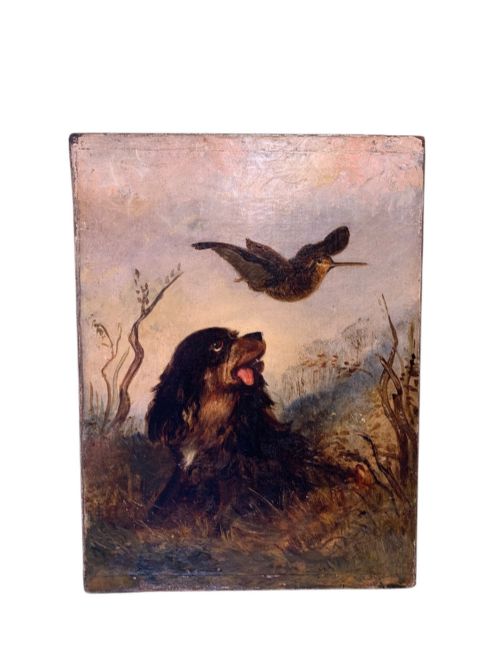
Twentieth-century pieces introduce new mediums such as original etchings and mid-century oil paintings. Formats vary from framed textiles in burr maple frames to small panel paintings and watercolours.
How they were made
Artists painted these subjects primarily with oil paint on canvas or panel, building up depth through layered glazes and opaque highlights. Watercolours on paper and pencil drawings offer a lighter, more immediate touch favoured for intimate sketches.
Needlework pieces utilise Berlin wool work techniques, stitching coloured threads onto canvas to render the dog's coat within a wooden frame. Etchings employ inked metal plates pressed onto paper to produce detailed prints of individual dogs.
Periods represented span from the seventeenth century through the Regency, Victorian, and Edwardian eras to the mid-twentieth century.
What varies in quality
Quality rests upon the artist's ability to render canine anatomy convincingly while capturing the alertness and expression characteristic of the breed. Stronger works demonstrate accomplished handling of fur texture, light, and anatomical proportion rather than generic rendering.
The integration of the dog within its setting distinguishes finer portraits, whether shown against a detailed country house landscape or an interior backdrop. Materials also contribute, with original frames such as burr maple enhancing the presentation of needlework and paintings.
William Barraud·Herbert Dicksee·Frank Owen Salisbury·George Romney·Francis Alleyne
The Spaniel Dog Portrait Glossary
- Berlin work
- A type of nineteenth-century needlework using brightly coloured wools stitched onto canvas from printed grid patterns. This method allowed makers to create detailed pictorial scenes and animal portraits.
- Etching
- A printmaking technique where an artist draws through a protective ground on a metal plate with a needle, exposing the metal to acid before printing. This process creates fine, precise lines.
- Panel painting
- A painting executed on a rigid wooden support rather than canvas. These works are common in earlier periods before canvas became universally adopted.
- Circle of
- A term used in art history to indicate a work produced by an unidentified artist closely associated with a master's studio or working in their immediate style.
Spaniel Dog Portrait: Frequently Asked Questions
What periods do these portraits cover?
The available pieces span from the seventeenth century through the Georgian, Victorian, and Edwardian eras into the mid-twentieth century.
Nineteenth-century works are most common, while seventeenth and eighteenth-century examples appear alongside twentieth-century etchings and paintings.
How were spaniels portrayed in early art?
Early portraits often place spaniels beside children, nobility, or country gentlemen to signify companionship and status.
They appear in formal interiors or natural landscapes, reflecting the fashions and artistic styles of periods like the Regency and English Baroque.
What materials are used besides oil paint?
Artists employed watercolours, pencil drawings, and etchings on paper alongside needlework stitched in wool.
Some pieces utilise wood panels or tin plates as supports instead of traditional stretched canvas.
How do I identify a needlework portrait?
Needlework pieces from this category typically feature Berlin work wool embroidery depicting spaniels, often housed in original wooden frames like burr maple.
These textile works translate the painterly traditions of dog portraiture into stitched threads.