
Solid Silver Cups
Solid silver cups encompass centuries of drinking vessels, christening mugs and commemorative tankards crafted from precious metal.
Solid Silver Cups
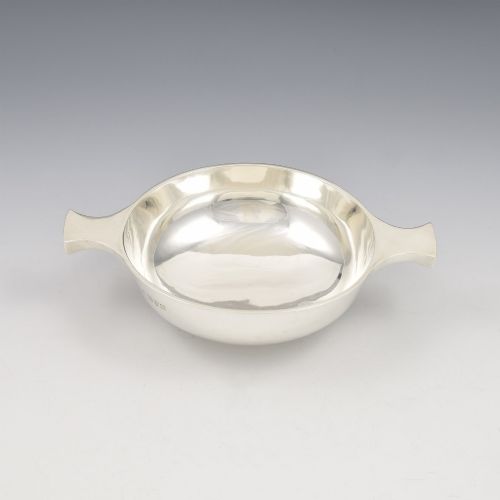
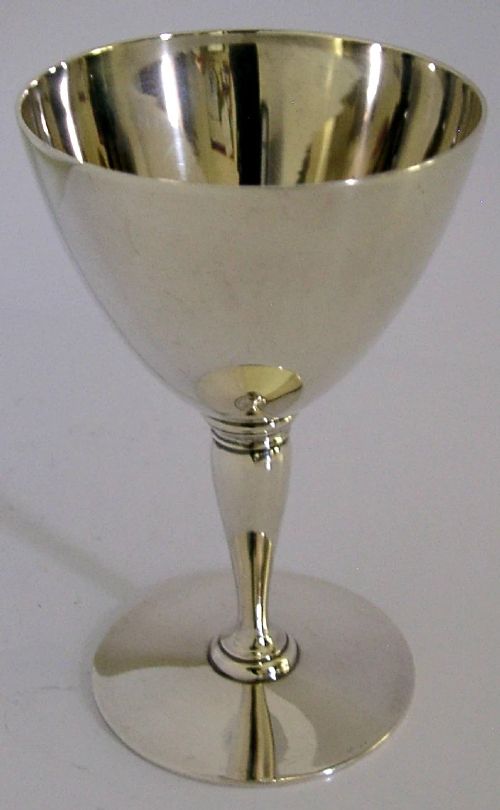
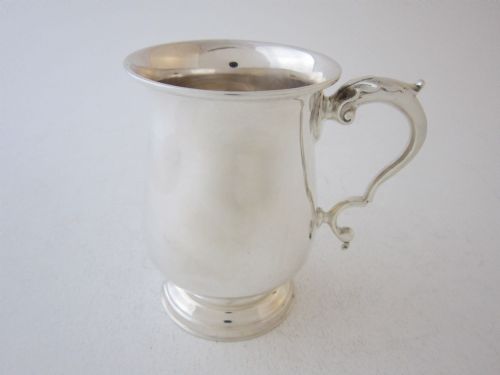
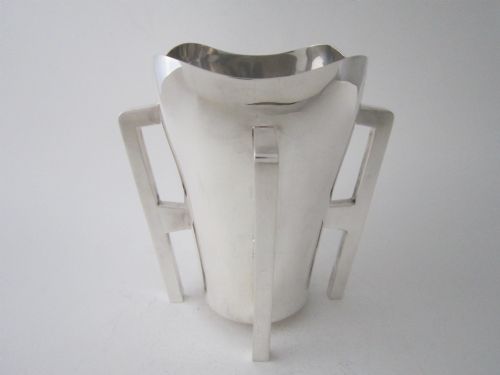
Solid silver cups span forms ranging from Georgian tankards and Victorian goblets to Edwardian quaichs and Art Deco cocktail goblets. When you search for solid silver cups, you encounter utilitarian drinking vessels and celebratory pieces created for domestic and ceremonial use.
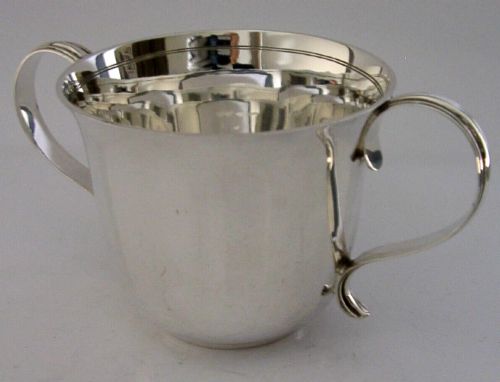
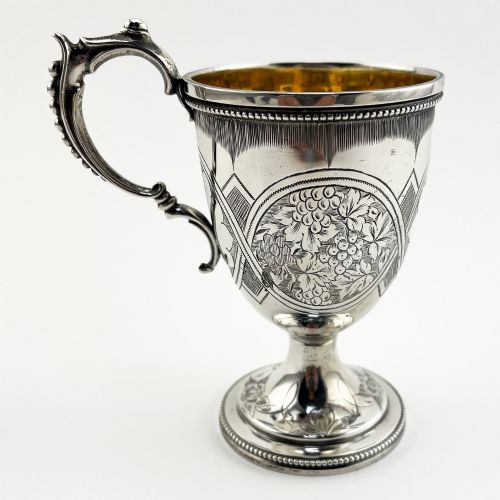
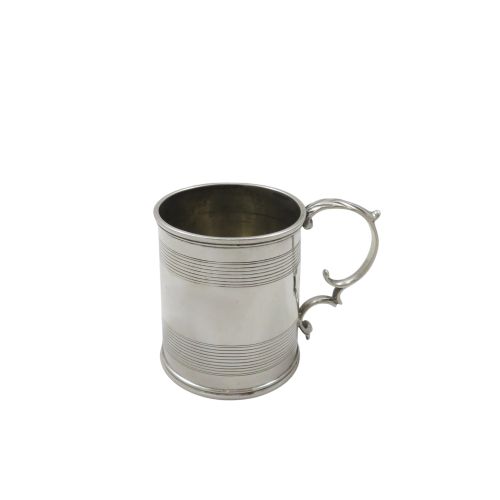
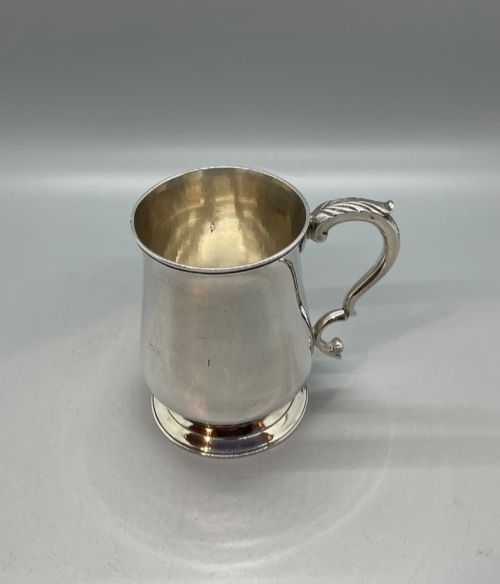
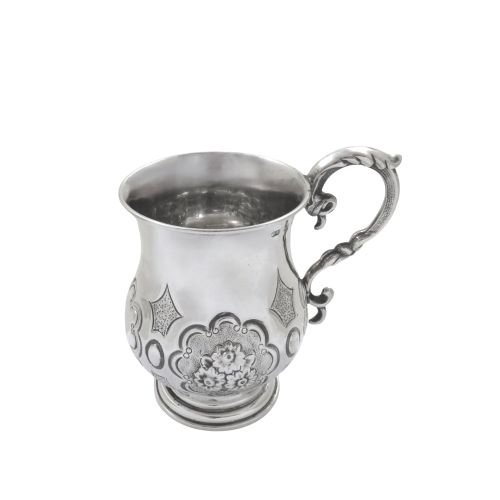
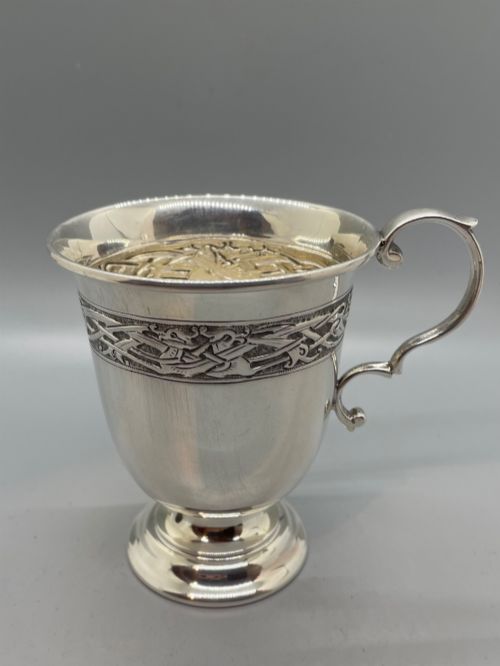
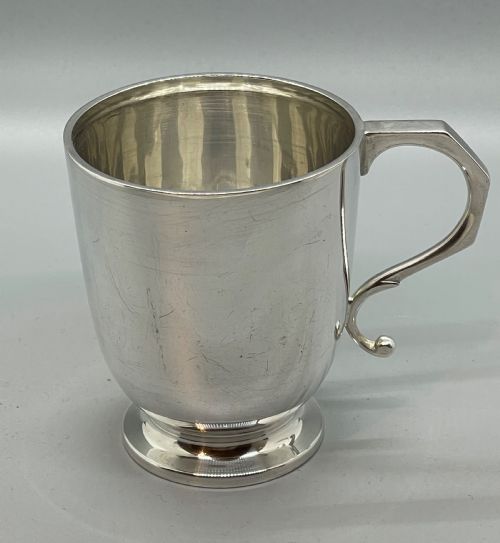
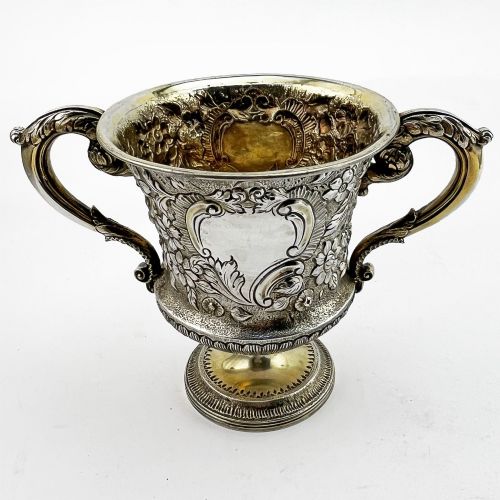
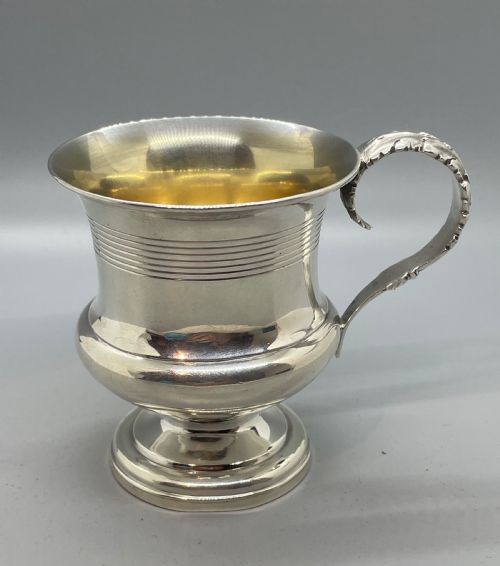
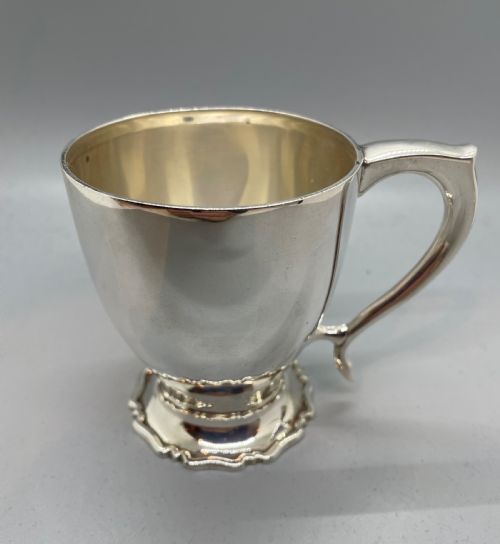
Christening mugs form a large part of the selection, often bearing repoussé floral decoration or clean cylindrical walls from the Victorian and George V periods. Tankards, beakers and two-handled porringers appear alongside specialist vessels such as wine tasters and chalices.
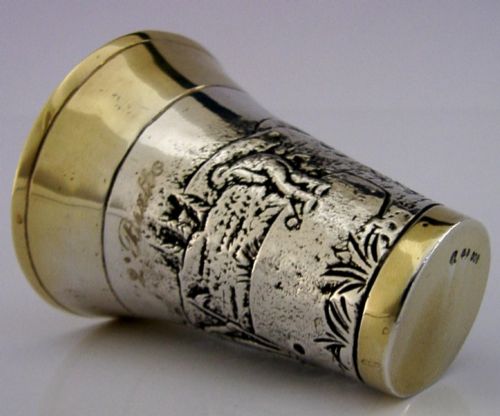
Origins stretch across English provincial assay offices and London workshops, alongside continental pieces including German beakers and Russian silver gilt items. Pieces span from the eighteenth century through to mid twentieth century manufacturing.
Materials and construction
Makers utilised sterling silver and higher purity standards such as Russian eighty-four zolotnik silver, sometimes applying gold gilt to interior bowls. Handles were cast separately and soldered securely to heavy gauge bodies formed by raising or spinning.
Decoration relied on hand chasing, floral engraving, and applied cast borders, whilst fitted elements occasionally incorporated materials such as silk, velvet, leather and glass liners.
Some nineteenth century travellers packed ingenious collapsible silver beakers into leather cases for tipples on the move.
Assessing quality and craftsmanship
Weight dictates substance, with heavier gauge silver offering a more substantial feel in the hand and resisting denting over generations of handling. The crispness of hand-engraved motifs and the clean integration of handles reveal the skill of the silversmith.
Maker marks and clear full hallmarks provide assurance of origin and standard, whilst balanced proportions separate standard production items from exceptional workshop examples.
Nathan and Hayes·Tiffany and Co·William Burwash·R E Stone·John Robins·Mark Willis
The Solid Silver Cups Glossary
- Hallmark
- Official stamps punched into precious metals to indicate the assay office, standard of purity, and year of manufacture.
- Quaich
- A traditional two-handled drinking vessel originating in Scotland, featuring a shallow circular bowl and flat lug handles.
- Porringer
- A small bowl with one or two horizontal flat handles, historically used for porridges, broths or liquids.
- Chalice
- A stemmed sacramental cup used for drinking wine during religious ceremonies or formal presentations.
- Repoussé
- A metalworking technique where the artisan hammers the design from the reverse side to create a raised relief pattern.
Solid Silver Cups: Frequently Asked Questions
How were christening mugs used?
Christening mugs were given as traditional gifts to newborns to mark their baptism and provide a lasting keepsake into adulthood.
Families often displayed these silver vessels on mantelpieces or cabinets rather than using them for daily meals.
What is a quaich used for?
A quaich served as a welcoming cup for offering a dram of whisky to guests in Scottish tradition.
The two handles allowed the drinker to hold the vessel securely with both hands during toasts.
How do I clean silver cups?
Silver cups require gentle washing in warm soapy water followed by thorough drying with a soft lint-free cloth.
Harsh abrasive polishes should be avoided to preserve delicate hand engraving and original hallmarks.
Can I drink from antique silver?
Antique silver cups and goblets remain fully functional for drinking cold beverages and celebratory toasts today.
Acidic liquids should not be left sitting in un-gilded silver vessels for extended periods to prevent tarnishing.