

Solid Silver Chain
When you search for a solid silver chain, you uncover robust pocket watch albert links, elaborate collars, and versatile necklaces spanning from the Georgian era to the mid twentieth century.
Solid Silver Chain
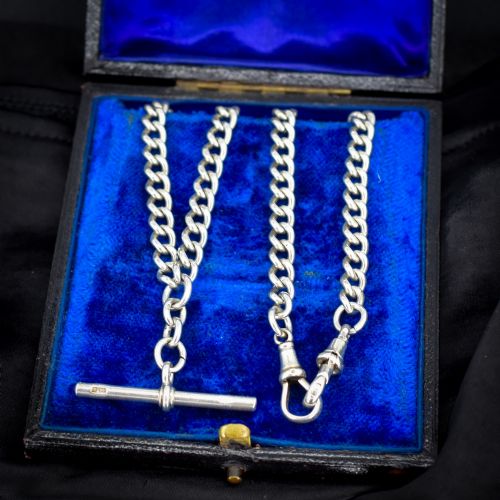
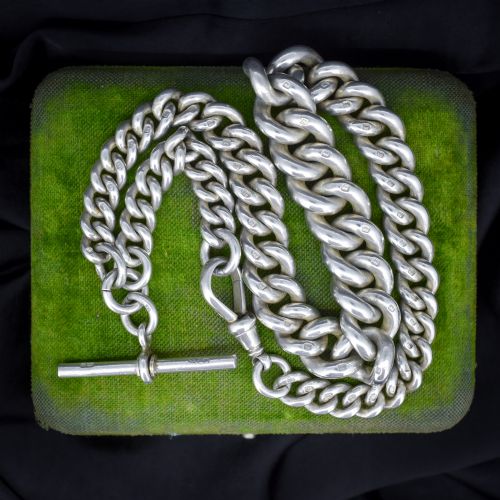
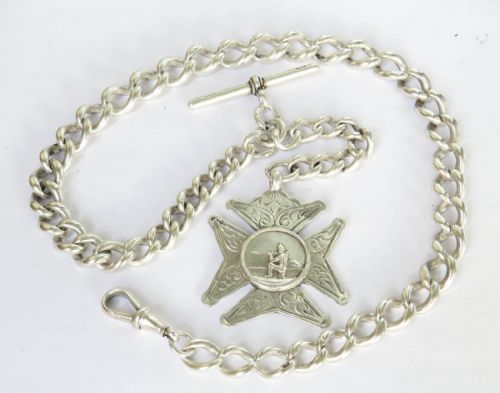
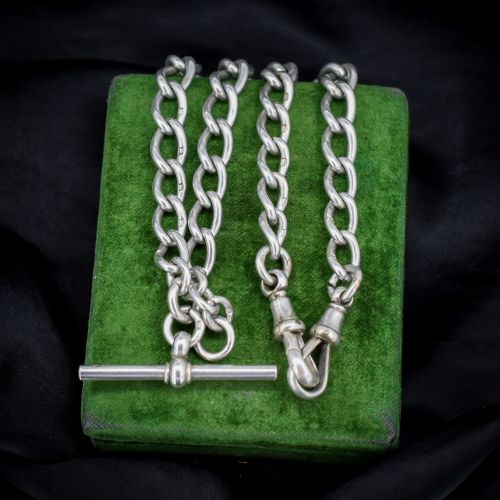
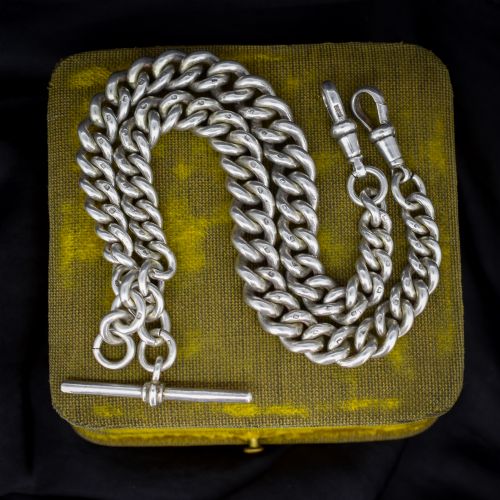
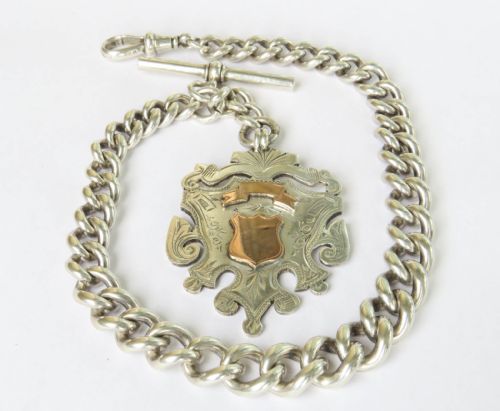
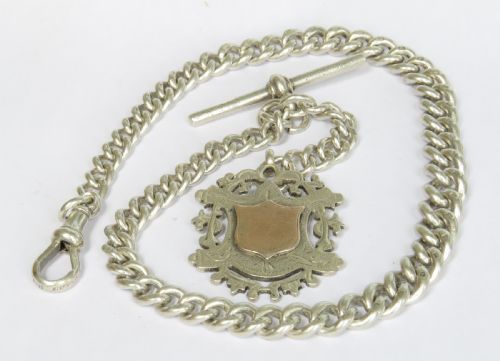
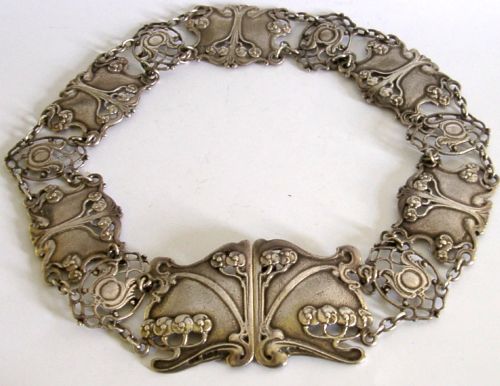
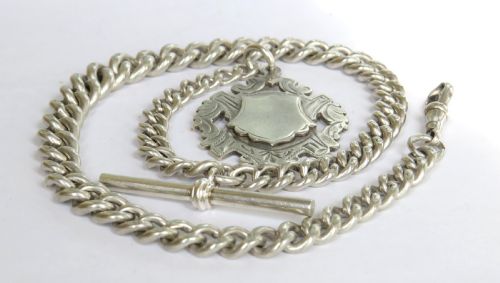
A solid silver chain encompasses traditional pocket watch albert chains, substantial curb and trombone link necklaces, and decorative collars originating from the nineteenth and early twentieth centuries. These pieces were originally engineered to secure pocket watches or accompany gentlemen's waistcoats, but today they frequently serve as distinctive necklaces and chokers.
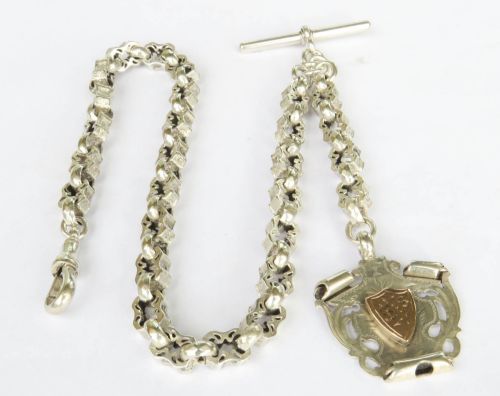
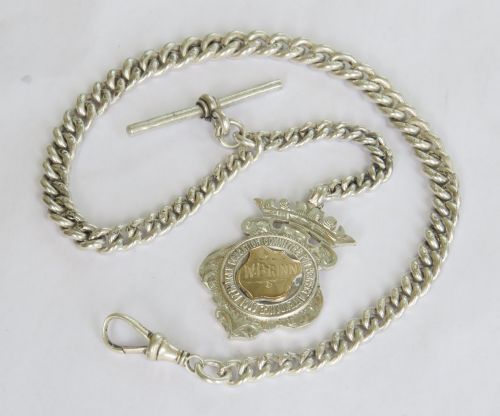
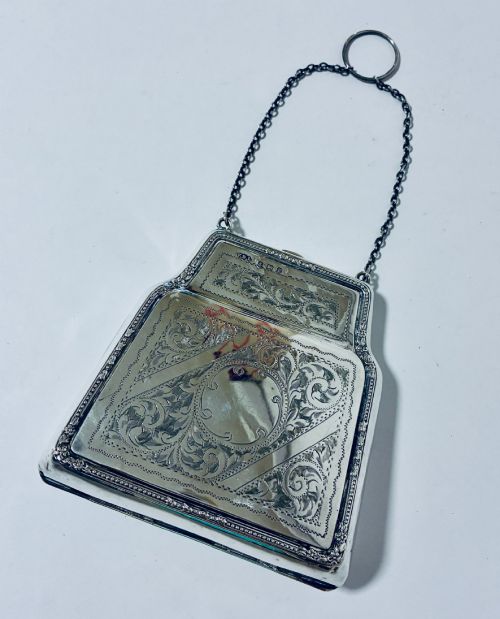
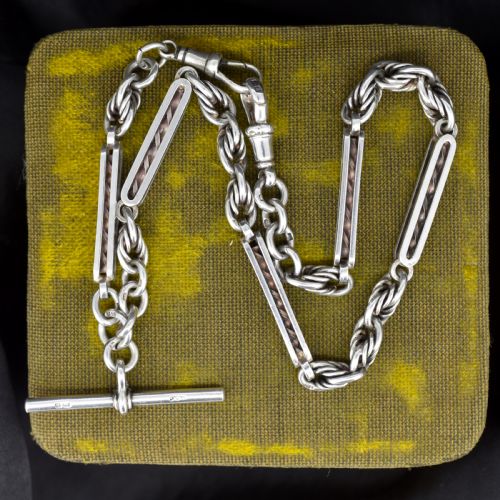
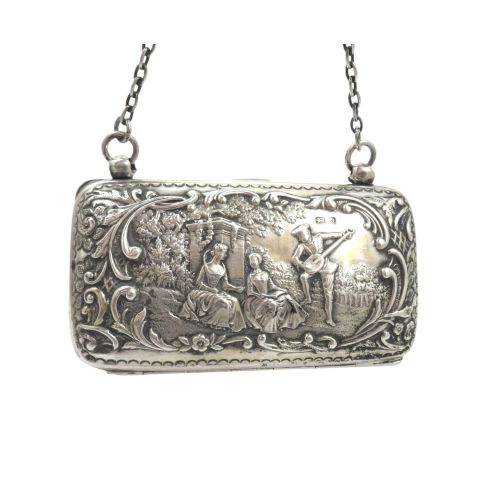
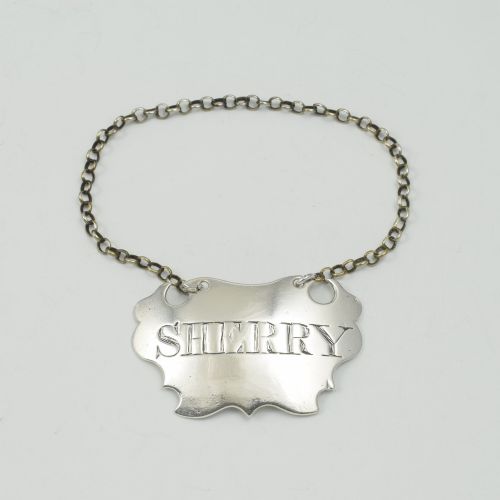
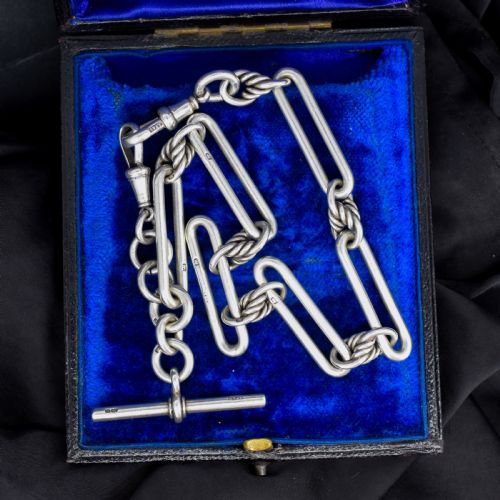
The selections visible here extend beyond standard neckwear to include pocket watch chains equipped with dog clips, t-bars, and fobs, alongside related silver items incorporating chain elements such as purses, belts, and decanter labels. Buyers frequently encounter Victorian and Edwardian examples featuring uniform curb links, love knots, and intricate trombone patterns.
Originating largely from British assay offices during the Georgian, Victorian, and Edwardian periods, these items reflect the heavy metal smithing traditions of the era. Later twentieth century modernist designs and vintage iterations also appear, offering varied link geometries and alternative stylistic influences.
Materials and Construction
Makers constructed these chains primarily from sterling silver and solid silver components, shaping individual links by hand or utilising early mechanical stamping and wire drawing techniques. Heavier pieces employ solid curb, figaro, or trombone links soldered securely together to withstand daily wear.
Constructural hardware such as dog clips, t-bars, swivel clasps, and jump rings were cast or forged separately and integrated into the primary chain structure. Accompanying items incorporate supplementary materials like rose gold accents, enamel work, and chainmail mesh.
Assay office hallmarks stamped directly onto links, fobs, or associated tags provide definitive evidence of origin, metal purity, and date of manufacture. These small stamped symbols record the exact year and city of production, from Birmingham and Chester to London.
Solid Silver Chain Retail Price Guide 2026
Typical asking prices for solid silver chain among the pieces listed under this phrase on Sellingantiques today, from the lower quarter to the upper quarter. They describe what is for sale here now, not the wider market.
Listings feature solid silver chains and related items spanning the Georgian, Victorian, Edwardian, and Art Deco periods, alongside mid twentieth century modernist pieces.
Evaluating Quality and Substance
Quality in a solid silver chain rests primarily on the heft, gauge of the silver, and the structural integrity of the individual links. Substantial weight, often exceeding fifty or ninety grams, indicates a robust manufacture designed to endure decades of use.
The preservation of original components, including matching dog clips, t-bars, and suspension fobs, elevates a piece above modified or incomplete examples. Clear, legible hallmarks stamped on the links and accompanying fob seals confirm the precise period and provenance.
Artisanal execution in decorative elements such as hand-engraved motifs, pierced box links, and secure soldered joints separates standard utility chains from exceptional wearable specimens.
John Reily·The Boots Company·G. Norman·William Adams Ltd·Alfred Taylor
The Solid Silver Chain Glossary
- Albert chain
- A pocket watch chain designed to secure a timepiece in a waistcoat pocket, typically featuring a t-bar at one end and a drop fob or swivel clip at the other.
- Dog clip
- A spring-loaded snap hook attached to the end of a watch chain used for fastening securely to a pocket watch or clothing loop.
- T-bar
- A short transverse bar of solid silver attached to a watch chain, slipped through a buttonhole to anchor the chain securely to a garment.
- Trombone link
- An elongated rectangular link flanked by smaller circular or oval connecting links, popular in Victorian watch chains and necklaces.
- Hallmark
- A series of official marks stamped onto precious metal items indicating the purity standard, assay office, and year of manufacture.
Solid Silver Chain: Frequently Asked Questions
How do I wear an antique albert chain as a necklace?
Many buyers remove any attached pocket watch and fasten the dog clip directly to one of the links to adjust the drop length around the neck. The remaining t-bar often hangs as a decorative pendant at the front.
Shorter double albert configurations can be doubled over or clasped to sit flush as a substantial choker necklace.
How can I date my solid silver chain?
Dating relies on examining the assay office hallmarks stamped onto the individual links, swivel clips, or attached fobs. These small punch marks typically include a date letter corresponding to a specific year and city.
Stylistic indicators such as heavy curb links, trombone patterns, or art nouveau motifs also point toward specific decades like the Victorian or Edwardian eras.
Are these chains suitable for daily wear?
Solid silver chains from the nineteenth and early twentieth centuries were engineered for practical daily utility to secure heavy pocket watches. Their robust links and secure spring clips make them durable enough for regular contemporary use.
Routine inspection of jump rings and swivel clasps ensures the security of the piece during active wear.