



Solid Silver Bird Ornament
A solid silver bird ornament brings the weight of sterling or continental silver to a cabinet, table or desk through naturalistic animal models.
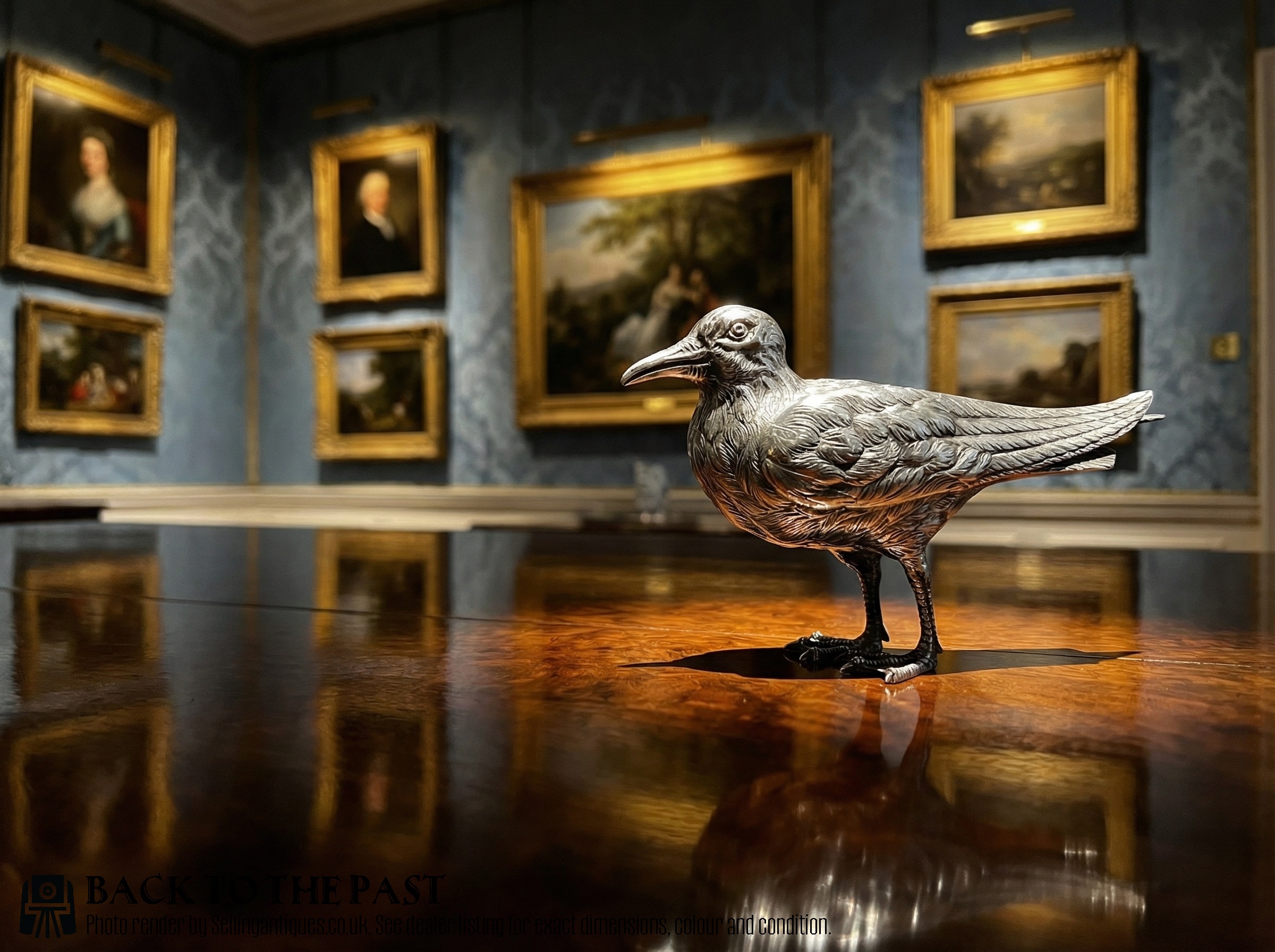
Solid Silver Bird Ornament
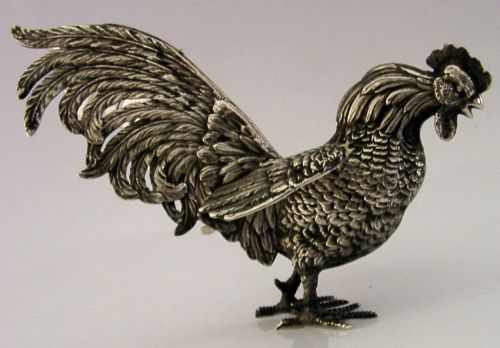
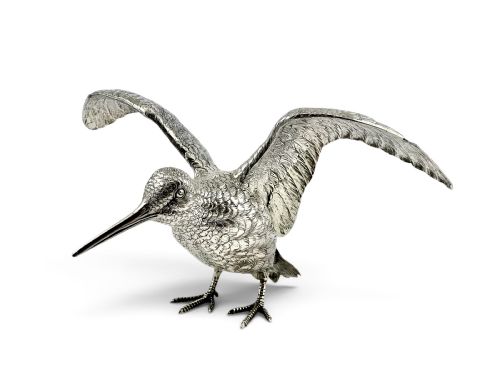
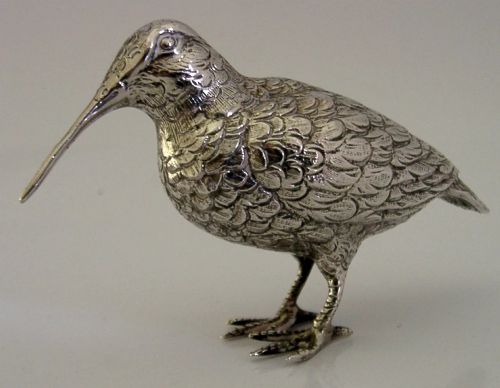
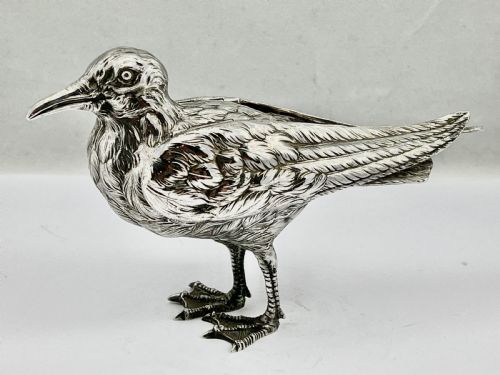
When you search for a solid silver bird ornament, you encounter pieces that span from the late Victorian period through Edwardian times to the mid-century. These domestic objects take the form of figures, paperweights, decorative boxes, sugar boxes and pepper shakers shaped as birds. The selections appearing here include woodcocks, cockerels, partridges, grouse, owls, pheasants and wading birds.
Makers rendered these creatures in sterling silver, 833 silver, 830 silver and general solid silver, sometimes pairing the metal with glass or incorporating functional compartments. Pieces originate from English workshops as well as Continental centres such as Germany, Hanau, the Netherlands and France. You will find both single display models and functional tablewares designed to hold sugar or pepper.
Materials and construction
Silversmiths utilised sterling silver and various continental standards including 833 and 830 silver to model these birds, occasionally integrating glass into the construction. Metal was cast, beaten and chased to render detailed feather patterns, beaks and claws across the surface of each figure or box. The resulting forms range from hollow pepper pots with removable sections to solid paperweights and hinged sugar boxes.
Workshop methods involved shaping sheet silver or pouring molten metal into moulds before applying hand-chased surface work to define plumage and texture. German makers in Hanau and other European centres employed traditional techniques to produce substantial animal models with articulated or fitted lids. English makers in London produced marked pieces that adhered to strict hallmarking standards for sterling silver.
Some birds secretly double as dinner table condiments, hiding peppercorns inside their metal tails.
Assessing quality in bird models
Quality rests upon the crispness of the chased feather work and the anatomical conviction of the bird's posture. Superior pieces capture the alertness of a woodcock or the aggressive stance of a cockerel with proportional accuracy, whereas lesser examples appear stiff or overly smooth.
The integrity of hallmarks, maker marks and silver purity standards also dictates standing. Clear stamps on sterling or continental silver indicate careful domestic or export production, while the weight and balance of functional forms such as pepper shakers or sugar boxes demonstrate structural competence.
Boaz Moses
The Solid Silver Bird Ornament Glossary
- Sterling silver
- A silver alloy containing 92.5 percent pure silver by mass, with the remainder usually copper. This standard defines much of the British domestic silverware seen in these listings.
- Chasing
- A metalsmithing technique where the metal is worked from the front with hammers and punches to sink the surface and map out decorative details like feathers.
- Hanau
- A German town renowned for its silver-producing workshops that created antique novelty silver items, often in historical styles for the export market.
- Sugar box
- A lidded container designed to hold refined sugar on the dining table, occasionally fashioned here as an animal or bird body with a hinged compartment.
- Hallmark
- An official stamp applied by an assay office to guarantee the purity of precious metal items, providing clues to date and origin.
Solid Silver Bird Ornament: Frequently Asked Questions
What were silver bird figures used for?
These pieces served multiple domestic purposes ranging from pure display ornaments and paperweights to functional tablewares like sugar boxes and pepper shakers.
Owners placed them on dining tables, desks and mantelpieces where their solid silver construction and naturalistic bird forms demonstrated taste and wealth.
How do I know if my bird ornament is solid silver?
Look for hallmarks, maker marks or purity stamps such as sterling, 833 or 830 pressed into the metal surface.
Solid silver pieces will show consistent metal composition throughout rather than plating over a base metal core.
Where were continental silver birds made?
Continental examples frequently originated in German workshops, including those in Hanau, as well as in France, the Netherlands and wider European centres.
These regions produced distinctive animal models that often adhered to 833 or 830 silver standards rather than British sterling.
How should I clean antique silver birds?
Dust gently with a soft brush to protect fine chased feather details and avoid abrasive silver dips that strip away patination.
Minimal intervention preserves the historic character and surface texture applied by the original silversmith.