
Solid Oak Wooden Table
A solid oak wooden table brings honest weight and stubborn grain into a room, forged from timber that outlasts generations.
Solid Oak Wooden Table
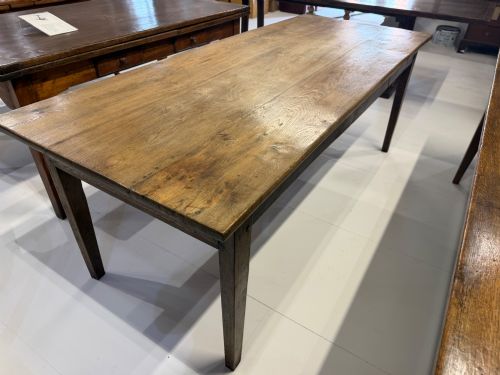
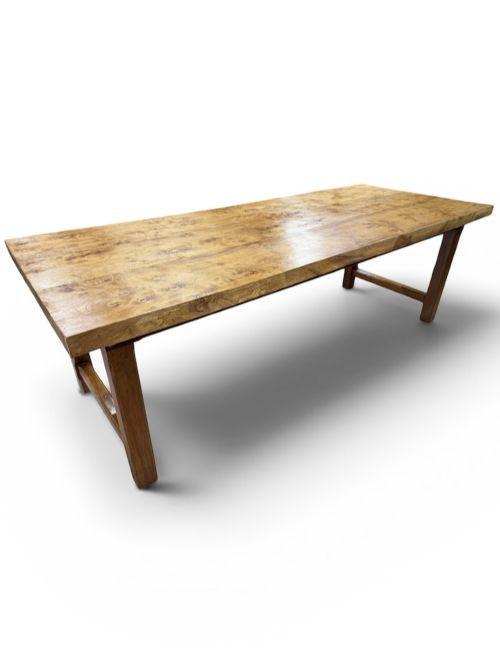
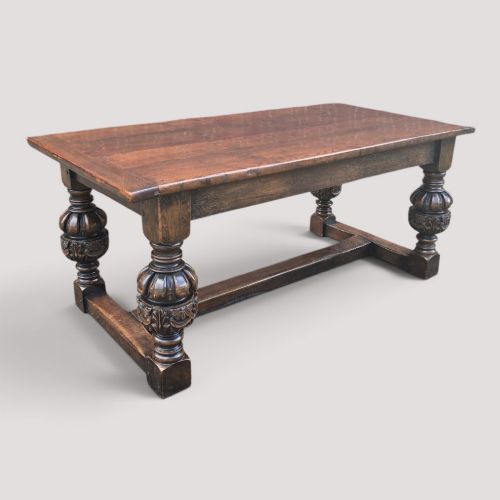
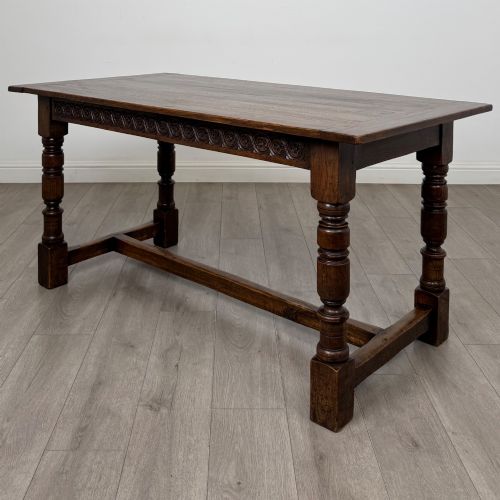
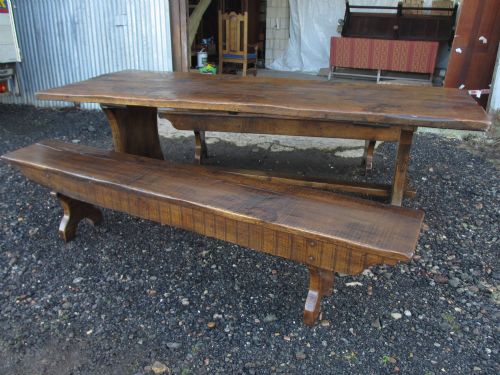
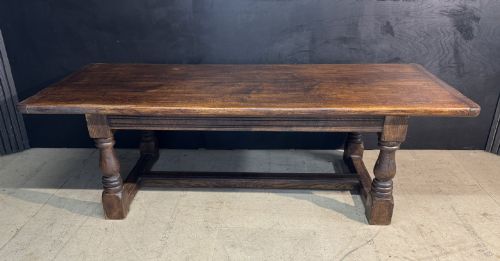
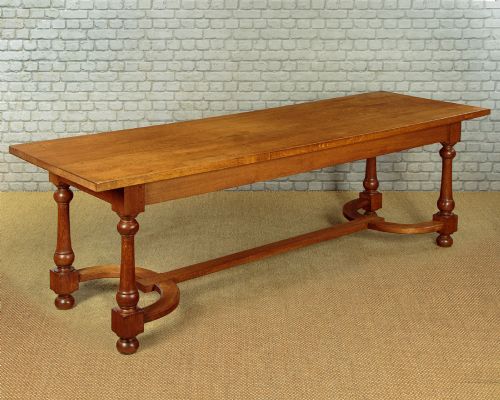
A solid oak wooden table spans substantial refectory dining boards, practical side surfaces, and low coffee variants shaped across the nineteenth and twentieth centuries. Buyers encounter heavy farmhouse designs alongside lighter Edwardian iterations and Arts and Crafts creations.
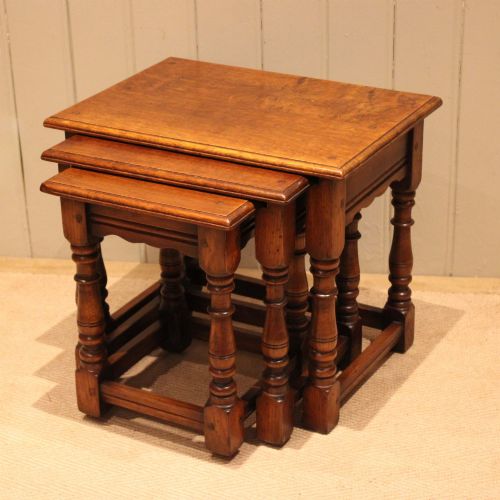
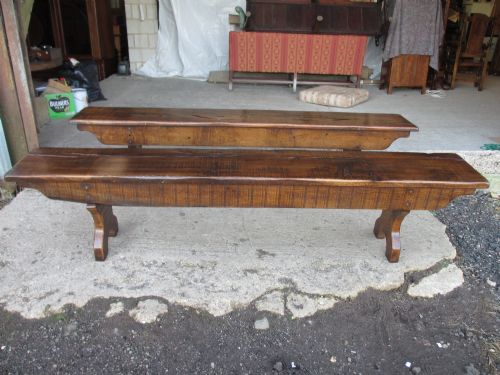
The material focus centres firmly on oak and solid oak construction, sometimes accompanied by walnut or secondary woods, alongside metal fittings in brass, iron, and glass. Forms range from extending draw-leaf dining surfaces to compact nests of tables and robust benches.
Origins stretch from English country workshops to French provincial makers, taking shape through rustic farmhouse, Jacobean Revival, and Edwardian aesthetic movements. These pieces served practical domestic roles in dining rooms, kitchens, and libraries.
How they were made
Timbers of oak and solid oak provide the primary structural foundation, chosen for dense grain and long-term durability. Joinery relies on traditional methods suited to heavy daily use in farmhouse and refectory settings.
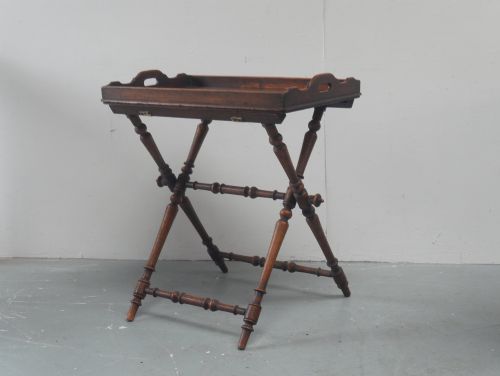
Secondary elements incorporate brass handles, iron brackets, and occasional glass inserts to complete functional items such as butlers trays and serving tables. Wood surfaces receive basic finishing to protect the timber while revealing natural figuring.
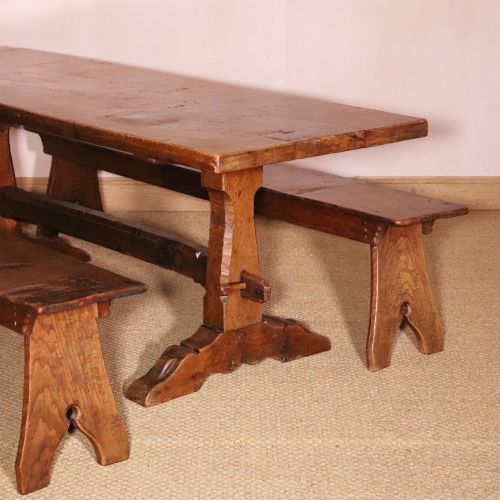
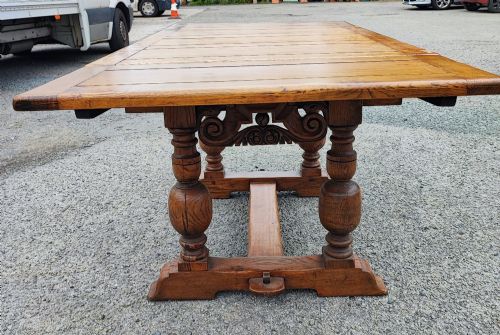
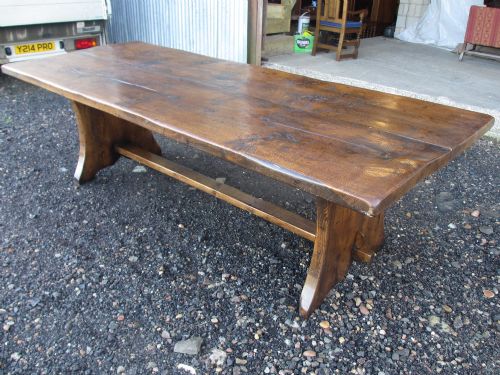
Construction techniques include trestle ends, pedestal supports, and draw-leaf mechanisms designed for practical expansion. Carved details and shaped supports reflect specific period styles like Jacobean Revival and Arts and Crafts.
Several tables boast such deep timber planks that generations of family dinners left zero impression on the iron-hard grain.
What varies in quality
The degree of material selection separates robust standard builds from superior examples, particularly in the choice of thick oak planks versus lighter boards. Timber weight and grain density dictate the overall substance of the piece.
Execution of joinery and carved ornamentation defines the upper tier of craftsmanship, where trestle ends and joints fit with absolute rigidity. Refined surface finishing and period-appropriate hardware enhance the integrity of the design.
The Solid Oak Wooden Table Glossary
- Refectory table
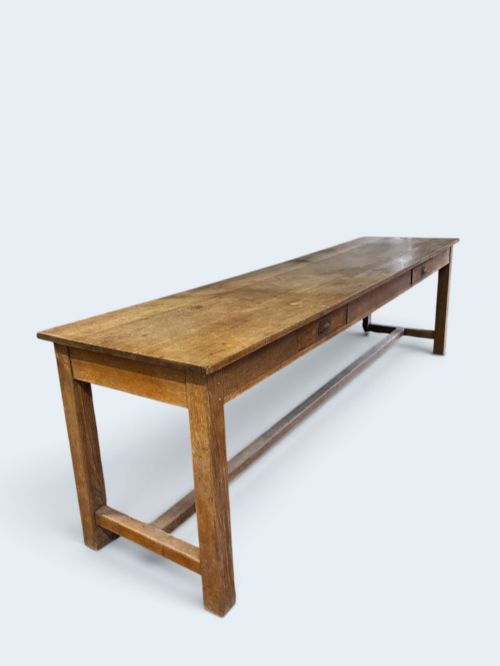
- A long, narrow dining table traditionally used in monastic refectories and later adopted for domestic dining rooms. These pieces often feature trestle ends or heavy side stretchers.
- Draw leaf table
- A dining table equipped with two hidden leaves sliding out from beneath the main top to extend surface length. This mechanism offers flexible sizing for larger gatherings.
- Tilt top pedestal
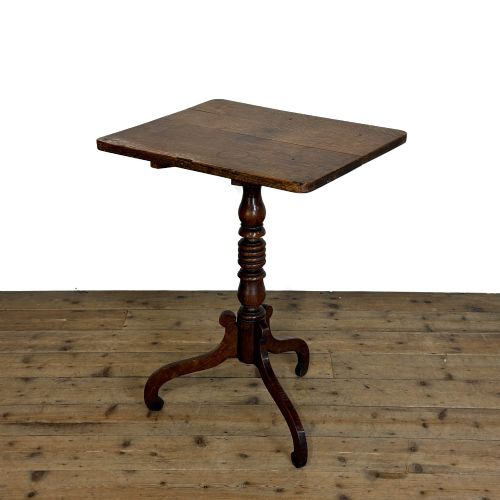
- A table construction where the wooden top pivots vertically on a central pillar for compact storage against a wall. This format appeared frequently in nineteenth-century occasional pieces.
- Joint stool
- A sturdy wooden stool constructed with mortise and tenon joints held together by wooden pegs. These early forms served multiple household seating and placement functions.
- Arts and Crafts
- A design movement valuing handcraftsmanship, simple utility, and honest expression of materials over mass production. Pieces from this tradition emphasise plain oak surfaces and understated joinery.
Solid Oak Wooden Table: Frequently Asked Questions
How do I care for solid oak?
Maintain timber surfaces by dusting with a dry cloth and avoiding excessive moisture or direct heat sources.
Apply natural beeswax periodically to nourish the wood grain and preserve the protective finish.
Are these tables suitable for daily dining?
Heavy refectory and farmhouse builds provide exceptional stability for daily family meals and heavy kitchen use.
Solid construction ensures the timbers withstand regular wear while developing a richer patina over time.
What defines an Edwardian oak table?
Edwardian examples often feature lighter proportions influenced by revival styles while retaining solid timber construction.
Detailing ranges from plain surfaces to subtle carved motifs on trestle ends or pedestal supports.
How do draw leaf mechanisms work?
Concealed extension leaves slide smoothly from beneath the main central surface to expand table length.
This system allows quick adjustment without removing or storing separate tabletop boards.