

Carved Oak Farmhouse Table
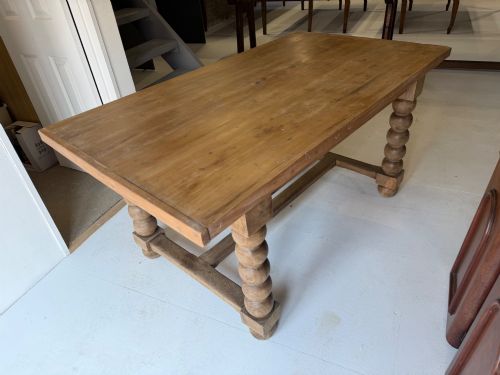
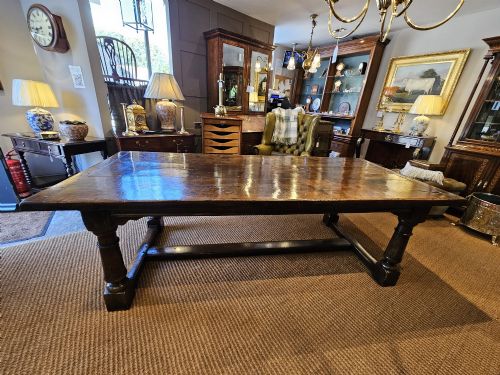
A carved oak farmhouse table brings substantial weight and honest grain to a room, serving as the central gathering place for daily meals.
Carved Oak Farmhouse Table
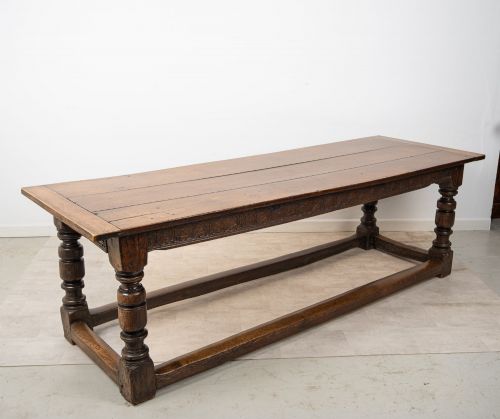
When you search for a carved oak farmhouse table, you encounter large refectory forms, kitchen dining tables, and occasional coffee tables designed for everyday domestic use. These pieces bridge centuries of domestic life, spanning from the seventeenth century through Georgian periods up to the early twentieth century.
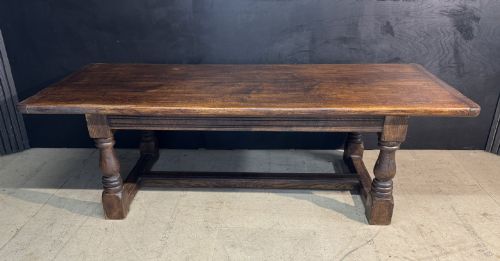
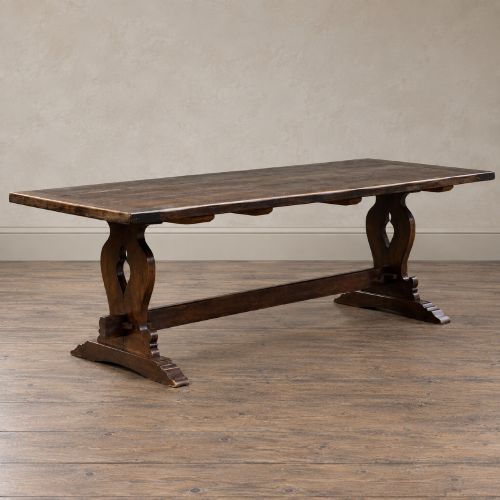
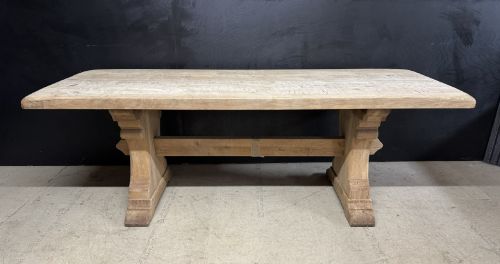
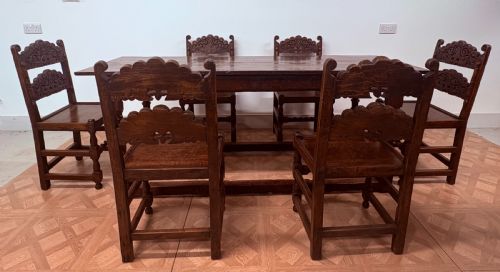
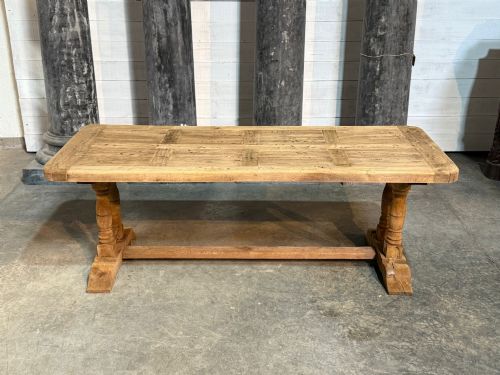
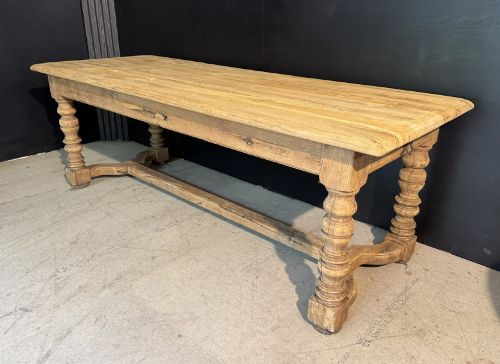
The version most commonly met on this page is the refectory dining table constructed from solid oak, often featuring extended lengths to seat multiple guests comfortably. Alongside these, French provincial and country kitchen variations appear frequently, bringing distinct regional proportions and occasional drawer additions to the form.
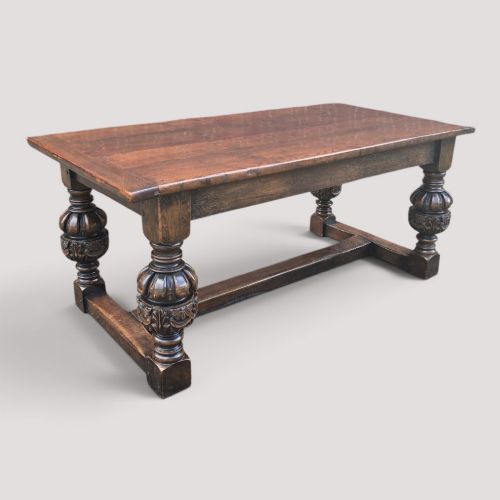
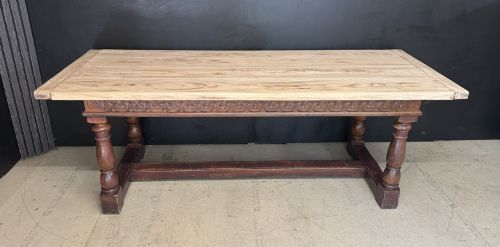
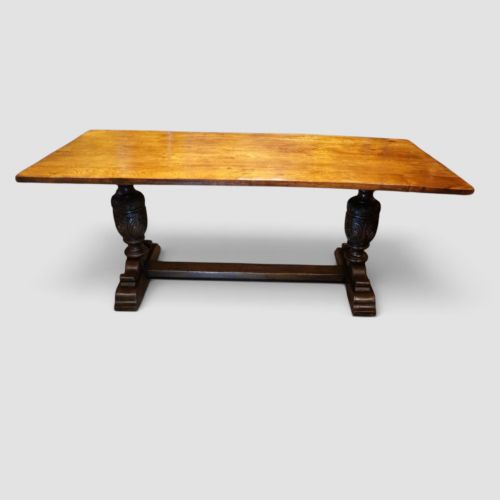
Stylistic influences range widely across the selection, encompassing Jacobean and Tudor revivals, Gothic details, and simpler rustic farmhouse interpretations. Each piece demonstrates how utilitarian domestic furniture incorporated decorative carving on rails, legs, and stretchers over successive eras.
What varies in quality
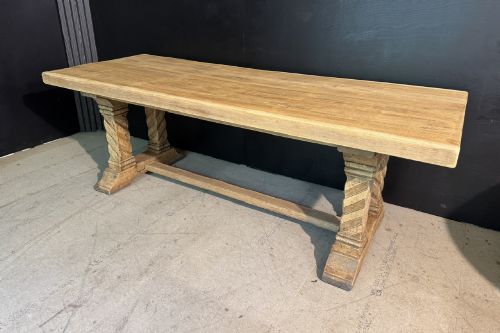
The integrity of the timber and the honesty of the construction dictate the standing of a piece within its period. Tables fashioned from thick, substantial oak planks command greater regard than those utilising thinner stock or mixed secondary woods.
The execution and depth of the carved elements separate standard utility pieces from more ambitious revival or period examples. Crisp, purposeful hand carving on rails and legs elevates the overall character, whereas worn or perfunctory detailing alters the visual balance.
One Danish table hides square, elaborately carved legs beneath its surface.
The Carved Oak Farmhouse Table Glossary
- Refectory table
- A long, narrow dining table traditionally used in monastic dining halls and later adopted for domestic farmhouse kitchens. This form forms the backbone of many listings on this page.
- H stretcher
- A horizontal wooden brace connecting the legs of a table in the shape of the letter H to provide structural rigidity. It often shows wear from centuries of resting feet.
- Draw leaf table
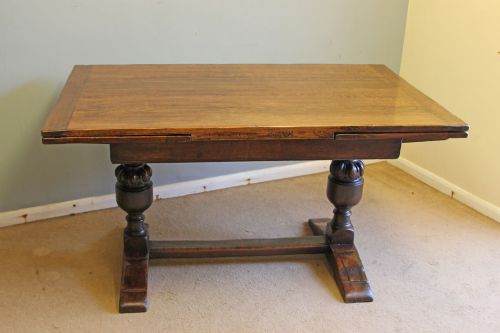
- An extending table equipped with hidden leaves beneath the main top that pull out from either end to increase surface area. This mechanism allows the table to adapt for larger gatherings.
- Plank top
- A table surface constructed from joining multiple long boards of timber together side by side. The number of planks often indicates the age and scale of the table.
Carved Oak Farmhouse Table: Frequently Asked Questions
How do I seat twelve people?
Look for substantial refectory tables spanning significant lengths, or utilise extending models with draw leaf mechanisms that expand when needed.
Measuring the clearance beneath the aprons and between the legs ensures chairs fit comfortably around the entire perimeter.
What is a refectory table?
A refectory table is a long, narrow dining table originally designed for communal dining in monasteries before becoming a staple of farmhouse kitchens.
These pieces typically feature thick tops supported by sturdy legs joined by low stretchers for added stability.
How do I identify seventeenth century tables?
Seventeenth century pieces often display heavy structural framing, period-specific jointing, and distinct regional carving motifs characteristic of the era.
Examining the underside reveals hand-cut elements and material ageing consistent with early timber preparation.
Can I use a coffee table version?
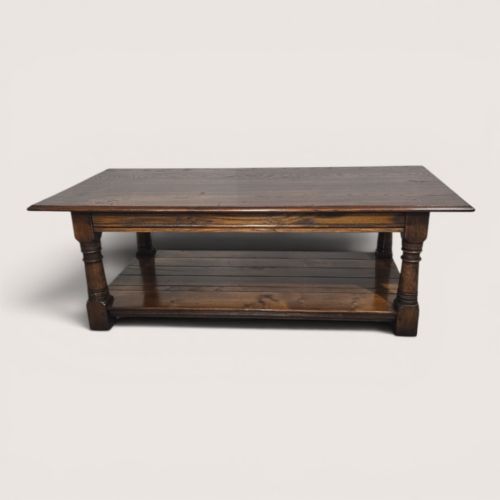
Lower coffee table variations derived from full-size dining boards offer the same sturdy oak construction and rustic grain in a compact domestic scale.
These pieces suit living spaces requiring the character of traditional farmhouse furniture without the imposing height of a dining table.