

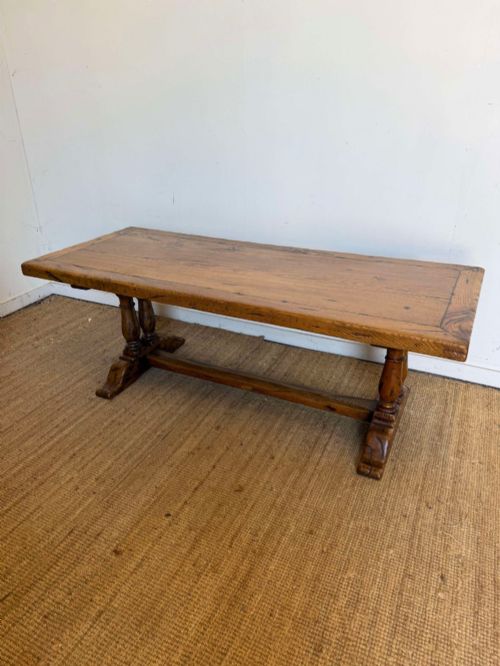
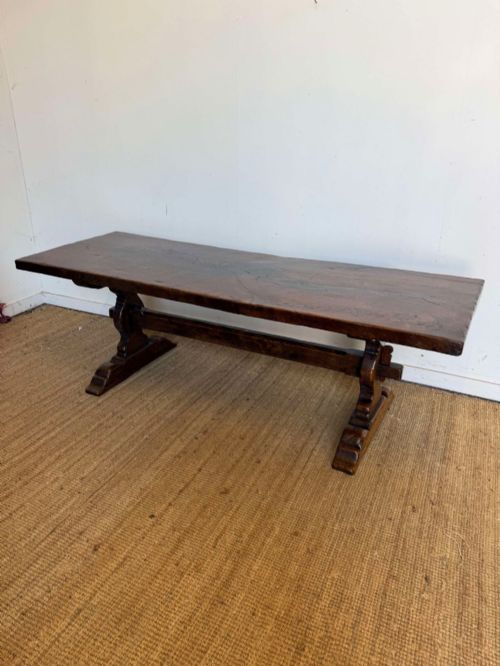
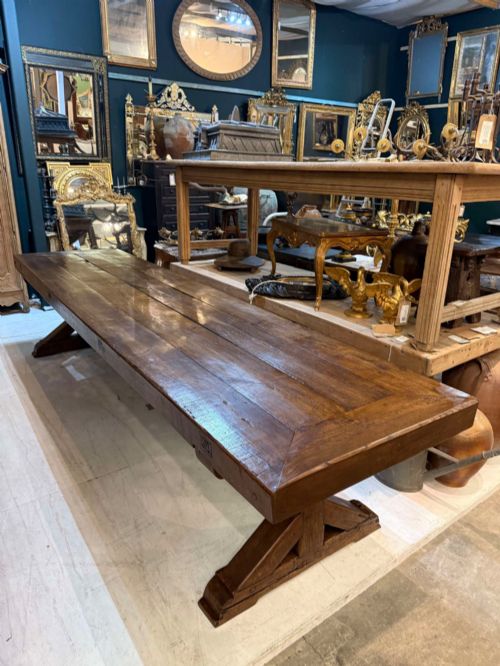
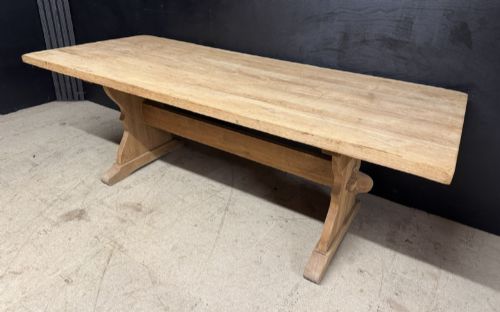
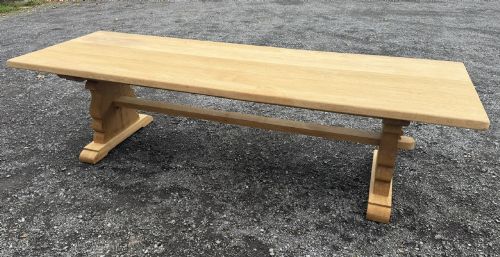
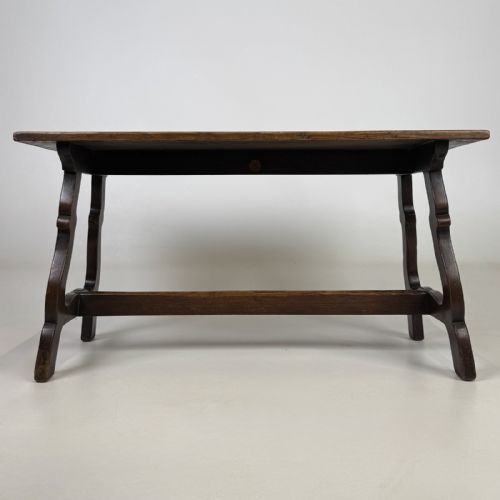
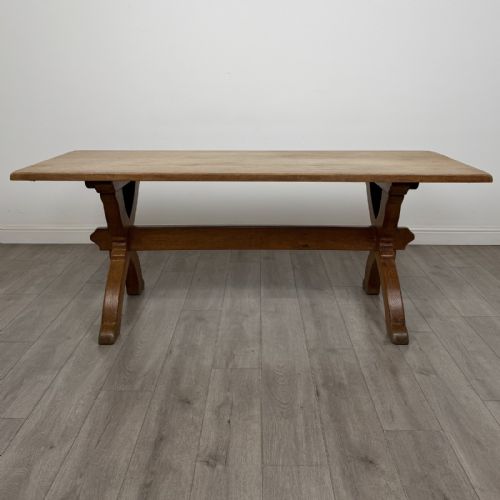
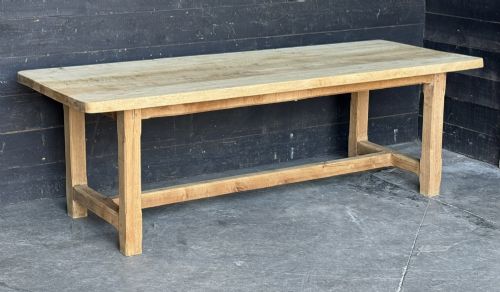
Solid Oak Trestle Table
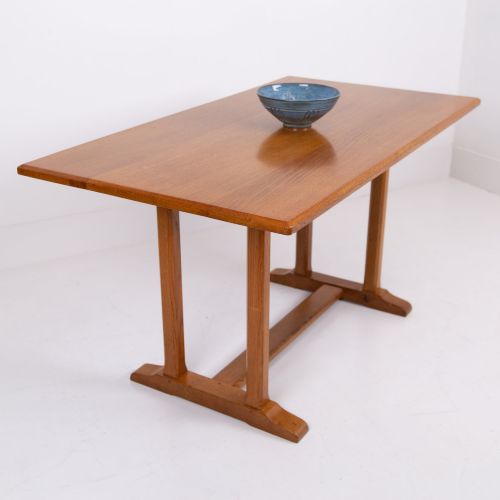
A solid oak trestle table brings weight and timber character to a room, drawing on centuries of refectory and farmhouse traditions.
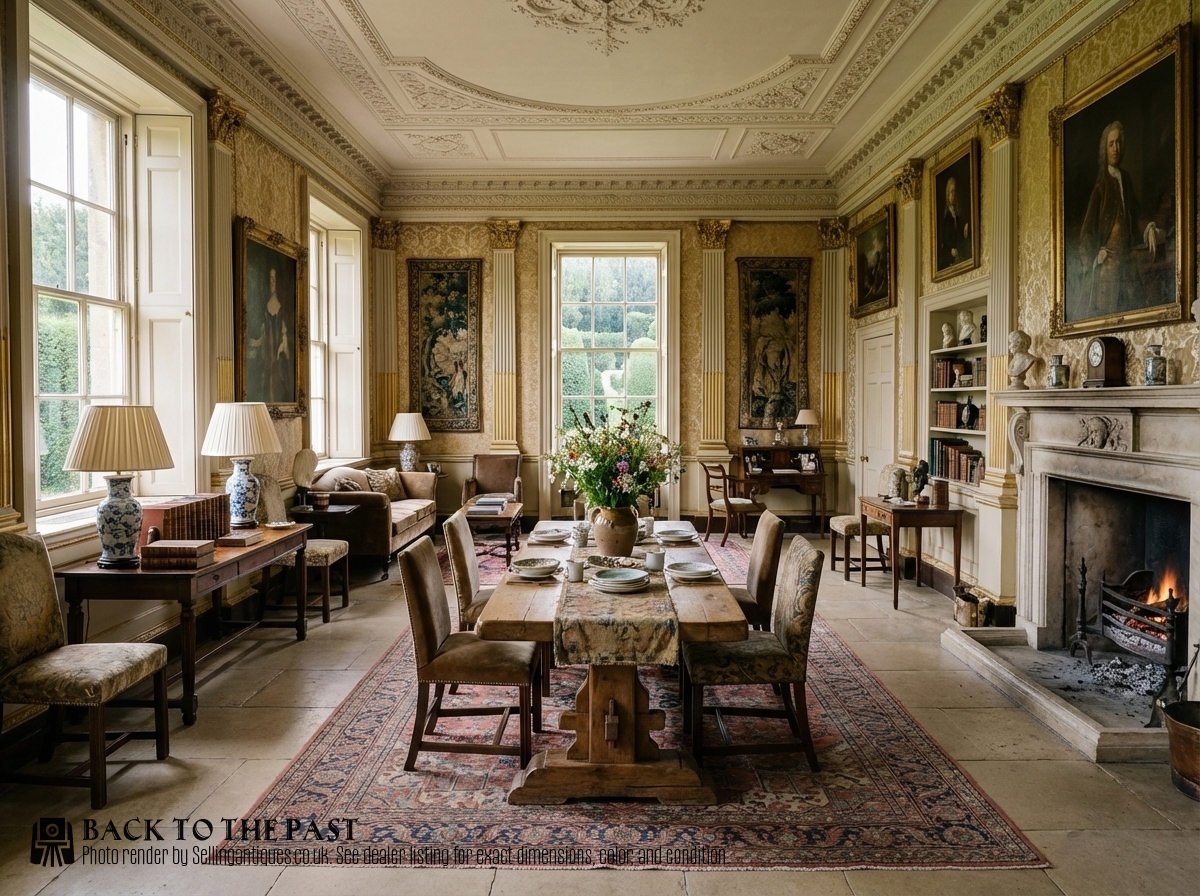
Solid Oak Trestle Table
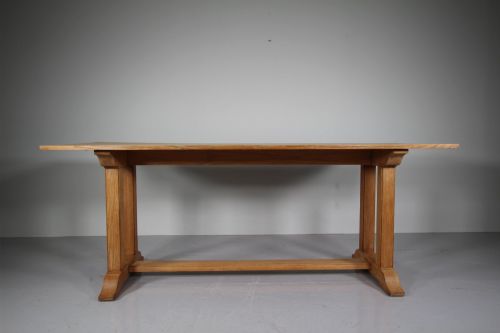
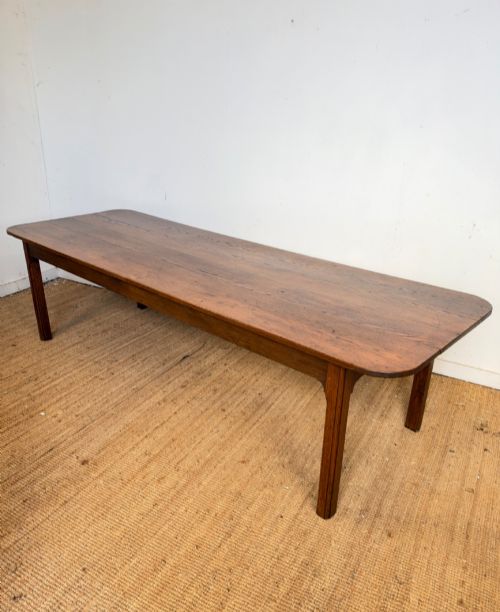
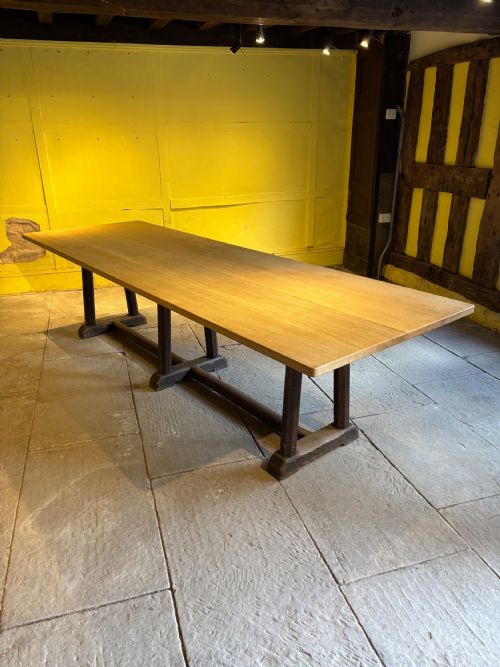
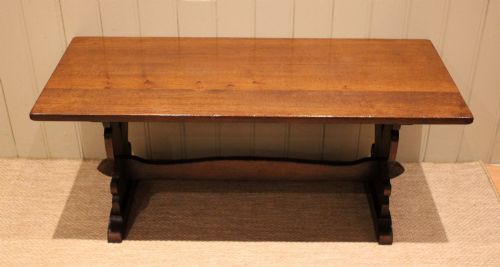
A solid oak trestle table provides a sturdy timber surface rooted in long refectory and farmhouse traditions. These pieces appear across periods from the eighteenth century through the Edwardian era up to the nineteen-thirties, taking forms such as dining tables, library tables, and serving tables.
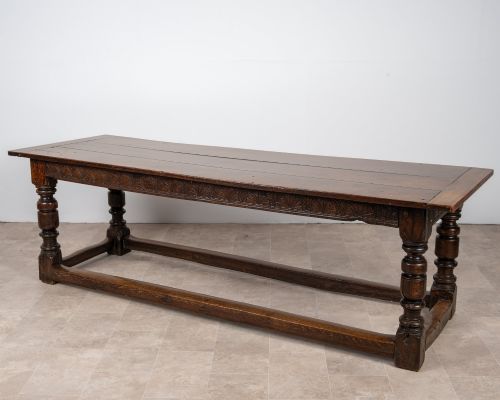
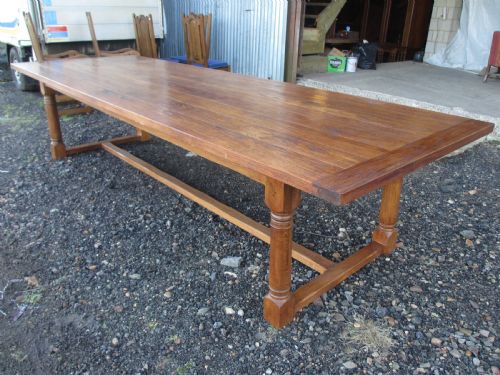
Buyers seeking this phrase frequently encounter heavy refectory styles featuring shaped trestle ends, thick timber tops, and matching benches. Styles range from rustic country and French farmhouse to Arts and Crafts and Jacobean Revival.
Origins stretch from English workshops to French provincial makers, utilising dense timbers like oak and elm. The resulting boards offer deep grain patterns and substantial proportions suited to daily domestic service.

How they were made
Construction relies primarily on solid oak and elm, sometimes complemented by iron brackets, leather inserts, or painted elements. Timbers are selected for density, with quarter-sawn oak displaying distinctive medullary rays across the grain.
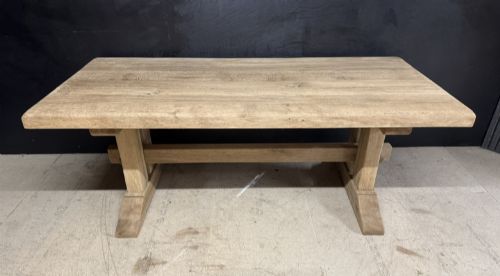
Joining methods include thick pegged mortise and tenon joints connecting the heavy top boards to substantial trestle supports. Single-plank surfaces and deep refectory rails provide structural stability without losing the natural warmth of the wood.
Solid Oak Trestle Table Retail Price Guide 2026
Typical asking prices for solid oak trestle table among the pieces listed under this phrase on Sellingantiques today, from the lower quarter to the upper quarter. They describe what is for sale here now, not the wider market.
Listings span centuries of cabinetmaking, featuring materials like solid oak, elm, and iron across styles from rustic farmhouse to Arts and Crafts.
What varies in quality
Quality rests upon timber selection and the integrity of the construction, distinguishing standard utilitarian pieces from finer artisanal work. Superior examples display carefully matched grain patterns on thick single-plank tops and substantial, well-balanced trestle ends.
Proportion and execution define the hierarchy of these tables, where cleanly carved details and sound joinery outweigh mere size. The integration of period hardware or thoughtful timber movement accommodation separates standard production from exceptional craftsmanship.
The Solid Oak Trestle Table Glossary
- Trestle
- A supporting framework consisting of a horizontal beam fixed to two vertical feet or uprights. This design allows maximum legroom along the length of the table.
- Refectory table
- A long, narrow dining table traditionally used in monastic dining halls. These pieces often feature sturdy underframes and thick timber tops suited to communal meals.
- Quarter-sawn oak
- Timber cut radially across the growth rings rather than tangentially. This method produces durable boards with a decorative silver flake grain pattern.
- Draw leaf table
- A dining table equipped with sliding leaves stored beneath the main surface. The leaves pull out from each end to extend the length of the top.
- Mortise and tenon
- A traditional joint formed by fitting a projecting tongue into a corresponding cavity. Pegs are often driven through the joint to lock the timbers securely in place.
Solid Oak Trestle Table: Frequently Asked Questions
How do I date a solid oak trestle table?
Dating relies on observing construction methods, tool marks, and timber characteristics. Hand-cut peg joints, single-plank surfaces, and vernacular design details typically point to earlier eighteenth-century origins.
Later Edwardian and twentieth-century examples often exhibit machine-sawn uniformity or revival styling such as Jacobean turning and Arts and Crafts simplicity.
Are these tables suitable for everyday family dining?
These pieces were built for heavy communal use, making them durable surfaces for daily meals and kitchen activities. Solid timber construction withstands regular wear while acquiring a deeper patina over time.
Pairing the table with matching benches or sturdy chairs creates a functional setup for busy household spaces.
What is the difference between a refectory and a trestle table?
A refectory table is defined by its long, narrow proportions intended for communal dining, while a trestle table is defined specifically by its base construction of upright supports and a connecting beam.
Many refectory tables utilise trestle ends, combining the elongated surface format with the open-leg framework characteristic of trestle designs.
How should I care for a solid oak surface?
Maintaining solid oak involves regular dusting with a dry cloth and avoiding excessive moisture or direct heat sources. Natural oils or wax finishes can be reapplied periodically to nourish the grain and protect the timber.
Quickly wiping away spills prevents staining and preserves the natural finish of the antique wood.