
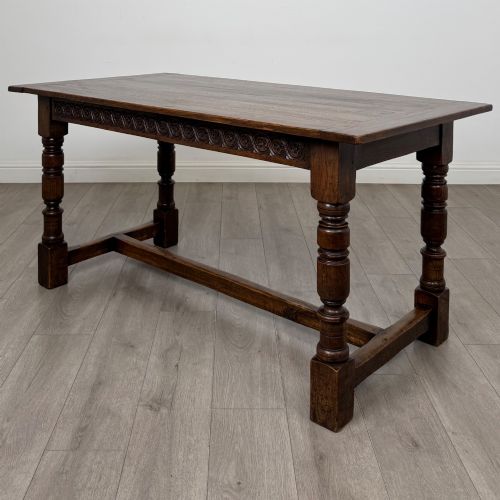
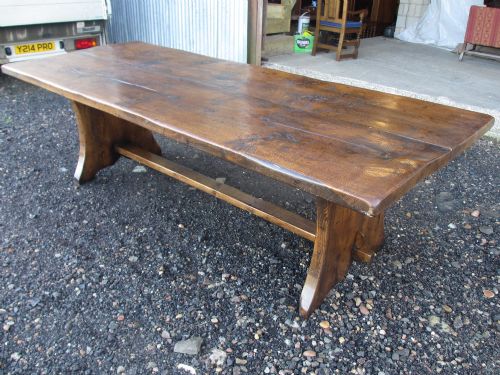
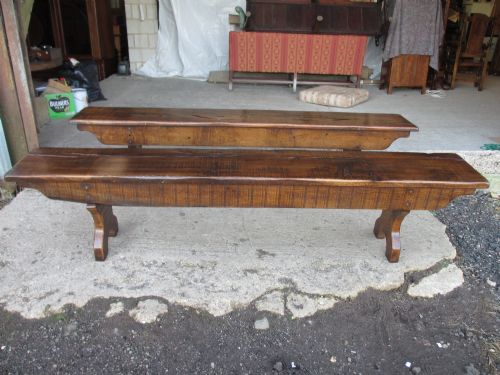
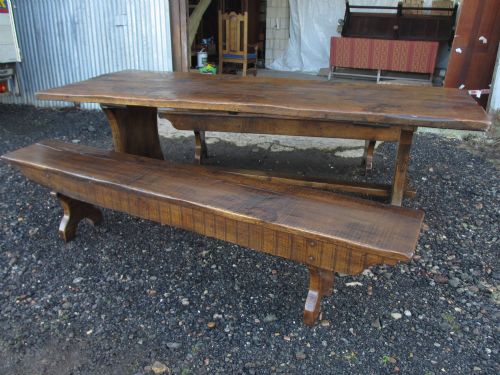
Solid Oak Trestle Dining Table
A solid oak trestle dining table brings enduring strength and natural grain into a room, offering a functional centrepiece built for daily use.
Solid Oak Trestle Dining Table
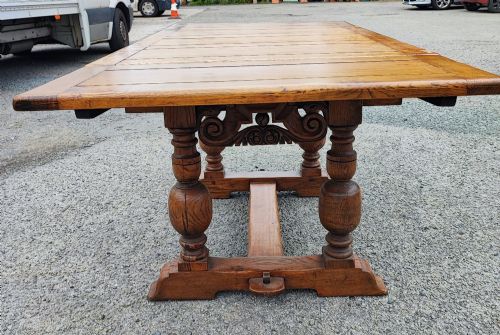
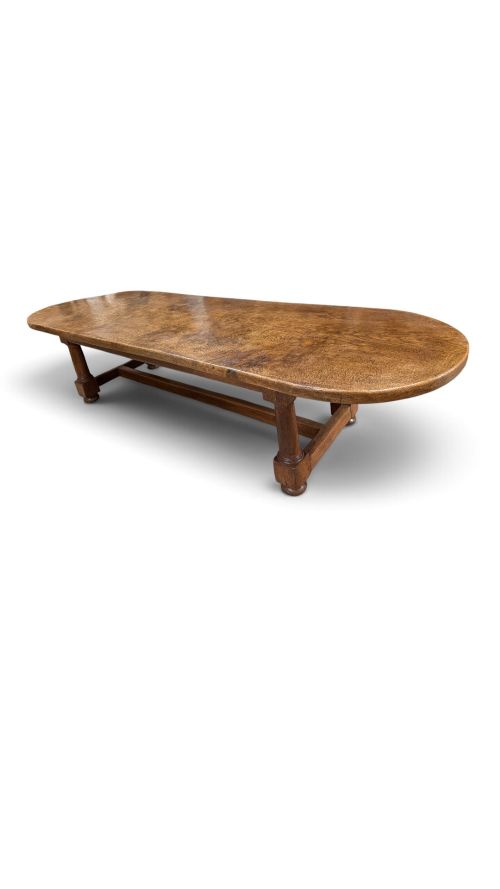
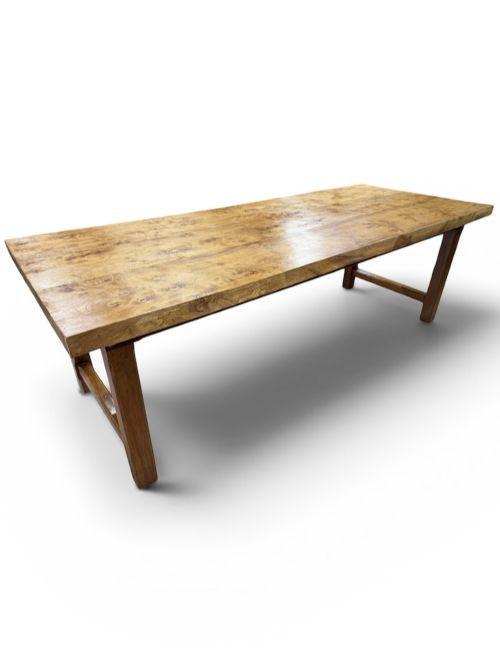
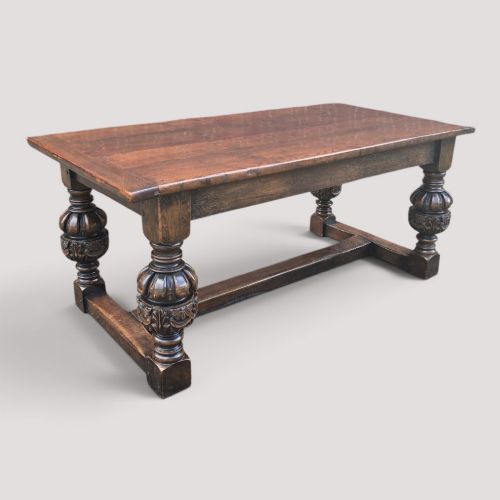
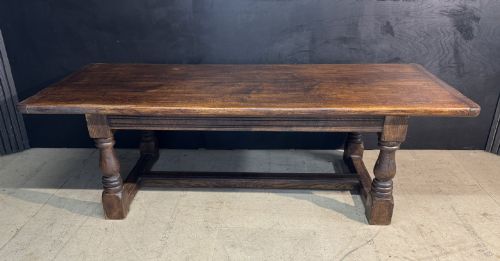
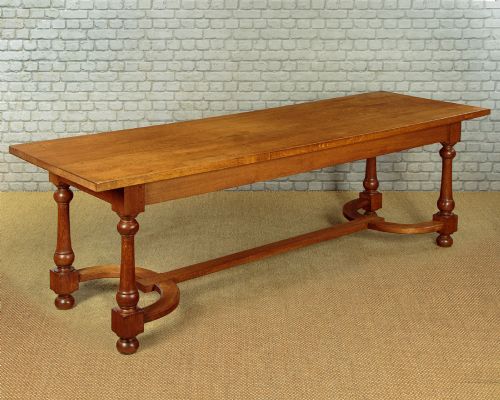
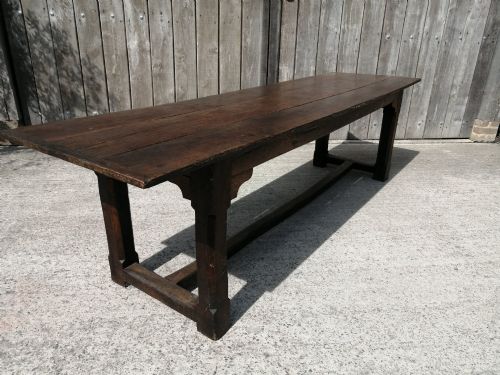
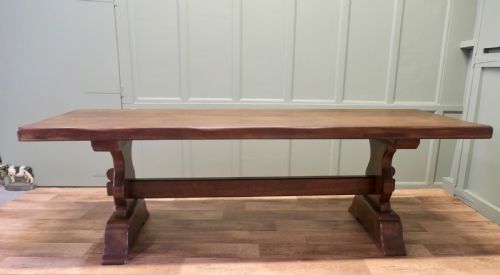
A solid oak trestle dining table provides a robust surface rooted in traditional refectory and farmhouse forms. When searching for a solid oak trestle dining table, buyers encounter examples spanning from the eighteenth century through to the Edwardian era and the 1930s.
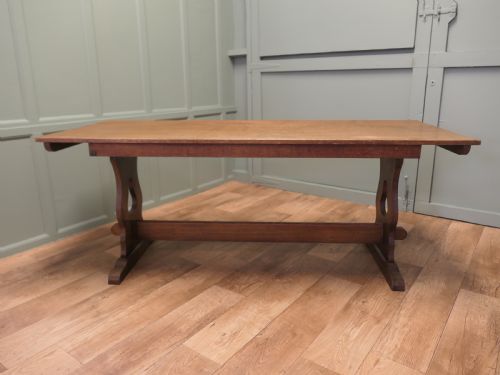
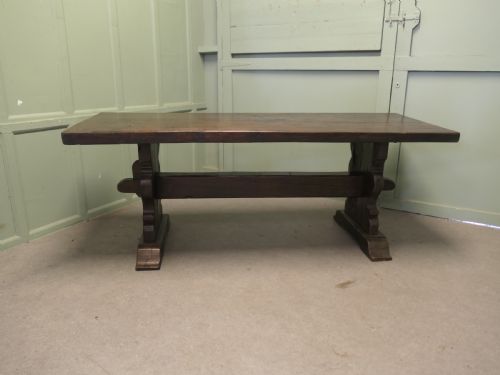
The selection includes heavy refectory formats, French provincial styles, and Arts and Crafts designs. Many incorporate thick plank tops supported by shaped trestle ends, alongside occasional matching benches.
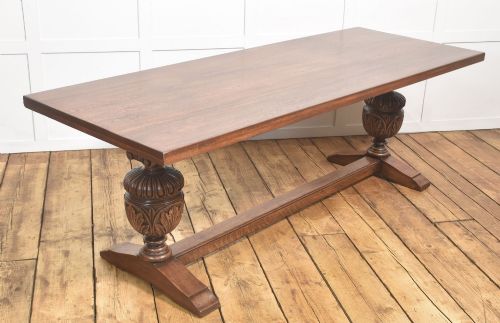
Earlier pieces from the eighteenth century or George I period appear alongside twentieth-century revivals in Jacobean and Arts and Crafts styles. These heavy wooden tables serve utilitarian dining and library functions with equal ease.
What varies in quality
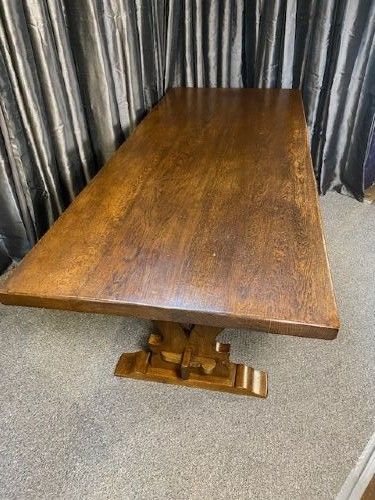
The substance of the timber top separates standard examples from exceptional pieces. Single plank surfaces and quarter-sawn boards displaying strong medullary rays command greater attention than joined multi-plank tops.
Structural heft and the proportion of shaped trestle ends dictate the architectural presence of the table. Density of the oak and the integrity of historic joints determine how well the piece endures decades of service.
Historic public school libraries contributed several sturdy oak tables now repurposed for domestic dining.
The Solid Oak Trestle Dining Table Glossary
- Refectory table
- A long narrow dining table originally built for monastic dining halls. These forms dominate the heavier farmhouse and trestle selections.
- Trestle ends
- Upright supports connected by a horizontal stretcher or shoe, replacing traditional corner legs. This construction allows for uninterrupted seating along the length of the table.
- Quarter-sawn oak
- Timber cut radially from the log rather than tangentially. This method produces characteristic decorative grain patterns known as silver grain or medullary rays.
- Draw leaf table
- An extending dining table featuring leaves stored beneath the main top that slide out to increase surface area. This mechanism provides flexibility for larger gatherings.
Solid Oak Trestle Dining Table: Frequently Asked Questions
How do I care for a solid oak table?
Maintain the wood by applying natural beeswax periodically to nourish the dry grain and protect against surface moisture. Avoid placing hot dishes directly onto the bare timber.
Keep the table away from direct heat sources such as radiators to prevent the thick oak planks from splitting or warping over time.
Are these tables suitable for everyday family use?
Solid oak construction provides exceptional durability and stability for daily meals, homework, and gatherings. The robust timber resists heavy impact and accommodates active households.
Heavier refectory formats and trestle bases remain firmly planted on the floor, preventing wobbling during daily activities.
How do I date an antique oak table?
Examine the underside of the top and the joinery methods for tool marks and construction clues. Hand-cut peg joints and irregular board widths often indicate eighteenth-century or earlier origins.
Standardised machine-cut dimensions and revival styles usually point toward Edwardian production or early twentieth-century workshops.
What is the difference between refectory and trestle tables?
A refectory table describes a long, narrow dining format traditionally used in communal halls. A trestle table specifically defines the method of support using upright ends connected by a stretcher.
Many pieces combine both definitions, featuring refectory proportions supported by shaped trestle feet.