

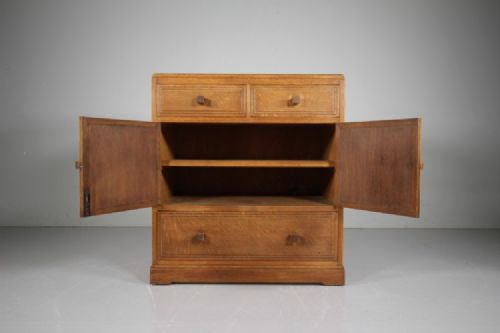
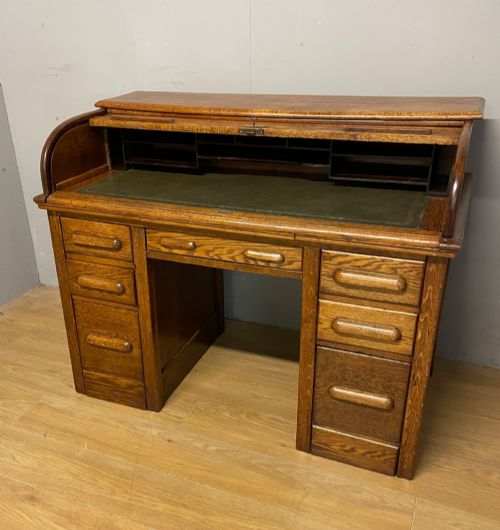


Solid Oak Secretary
A solid oak secretary combines sturdy utility with hidden writing drawers, offering a timeless anchor for any home workspace.
Solid Oak Secretary
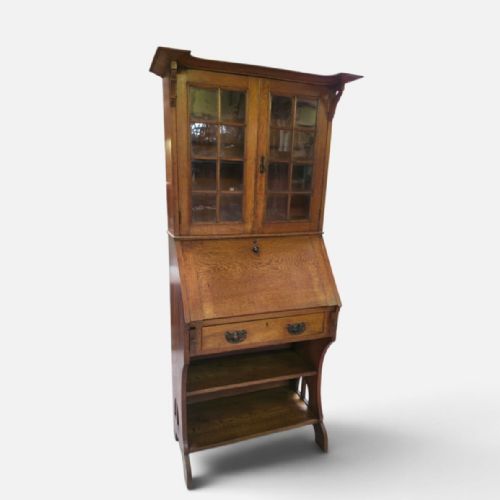
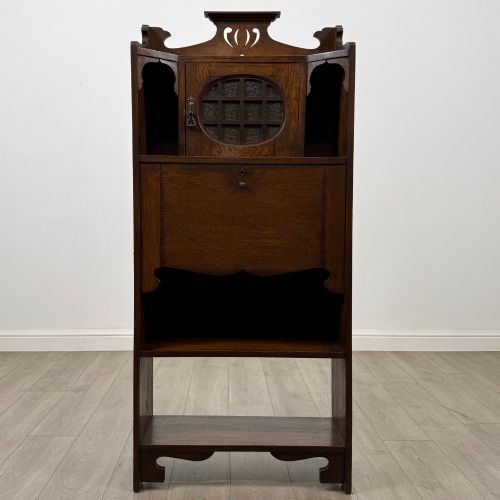
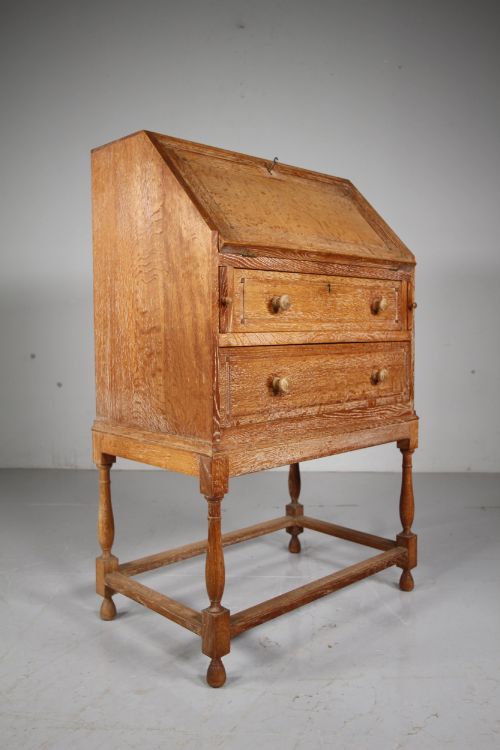
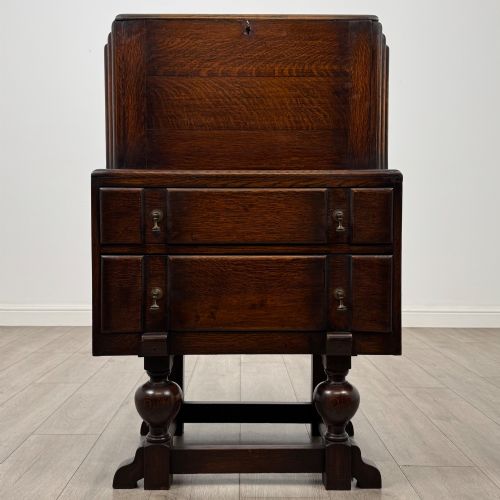
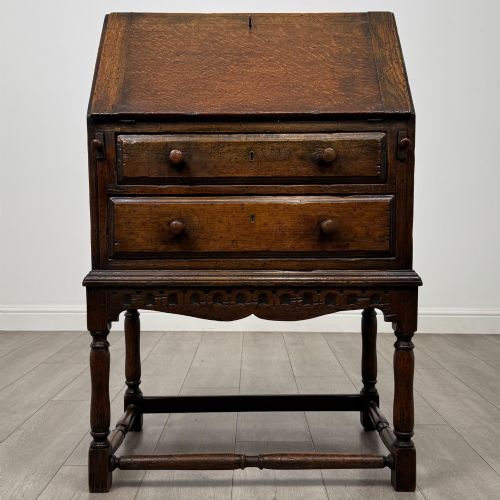
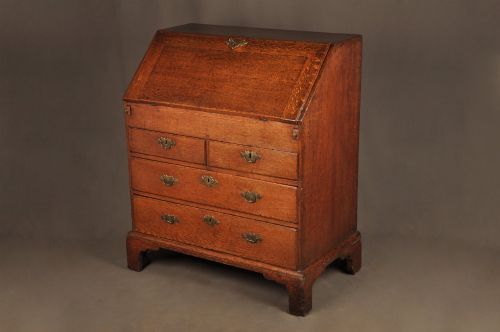
A solid oak secretary functions primarily as a writing bureau, desk, or bureau bookcase designed for practical correspondence and storage. When searching for a solid oak secretary, you encounter forms ranging from compact Edwardian writing desks to substantial 18th-century pieces and Arts & Crafts variants.
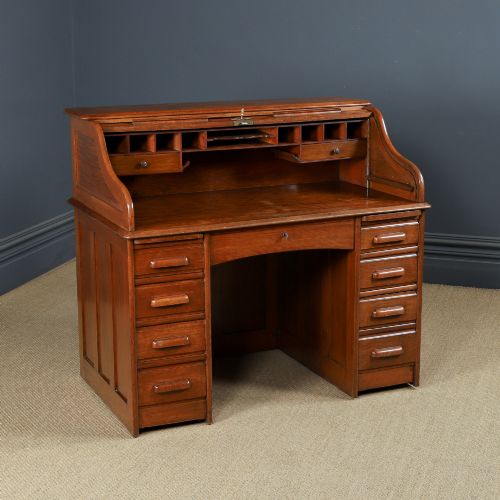
The pieces appearing on this page span several distinct periods including early Georgian, Edwardian, and twentieth-century decades up to 1940. Bureau bookcases and roll-top desks also emerge within these listings, showing diverse regional British workshop traditions and revival styles.
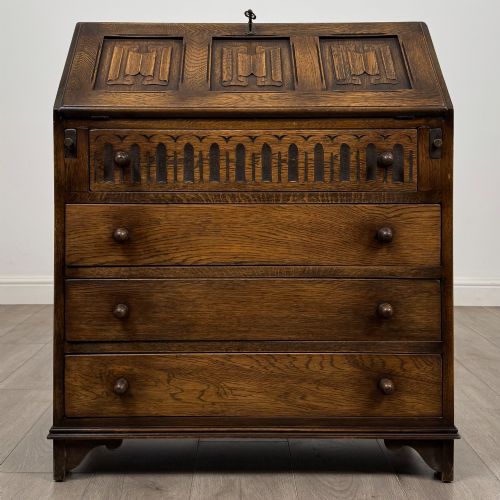
Early eighteenth-century examples provide simple, heavy timber construction while later Edwardian and 1930s incarnations often incorporate carved linenfold panels or fitted interior compartments. Each format serves the fundamental purpose of concealing writing materials behind a sloping fall-front or roll-top mechanism.
Materials and construction methods
Construction relies heavily on oak and English oak, selected for durability and pronounced grain patterns. Workshops often supplemented these primary timbers with brass for handles, escutcheons, and hinges, alongside occasional glass panels in bookcase doors.
Metal elements such as wrought iron and copper appear in specific hardware applications, particularly among Arts & Crafts designs. Joinery techniques range from traditional hand-cut dovetails on internal drawers to panel-and-frame assemblies on the main bodies.
Solid Oak Secretary Retail Price Guide 2026
Typical asking prices for solid oak secretary among the pieces listed under this phrase on Sellingantiques today, from the lower quarter to the upper quarter. They describe what is for sale here now, not the wider market.
Listings span from early 18th-century pieces up to 1940, incorporating oak, brass, glass, lead, iron, and copper across Edwardian, Georgian, and Arts & Crafts styles.
Assessing quality and craftsmanship
Quality rests upon the selection of timber and the precision of the joinery rather than mere surface ornamentation. Superior examples display carefully matched grain across the fall-front and drawer facades, showing harmonious timber selection by the cabinetmaker.
Makers' labels or stamps from established retailers provide tangible evidence of provenance and superior workshop standards. The intricacy of interior pigeonholes, concealed compartments, and original brass or copper hardware further distinguishes finer examples from utilitarian production pieces.
Heals of London·Bryn Mawr Welsh·ROBERT MOUSEMAN THOMPSON·Liberty & Co·James Shoolbred & Co
The Solid Oak Secretary Glossary
- Bureau
- A desk featuring a sloping hinged writing flap that covers a nest of small drawers and pigeonholes. This form serves as the primary configuration found in these listings.
- Bureau bookcase
- A tall piece combining a lower bureau desk section with an upper shelved bookcase enclosed by doors. These units provide substantial storage capacity.
- Roll top desk
- A desk with a flexible tambour shutter made of narrow wooden slats that slides over the writing surface. This mechanism secures the desk contents without a traditional drop-front flap.
- Linenfold
- A style of carved wooden panelling that resembles folded vertical sheets of linen. Cabinetmakers frequently utilised this decorative motif on Edwardian and revival furniture.
- Arts and Crafts
- A design movement valuing traditional craftsmanship, simple forms, and visible construction methods over mass-produced ornamentation. Pieces from this tradition often feature understated hardware and honest timber surfaces.
Solid Oak Secretary: Frequently Asked Questions
What is the difference between a bureau and a secretary?
In British furniture terminology, both terms generally describe a writing desk with a sloping front that drops down to form a writing surface. Regional preferences often dictate whether a piece is called a bureau or a secretary.
Historically, secretary can also denote a tall chest with a fitted writing drawer, whereas a bureau specifically relies on the fall-front flap design.
How do I date an antique oak bureau?
Dating relies on examining construction methods, hardware, and stylistic indicators such as carved motifs or leg styles. Early 18th-century pieces typically show hand-cut dovetails and pegged frames.
Later Edwardian and 1930s items often feature machine-sawn components, standardised brass fittings, and labels from known retailers or workshops.
Are these desks suitable for daily modern use?
Solid oak construction provides immense structural resilience, making these pieces well-equipped for regular daily work. The internal compartments accommodate modern stationery while the drop-front provides a dedicated writing surface.
Care should be taken to protect the historical timber surfaces from moisture and excessive heat.
What does linenfold carving indicate?
Linenfold carving represents a decorative technique designed to mimic folded cloth panels on cabinet doors and drawer fronts. Its presence often points towards revival styles or Arts and Crafts pieces influenced by Tudor aesthetics.
Cabinetmakers utilised this motif to add texture and architectural interest to plain oak surfaces.