
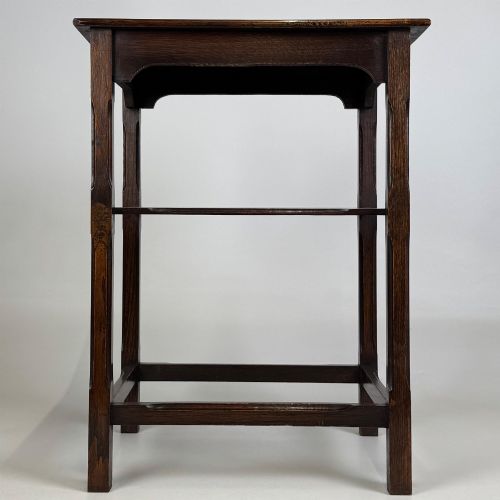
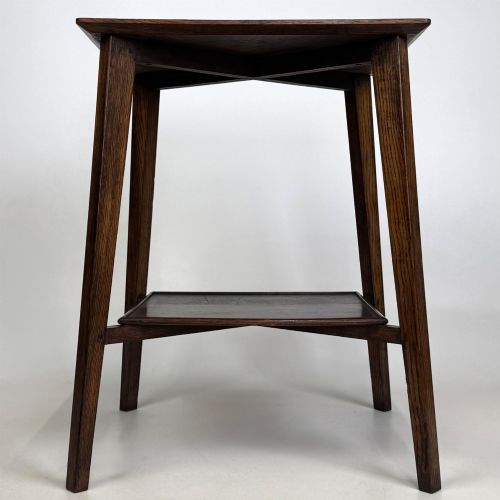
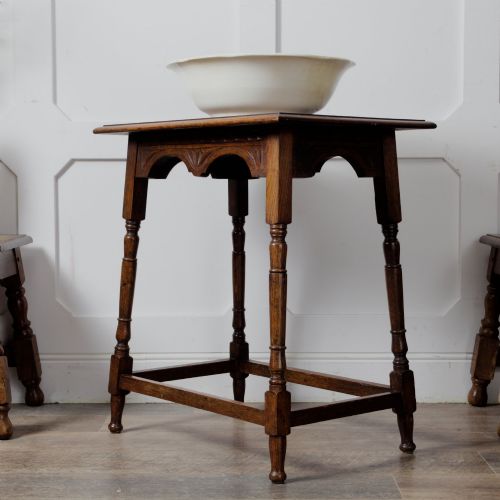
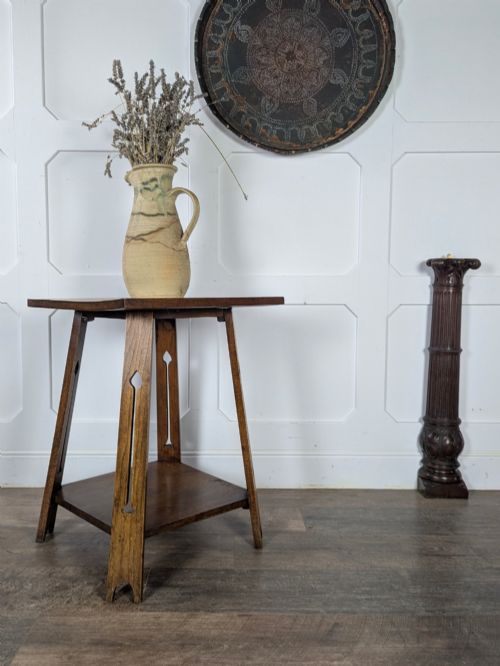


Solid Oak Plant Stand
A solid oak plant stand brings sturdy grain and honest proportion into a room, holding a favourite pot with quiet architectural presence.
Solid Oak Plant Stand
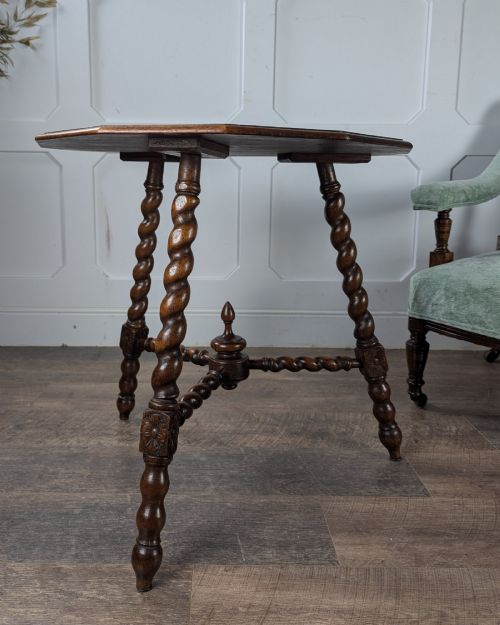
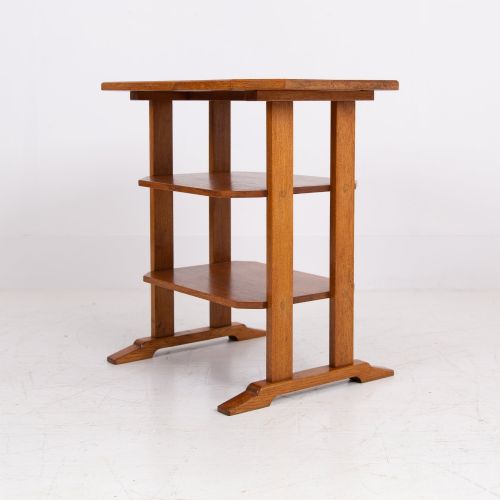
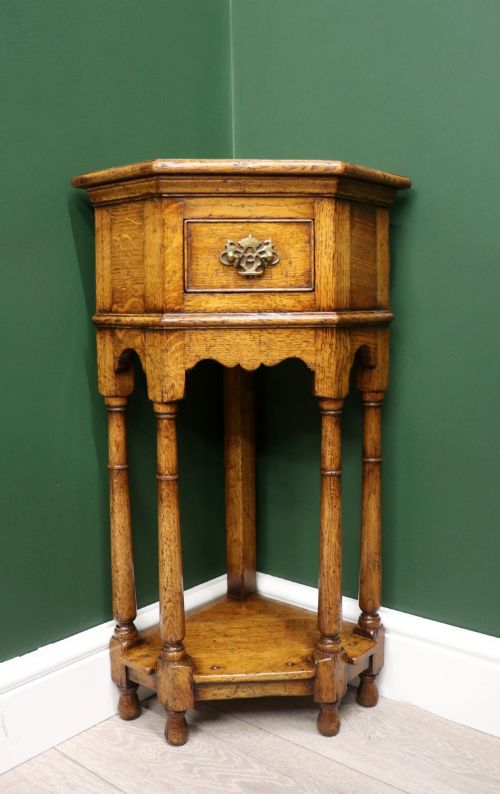
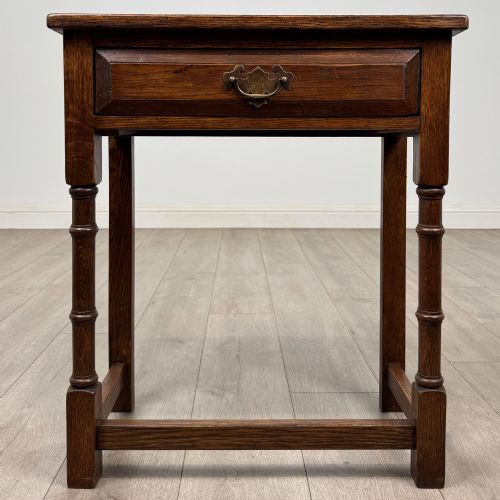
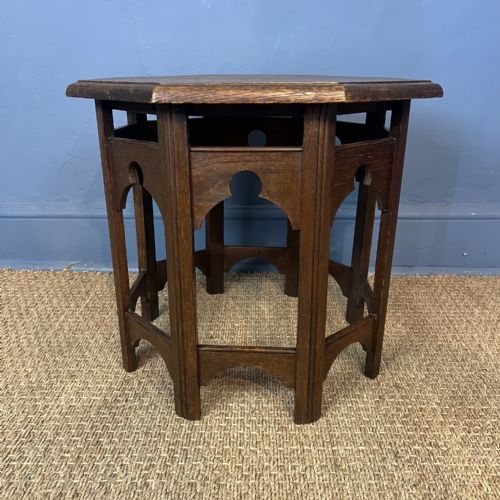
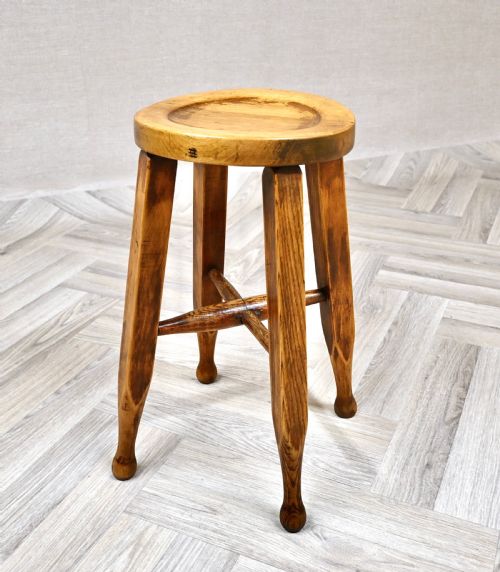
A solid oak plant stand is typically encountered in forms such as small side tables, joint stools, and occasional tables dating from the Victorian and Edwardian eras through to the Arts and Crafts and Art Deco periods. These pieces serve as pedestals or low surfaces, designed to elevate greenery or display objects within a domestic interior.
The materials and styles span from late nineteenth-century carved designs to early twentieth-century Cotswold and Glasgow School interpretations, with timber and ebonised wood appearing alongside solid oak. Buyers will find that many examples double as compact side tables or hexagonal display stands rather than tall, slender columns.
How they were made
Makers utilised solid oak timber, relying on its natural density and prominent grain to provide structural integrity for upright furniture. Joinery often involved traditional methods suited to heavy wood, ensuring stability under weight.
Surface detailing frequently included carved motifs, barley twist turnings, or ebonised wood accents, reflecting the prevailing styles of the late nineteenth and early twentieth centuries without masking the fundamental character of the oak.
Listings feature solid oak and timber forms spanning the Victorian, Edwardian, Arts and Crafts, and Art Deco periods.
What varies in quality
Quality in a solid oak plant stand rests upon the integrity of the timber selection and the precision of the construction. Pieces that display thoughtful proportion, clean joints, and well-executed carving demonstrate a higher level of workshop competence than simpler utilitarian items.
The distinction also lies in stylistic coherence, where regional movements such as the Arts and Crafts or Glasgow School imparted a distinct artistic vision to the form, elevating the object beyond a basic stand into a considered piece of furniture.
The Solid Oak Plant Stand Glossary
- Solid oak
- Timber that is entirely oak throughout its construction rather than veneered onto a secondary wood. This ensures durability and a consistent grain pattern.
- Arts and Crafts
- A design movement spanning the late nineteenth and early twentieth centuries that emphasised honest construction, simple forms, and visible handcraftsmanship.
- Barley twist
- A type of turning shaped like a spiral rope, commonly found on the legs and structural supports of Victorian and Edwardian furniture.
- Joint stool
- A sturdy wooden stool constructed with mortise and tenon joints, often utilised as a low table or plant support in traditional interiors.
- Ebonised wood
- Timber treated with a chemical stain or finish to imitate the deep, dark appearance of ebony, frequently used for contrast in period furniture.
Solid Oak Plant Stand: Frequently Asked Questions
What periods do these stands come from?
The pieces span from the late nineteenth century through the Edwardian era, with examples reaching into the 1920s and 1930s. Styles range from late Victorian carved designs to Arts and Crafts and Art Deco.
Most examples encountered date from the transitional period around 1900, reflecting regional British design movements like the Cotswold and Glasgow Schools.
How were solid oak stands used historically?
These pieces were built to support heavy earthenware pots, jardinières, and decorative plants within domestic hallways and parlours. Their robust timber frames provided the necessary stability for daily household placement.
Due to their compact proportions, many examples also functioned as occasional tables or side surfaces for books and small lamps.
How do I distinguish Arts and Crafts examples?
Arts and Crafts stands emphasise honest timber construction, unpretentious surfaces, and structural clarity rather than heavy applied ornament. They often feature exposed joinery and direct proportions derived from regional workshop traditions.
Details like chamfered edges, hexagonal tops, and a lack of excessive varnish help separate these pieces from mass-produced Victorian furniture.
How should I live with a solid oak stand?
Place the stand away from direct heat sources and sudden temperature shifts to protect the natural oak timber from movement. Regular dusting with a dry cloth keeps the surface finish preserved.
Use protective pads beneath heavy pots to prevent moisture rings from settling into the bare grain of the wood over time.