
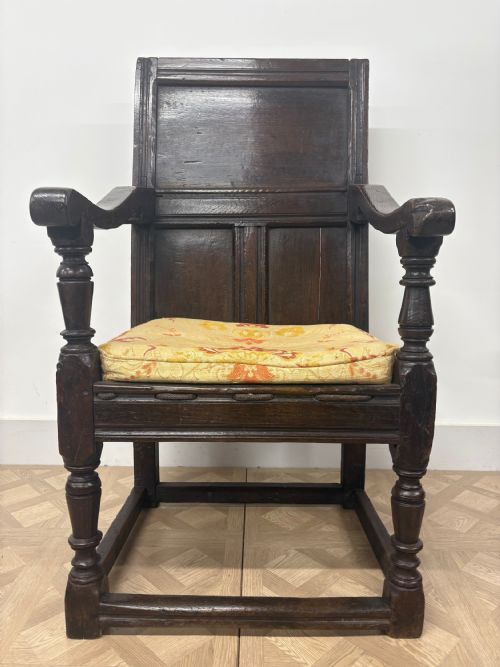
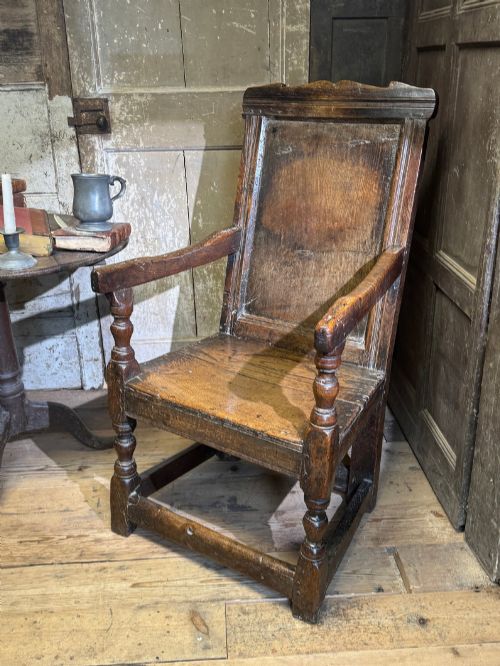


Solid Oak Period Armchair
A solid oak period armchair brings heavy seventeenth-century presence into a room, offering robust timber construction built to endure for centuries.
Solid Oak Period Armchair
A solid oak period armchair is a heavy wooden seat built primarily during the seventeenth and eighteenth centuries, taking forms such as wainscot, great chair, and fireside chair. These early seats display rigid upright backs and solid timber panels designed for formal halls and substantial domestic spaces.
The versions most commonly met on this page date from the seventeenth century, alongside eighteenth-century examples including George III period elm country house designs and later Victorian revivals. Regional variations appear from the North Country and West Country, showing local joinery traditions in solid oak and elm.
Makers constructed these armchairs for utility and status, resulting in heavy proportions that anchor modern interiors. Buyers encounter both early seventeenth-century wainscot models and later provincial interpretations that retain traditional mortise and tenon construction.
Judging Quality
Quality rests in the integrity of the original timber and the depth of the surface colour. Pieces retaining their primary oak structure without extensive timber replacement stand higher in the range than those with heavily restored frames.
Proportion and carving clarity distinguish finer provincial examples from plain utilitarian seating. The presence of untouched patination on solid oak surfaces marks the distinction between superior survivals and heavily refinished pieces.
Some master armchairs were built so wide that seventeenth-century squires could sit comfortably while wearing their heavy woolen cloaks.
The Solid Oak Period Armchair Glossary
- Wainscot chair
- A heavy wooden armchair characterised by a solid paneled back and wooden seat, typical of seventeenth-century English interiors. These pieces represent the earliest form of domestic seating before upholstered furniture became widespread.
- Stile
- The upright vertical member forming the outer edge of a chair back or paneled construction. Stiles provide the main structural support for the backrest and rear legs.
- Rail
- A horizontal framing member fitted between stiles in panel work or chair construction. Rails help distribute weight and reinforce the overall frame.
- Mortise and tenon
- A traditional joint where a projecting tongue fits snugly into a corresponding cavity, secured with wooden pegs. This method forms the backbone of seventeenth-century joinery.
- Patina
- The surface sheen and colour developed on timber through age, wear, and polishing. Good patina indicates genuine age and undisturbed historical surfaces.
Solid Oak Period Armchair: Frequently Asked Questions
How do I date a solid oak armchair?
Dating relies on construction methods, timber species, and stylistic details such as carved panels or turned legs. Seventeenth-century examples typically feature peg-joined frames and wainscot backs, whereas eighteenth-century pieces show lighter proportions and different regional joinery.
Examining the underside and interior joints reveals tool marks and wear patterns that help confirm the period of manufacture. Comparing the timber patination with known examples from the same era provides further verification.
Where were wainscot chairs used?
Wainscot chairs originally stood in the principal rooms of substantial houses, occupied by the head of the household or honoured guests. Their solid wooden construction offered protection against drafts in large, cold halls.
Over time, these chairs moved into smaller chambers, parlours, or firesides as domestic heating and interior layouts evolved. Today, they serve as focal points in studies, hallways, and living rooms.
Are these chairs comfortable for daily use?
These chairs feature rigid wooden seats and upright backs built for posture rather than lounging. Adding a simple loose cushion provides extra comfort for modern sitting habits.
Their solid construction makes them durable for daily use, provided they are placed on level floors to prevent twisting the antique joints.
What is the difference between oak and elm in these chairs?
Oak provides a hard, heavy framing material with a distinct grain pattern, frequently used for seventeenth-century wainscot and great chairs. Elm appears in eighteenth-century country house armchairs, offering toughness and resistance to splitting in seat boards.
Both timbers develop rich patination over centuries, though oak tends to show prominent medullary rays while elm presents a more interwoven grain.