


Solid Oak Hall Seating
Solid oak hall seating brings architectural presence and robust utility to an entrance, spanning sturdy Victorian benches and carved Arts and Crafts chairs.
Solid Oak Hall Seating
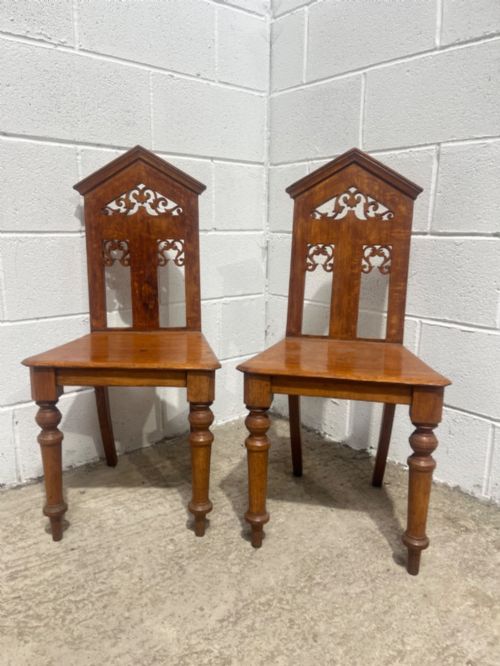
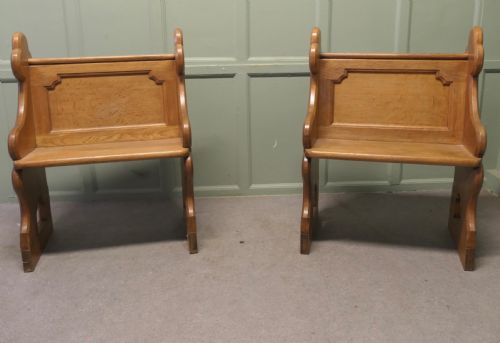
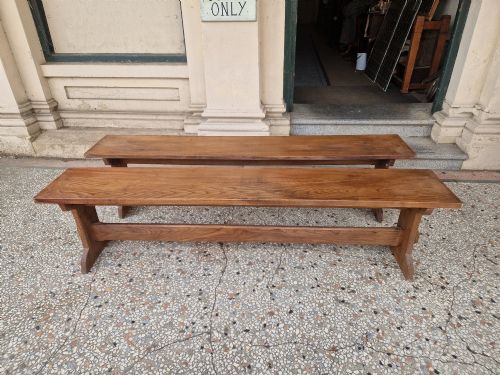
Solid oak hall seating encompasses functional furniture designed for entranceways, corridors, and reception areas, appearing primarily in formats such as hall chairs, benches, hall seats, and armchairs. Buyers searching for solid oak hall seating frequently encounter pairs of chairs and benches originating from the nineteenth century, alongside Edwardian and eighteenth-century examples.
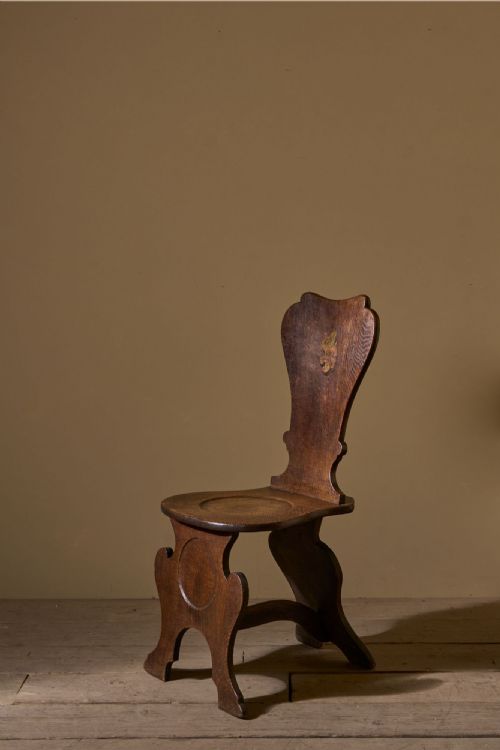
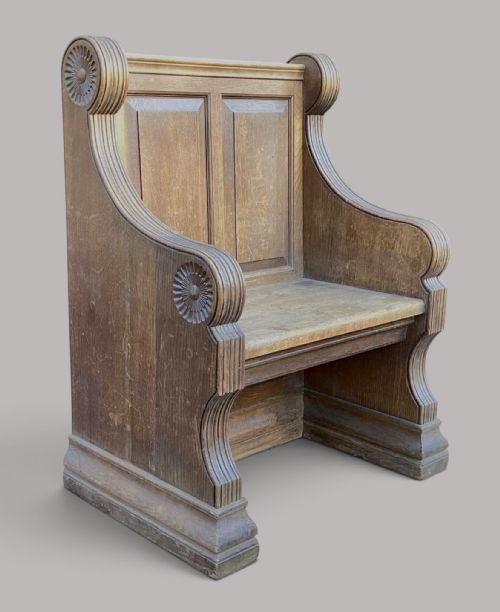
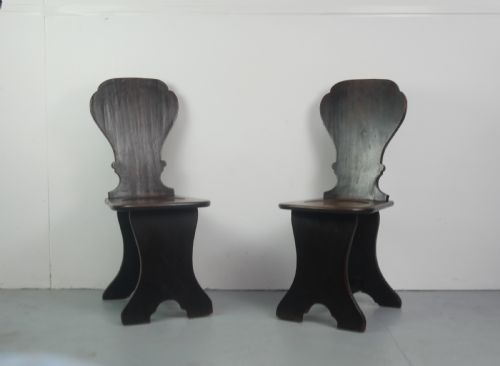
The selection ranges from architectural forms and narrow proportion benches to chapel throne chairs, monks benches, and sgabello chairs. Makers and designers drew upon historical idioms, producing pieces in Gothic Revival, Jacobean Revival, Arts and Crafts, and rustic farmhouse styles.
Victorian and Edwardian pieces dominate the available inventory, though earlier eighteenth-century craftsmanship and revival designs spanning the nineteenth and early twentieth centuries also appear. These forms reflect a traditional domestic requirement for substantial, durable seating in high-traffic transition spaces.
Distinctions in construction and design
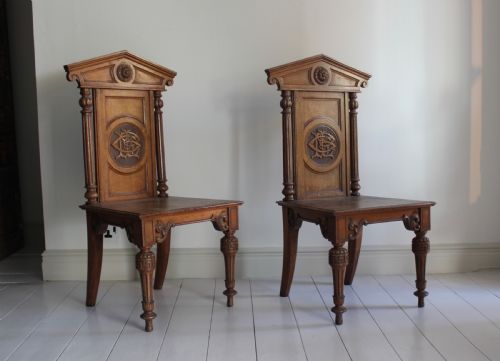
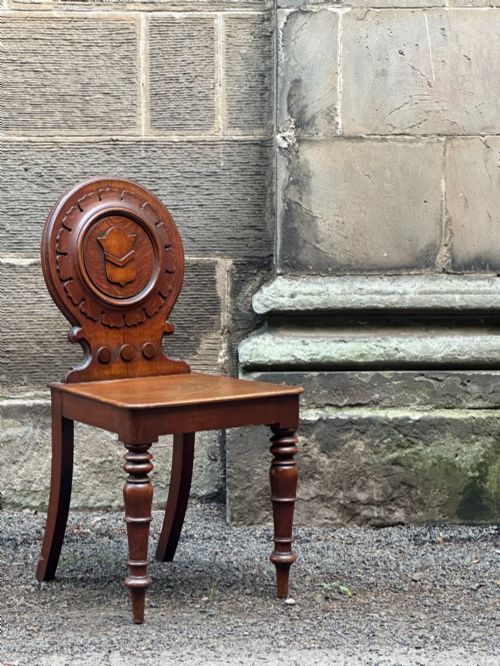
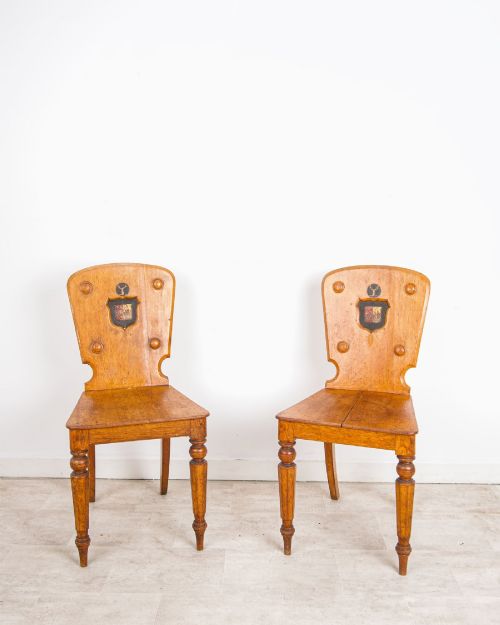
Quality separates through the depth and crispness of hand-carving on shield backs, trestle ends, and panelled surfaces. Pieces featuring architectural proportions and balanced symmetry command attention for their sculptural execution.
The selection of timber grain, the weight of the solid oak construction, and the integrity of revival styling distinguish standard utility furniture from finer artistic commissions.
Listings feature solid oak hall seating spanning from the eighteenth century through the Edwardian era, incorporating brass and elm elements.
The Solid Oak Hall Seating Glossary
- Sgabello
- An Italian Renaissance chair form featuring a wooden seat supported by solid trestles or carved slab legs instead of traditional vertical posts. This style appears in eighteenth-century and revival formats within entrance halls.
- Wainscot chair
- An early wooden armchair constructed with panelled backboards and solid oak sides, originating when timber wall panelling was common. These pieces offer deep seats and sturdy frame construction.
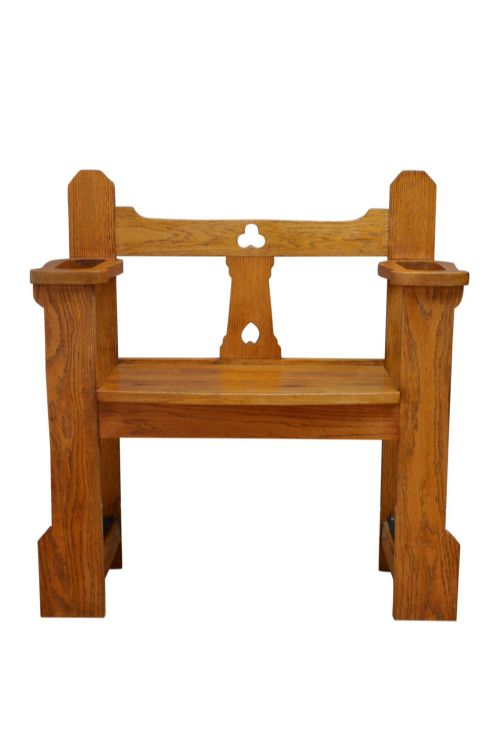
- Trefoil
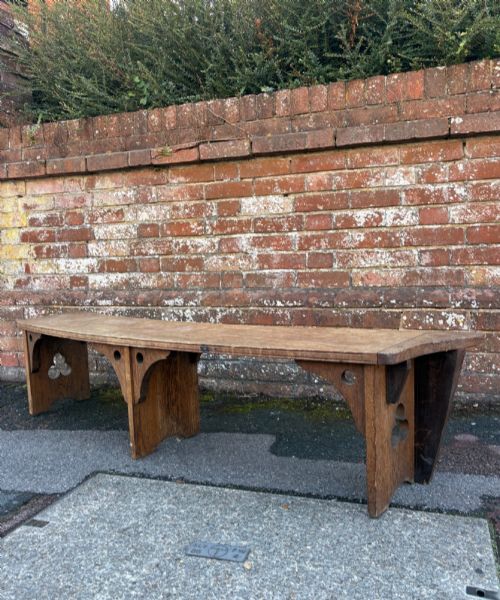
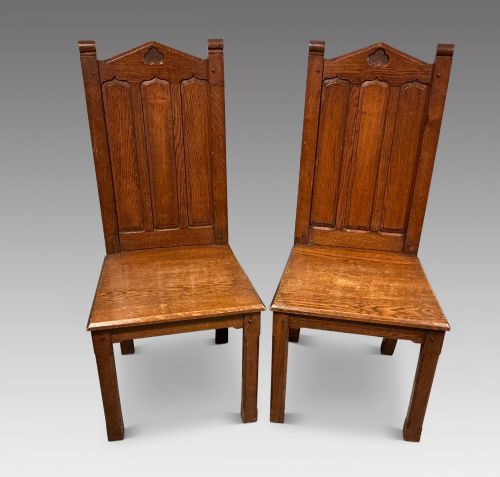
- A three-lobed decorative ornament resembling a clover leaf, frequently pierced or carved into the wood supports and backs of Gothic revival furniture.
- Monks bench
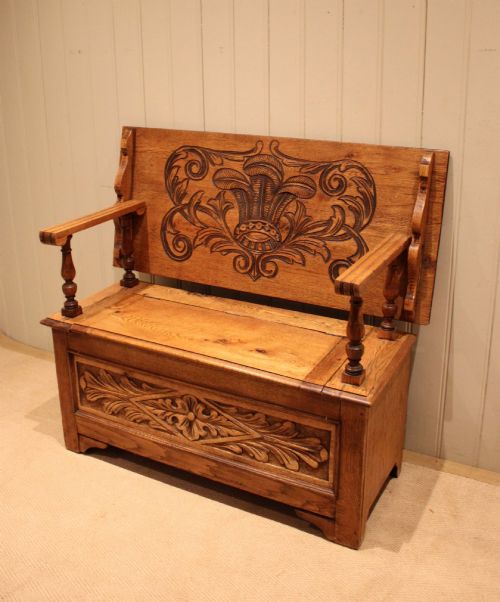
- A convertible form featuring a hinged back that folds down over the armrests to transform a high-backed seat into a flat table surface. This versatile design suited compact domestic spaces.
- Gothic Revival
- An architectural and decorative style drawing inspiration from medieval forms, characterised by pointed arches, trefoils, and heavy carved detailing on oak furniture.
Solid Oak Hall Seating: Frequently Asked Questions
Where should I place solid oak hall seating?
These pieces suit entrance halls, wide corridors, and reception rooms where their substantial timber frames provide both utility and a distinct architectural focal point.
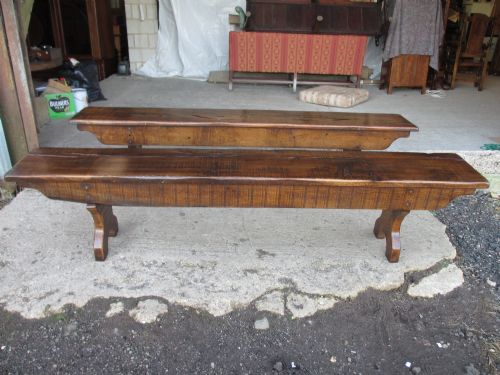
Because the forms include narrow benches and single chairs, they adapt well to both expansive vestibules and restricted circulation spaces.
How do I care for solid oak furniture?
Maintain the timber by avoiding direct heat sources and excessive moisture, applying natural wax periodically to nourish the grain of the oak.
Handle brass fittings and upholstered leather or fabric elements gently during routine dusting to preserve their original condition.
What styles are common in solid oak hall seating?
Victorian Gothic Revival, Arts and Crafts, and Jacobean revival idioms dominate the aesthetic, featuring pointed arches, carved heraldic shields, and exposed joinery.
Simpler rustic farmhouse and architectural forms also feature prominently among the available bench designs.
How can I tell the period of a hall chair?
Examine the construction marks, timber thickness, and stylistic motifs such as Pugin-style trefoils or Victorian Gothic carving patterns.
Revival pieces often blend seventeenth-century structural ideas with nineteenth-century manufacturing methods and heavier hardware.