
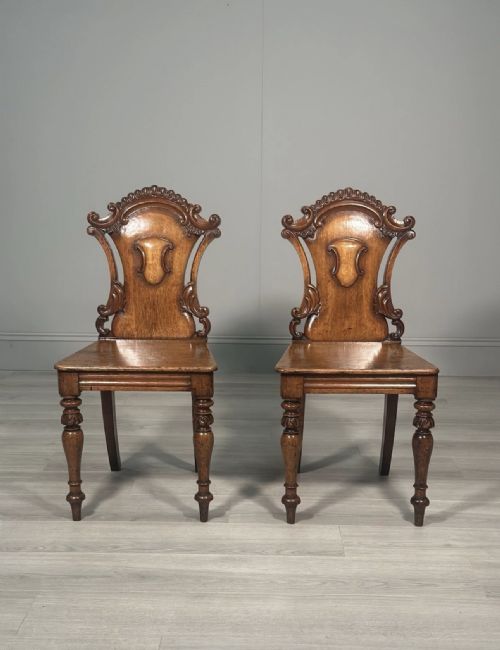


Solid Oak Entryway Chair
A solid oak entryway chair welcomes visitors with robust timber and formal dignity, offering a sturdy seat to pull on boots before stepping out.
Solid Oak Entryway Chair
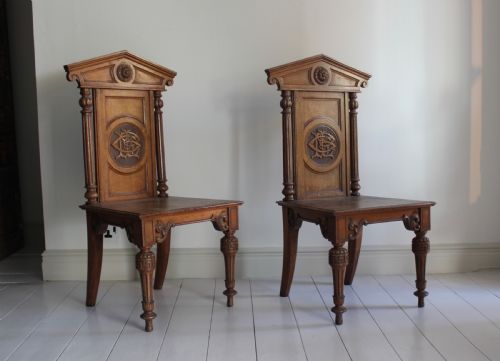
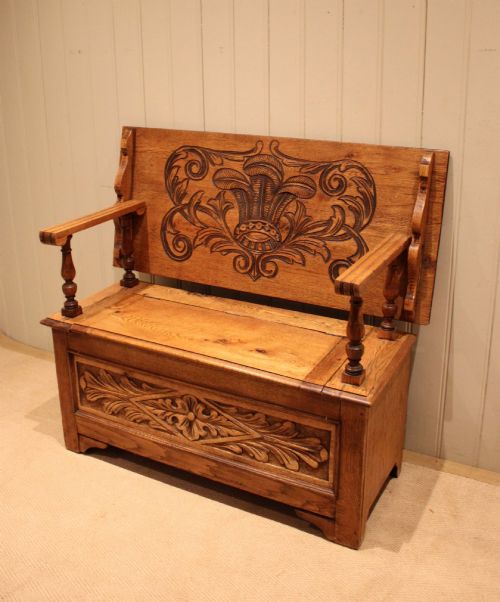
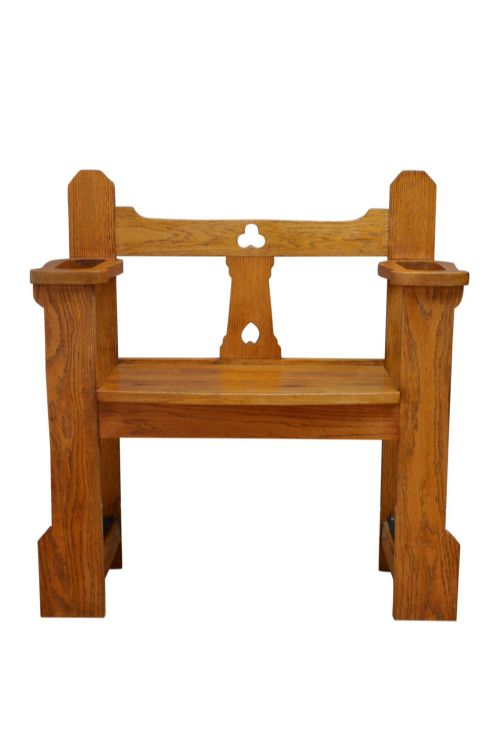
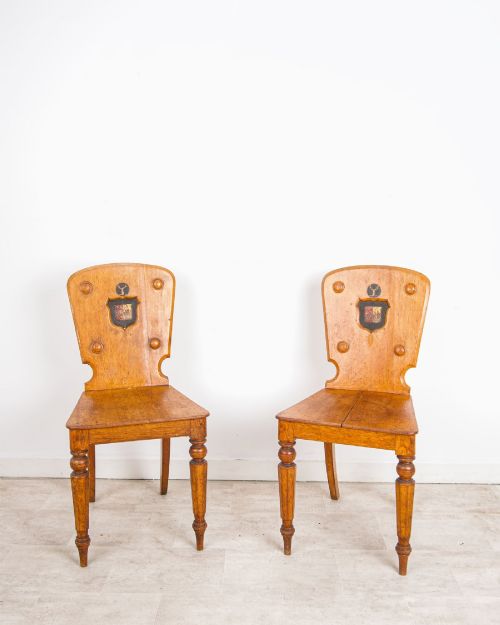
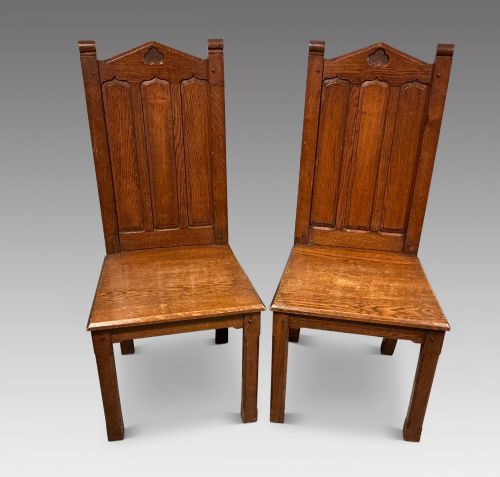
A solid oak entryway chair takes the form of a formal hall seat, hall bench, or reception seat designed for transient resting rather than long lounging. These pieces range from upright Victorian chairs with carved backs to narrow Arts and Crafts benches and geometric Jacobean Revival forms.
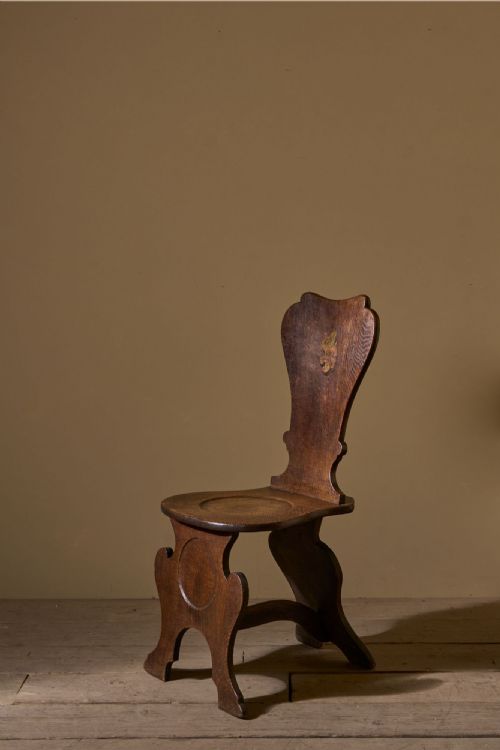
The pieces appearing on this page span the eighteenth, nineteenth, and early twentieth centuries, reflecting changing domestic fashions from Georgian simplicity to elaborate Victorian Gothic styling. Among these varieties, the Victorian shield-back hall chair is most frequently encountered.
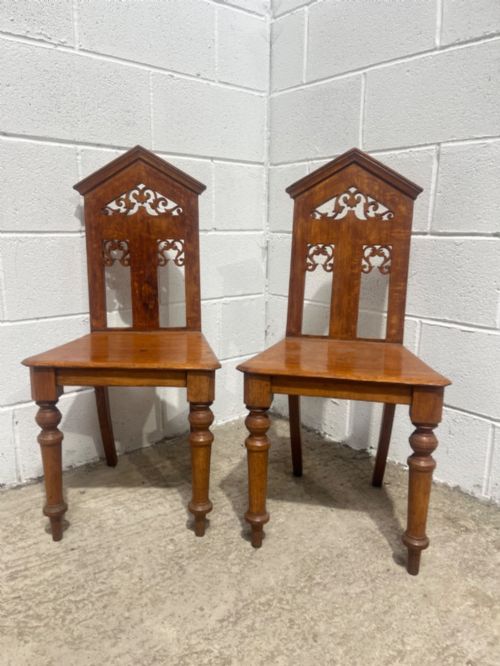
Makers often fashioned these items in pairs to flank a grand hallway or entrance vestibule symmetrically, though individual seats and narrow benches also emerge from the woodwork. Each piece served as an architectural statement of the household's taste long before guests reached the main reception rooms.
Materials and construction methods
Makers relied on solid oak throughout these pieces, utilising its dense grain and durability to withstand heavy traffic near the front door. Some examples incorporate brass fittings or ceramic accents, while occasional items show traces of historical paint finishes applied to the timber.
Listings span multiple eras including the Georgian, Victorian, and Arts and Crafts periods, constructed primarily from solid oak with occasional brass and ceramic details.
Judging quality in hall seating
Quality reveals itself in the crispness of the carved details on the backrest and the depth of the timber's figuring. Pieces with deeply sculpted heraldic shields or intricate pierced work demonstrate superior craftsmanship compared to simpler, flat-panelled versions.
The structural integrity of the joints and the choice of stock timber dictate the longevity of the seat. Heavier gauge oak and precise turning on the legs separate standard utility pieces from high-status examples commissioned for grand country houses.
The Solid Oak Entryway Chair Glossary
- Hall chair
- A rigid wooden seat placed in an entrance hall, typically featuring a solid wooden seat and a decorative back rather than upholstery. These were intended for brief use by callers and servants.
- Shield back
- A chair back shaped in the outline of a heraldic shield, frequently carved with crests or foliage during the eighteenth and nineteenth centuries.
- Sgabello
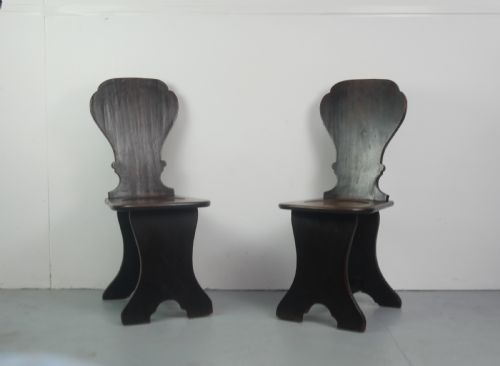
- An Italian Renaissance-style chair form featuring a wooden seat supported by solid trestles or boards rather than conventional legs, sometimes adopted by nineteenth-century revivalists.
- Arts and Crafts
- A design movement of the late nineteenth and early twentieth centuries emphasising honest construction, visible handcraftsmanship, and simple utility.
Solid Oak Entryway Chair: Frequently Asked Questions
Where should I place a solid oak entryway chair?
These seats suit narrow entrance halls, boot rooms, and porches where a striking silhouette is desired without taking up excessive floor space. Their upright posture discourages slouching, making them ideal for quick transitions.
Because they lack upholstery, they resist dust and dampness brought in from outside, though keeping them away from direct radiators prevents the solid oak from drying out and splitting.
Are these chairs comfortable for daily use?
Designed for formal reception halls and quick greetings rather than extended relaxation, these seats offer firm wooden contours and upright backrests. They function best as accent furniture or functional sculpture.
Adding a loose cushion can soften the seat if you intend to sit longer while changing footwear, though many collectors prefer them in their stark, original state.
How do I identify a Victorian hall chair?
Victorian examples frequently display Gothic, Jacobean, or heraldic revival motifs, often featuring heavily carved, turned, or pierced wooden backs. The timber shows a deep, aged patina developed over generations.
Examining the underside and joints reveals hand-tool marks and traditional peg construction that distinguish nineteenth-century production from later modern reproductions.