
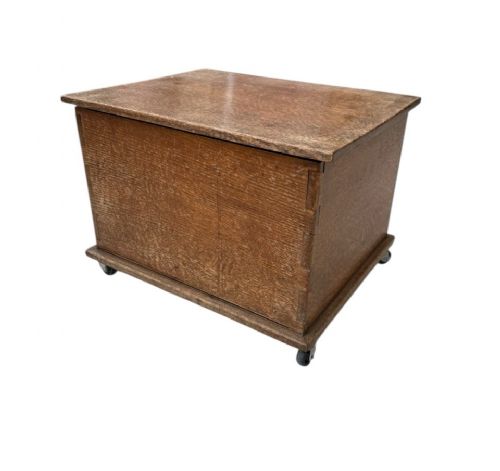
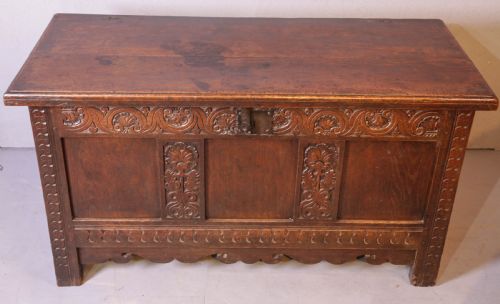


Solid Oak Coffer
A solid oak coffer is a heavy, timber-built storage chest designed to hold domestic goods, valued for its robust construction and enduring utility.
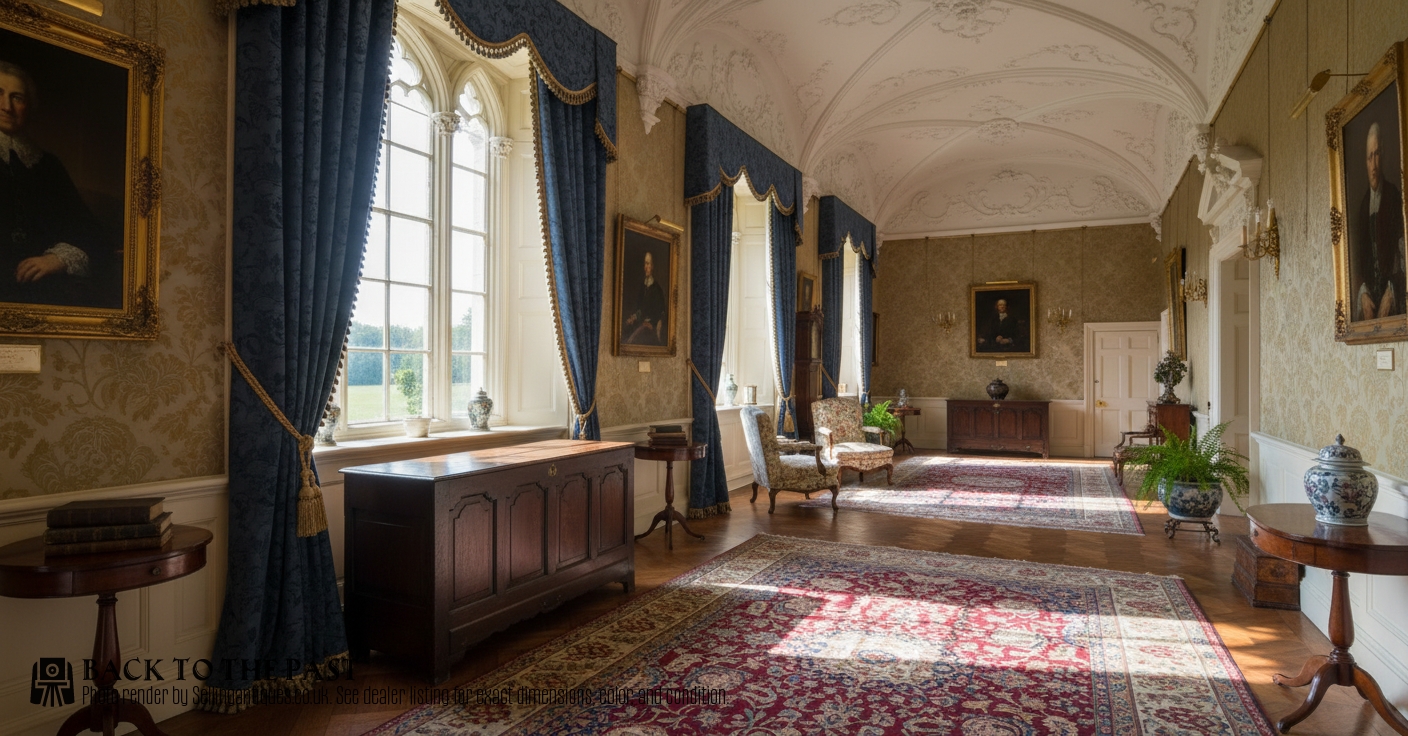
What these pieces are
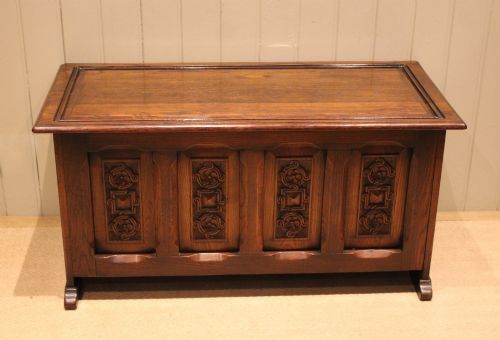
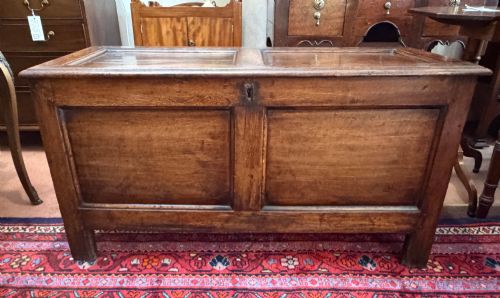
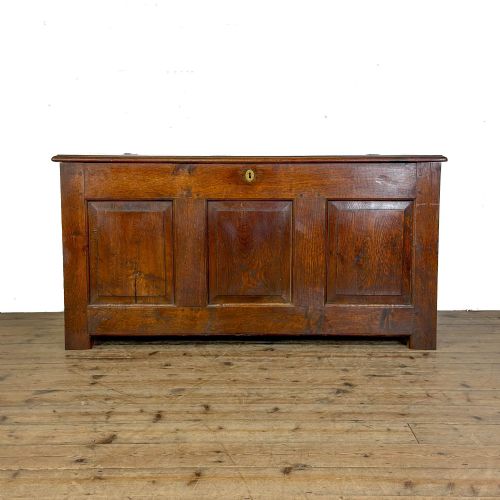
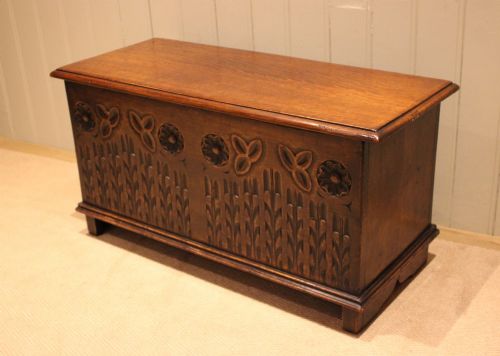
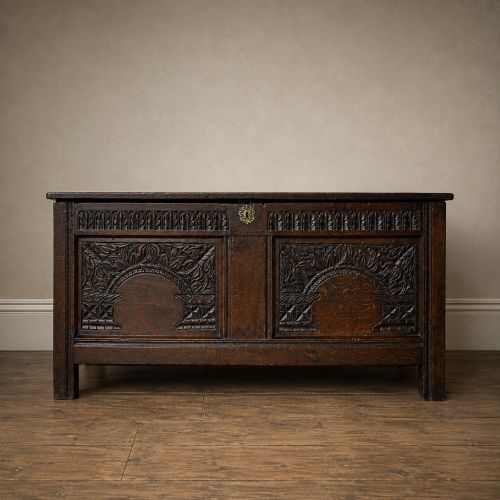
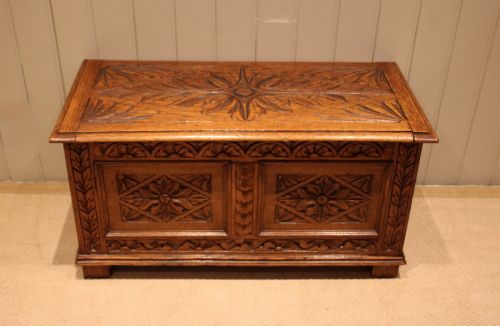
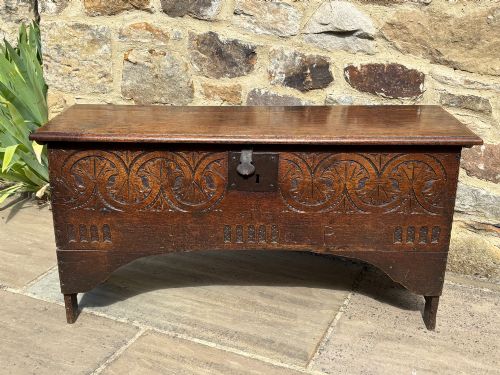
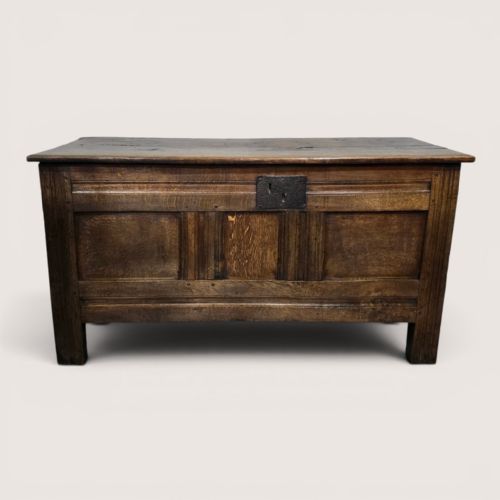
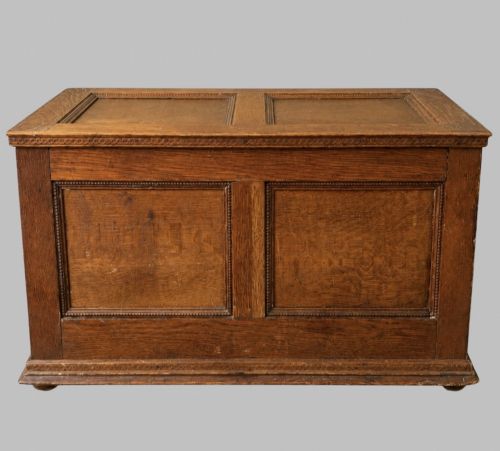
A solid oak coffer is a sturdy storage chest found in forms ranging from plain planked boxes to panelled designs and carved examples. You are most likely to meet panelled coffers and blanket boxes made from oak, sometimes incorporating steel or iron mounts.
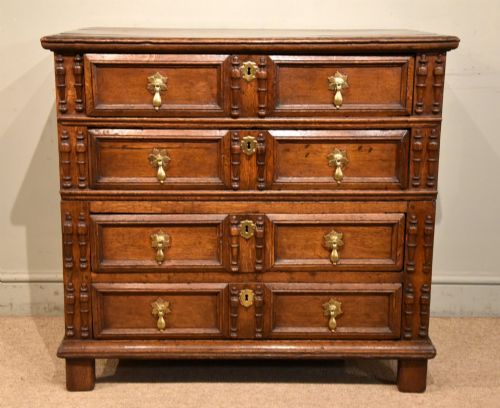
The pieces span several centuries of British craftsmanship, taking shape as provincial blanket boxes, sword chests, mule chests with lower drawers, and heavy shipping trunks. Styles recorded across the inventory include Tudor, 17th Century, Georgian, and Victorian interpretations.
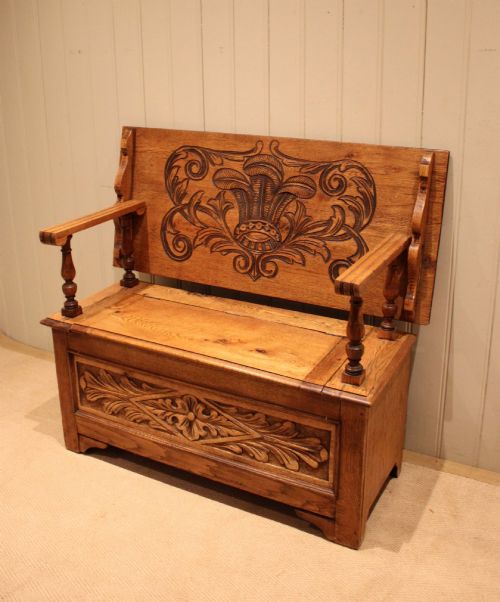
Originating as utilitarian household furniture for storing textiles, valuables, and documents, these chests served multiple domestic purposes in homes of varying status. Their heavy timber frames allowed them to double as benches or tables in period interiors.
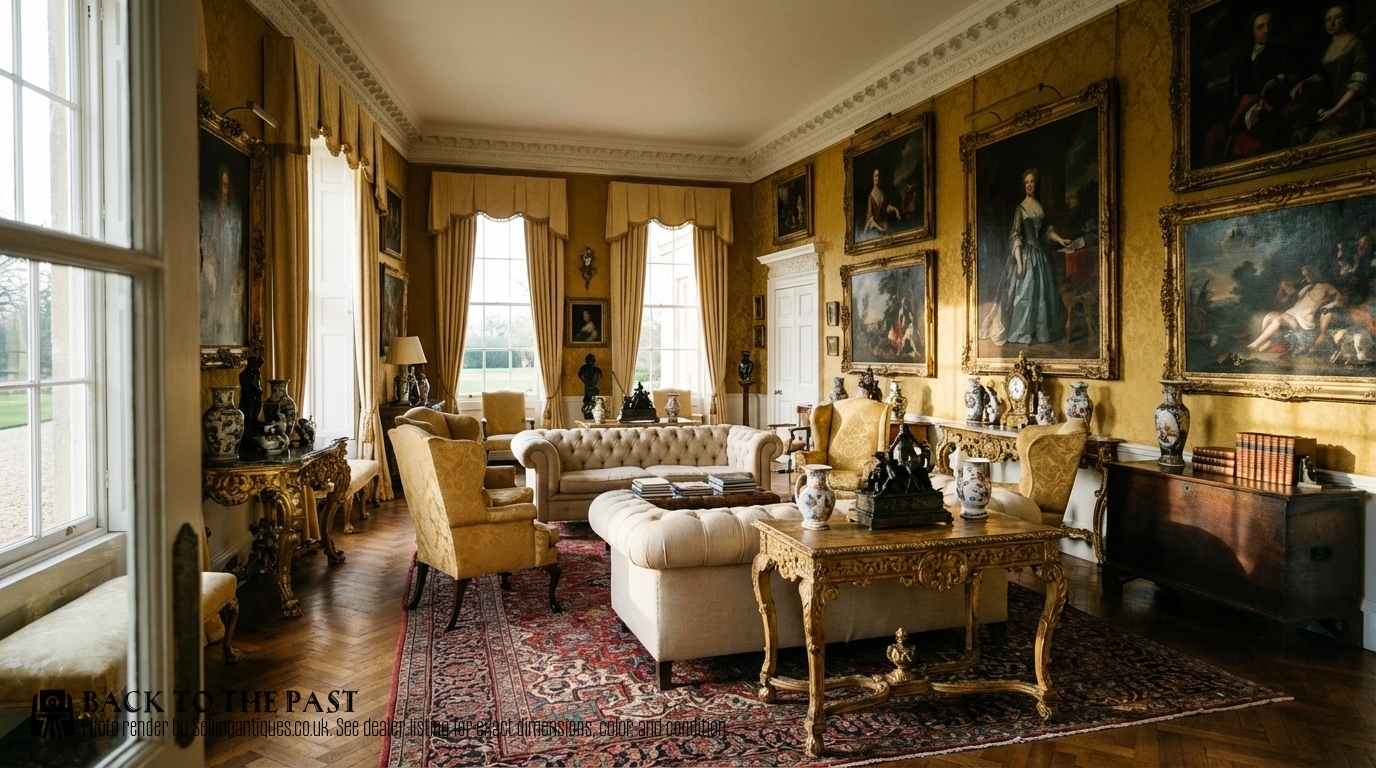
How they were made
Makers constructed these chests primarily from solid oak, utilising heavy planks and framed panels joined to accommodate the natural movement of timber over time. Iron, brass, and steel components appeared as hinges, straps, and protective corner plates.
Construction techniques relied on traditional joinery such as mortise and tenon frames, pegged joints, and hand-planed boards. Surface decoration on selected examples involved carved linenfold motifs, geometric panelling, or simple plain finishes.
Retail Price Guide 2026
Typical UK retail prices for solid oak coffer, calculated from the Sellingantiques database of over a million retail prices indexed since 2003. This retail price guide relies exclusively on Sellingantiques data; no external sources or auction records are used, so the figures do not describe the wider market.
Some sturdy oak chests doubled as impromptu dining tables when hungry medieval travellers arrived after dark.
What varies in quality
Quality separates plain utility boxes from sophisticated examples through the selection of timber, the crispness of hand-carved panels, and the integrity of the original joints. Superior pieces retain their thick solid plank lids and uncompromised structural framing.
The presence of period metalwork, such as iron strap hinges and original locks, distinguishes better examples from those altered or repaired with later replacements. Proportions also influence the standing of a piece, with smaller proportions and long low profiles prized by collectors.
The Solid Oak Coffer Glossary
- Panelling
- A method of framing thin boards within grooved stiles and rails to prevent timber splitting. This technique defines the construction of many period coffers.
- Linenfold
- A style of carved wooden panelling resembling folded vertical linen fabric. It appears frequently on earlier Tudor and 17th-century pieces.
- Mule chest
- A storage chest featuring one or more drawers beneath the main lift-top compartment. This form bridges the evolution between the simple coffer and the modern chest of drawers.
- Plank lid
- A top constructed from solid, unjoined timber boards running the full length of the chest. These heavy tops sit directly on the upper frame of the coffer.
- Strap hinge
- An elongated metal hinge fastened across the surface of a lid to distribute weight. They are commonly forged from iron or steel on heavier transport trunks.
Frequently Asked Questions
What is a solid oak coffer?
A solid oak coffer is a heavy wooden storage chest built primarily for domestic use. These pieces served to secure textiles, valuables, and household goods in period homes.
Over centuries, makers adapted the form into blanket boxes, mule chests, and travel trunks. Their sturdy build allowed them to function as seating furniture as well as storage.
How do I date an oak coffer?
Dating relies on observing construction methods, joinery types, hardware, and decorative styles. Hand-pegged frame joints and linenfold carving typically point to earlier periods.
Later Victorian and Edwardian examples often display machine-sawn timber, different hinge mechanisms, and lighter overall proportions compared to 17th-century pieces.
How were these chests used?
Historically, households used coffers to store heavy woollens, bed linens, family silver, and important legal documents. Their heavy lids provided security against theft and damp conditions.
In domestic interiors, they doubled as benches for seating or tables for display. Travellers also utilised reinforced versions as carriage and shipping trunks.
How do I care for a solid oak coffer?
Maintaining solid oak requires placing the chest away from direct heat sources and sudden temperature fluctuations. This prevents the timber from drying out and splitting.
Applying a traditional beeswax polish helps nourish the wood surface and maintain its natural lustre without sealing the grain.