
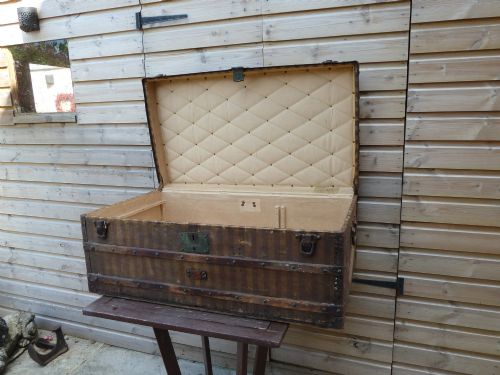
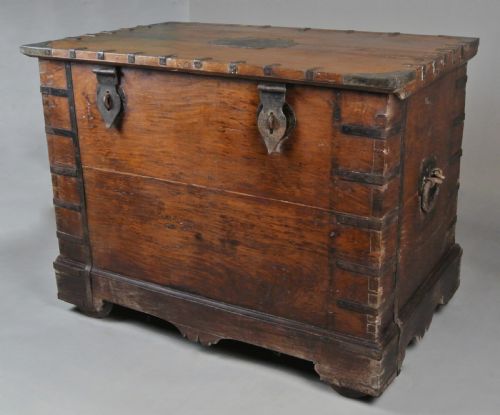
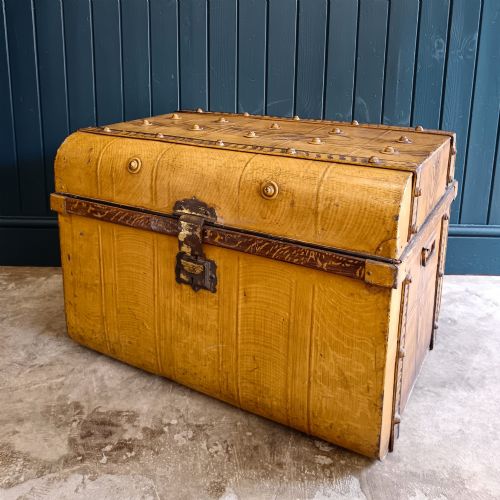


Victorian Steamer Trunk
These Victorian steamer trunk pieces are sturdy travel chests built for nineteenth-century journeys, offering robust storage with genuine period character.
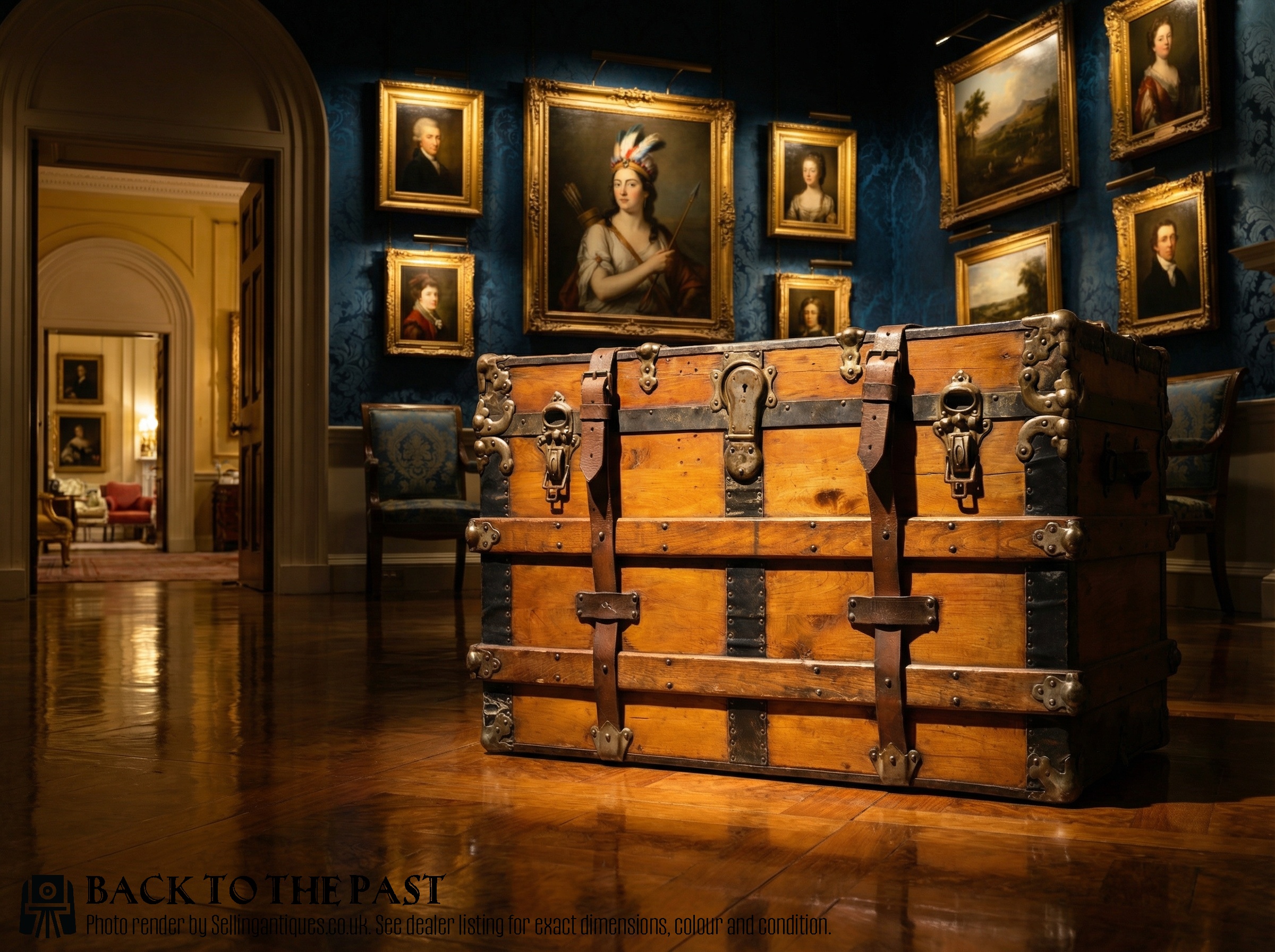
Victorian Steamer Trunk Forms and Origins
When you search for a victorian steamer trunk, you encounter robust luggage designed for long-distance travel during the nineteenth century. These items appear as travel chests, shipping chests, carriage chests, and cabin trunks intended to withstand the rigours of transit.
The pieces on this page span the Victorian era, specifically featuring examples from the 1870s up to circa 1900. You will regularly find pine travelling trunks alongside specialist forms such as silver chests, dome top trunks, and bentwood designs.
Originating predominantly from English and Scottish workshops, these trunks served maritime, railway, and carriage journeys. Many retain a utilitarian aesthetic that adapts readily to modern domestic settings as coffee tables or storage chests.
Materials and Construction
Makers constructed these trunks primarily using sturdy timbers such as pine, oak, cedar, and wood. These foundational woods provided the necessary structural integrity to endure heavy handling during transport.
Protective layers of canvas, leather, paper, or painted finishes were applied to the exterior surfaces. Metal reinforcement appeared in the form of iron, steel, and brass bindings, brackets, and latches to secure the corners and edges.
Retail Price Guide 2026
Typical UK retail prices for victorian steamer trunk, calculated from the Sellingantiques database of over a million retail prices indexed since 2003. This retail price guide relies exclusively on Sellingantiques data; no external sources or auction records are used, so the figures do not describe the wider market.
Several trunks have successfully transitioned from nineteenth-century maritime transport to holding contemporary coffee table books.
Assessing Build and Materials
The distinction between standard utility luggage and finer examples rests upon the choice of secondary materials and hardware. Heavy steel or iron bindings and original leather coverings indicate superior durability.
Internal preservation heavily influences the appeal of a piece, particularly those retaining original fitted interiors or paper linings. The selection of timber, ranging from basic pine to robust oak and cedar, determines the overall heft and longevity.
The Victorian Steamer Trunk Glossary
- Steamer trunk
- A low-profile travel chest designed to fit beneath a steamship berth or in a railway carriage. These pieces prioritise manageable height over deep vertical storage.
- Dome top trunk
- A storage chest featuring a rounded lid designed to shed water during travel. This curved profile requires specialised bending techniques in the wooden frame.
- Carriage chest
- A heavy-duty trunk reinforced for mounting on horse-drawn carriages or coaches. They typically incorporate substantial iron bindings to withstand constant motion.
- Cabin trunk
- A portable luggage container sized specifically for passenger cabins on ships or trains. They offer accessible storage during transit without taking up excessive floor space.
- Bentwood
- Wood that has been heated and shaped into curved structural components. This technique provides both strength and distinctive aesthetic lines to the trunk lid.
Frequently Asked Questions
What is a Victorian steamer trunk?
A Victorian steamer trunk is a nineteenth-century travel chest built with wood, metal, and canvas to transport belongings during railway and ship journeys.
These pieces were engineered for durability, featuring reinforced corners and secure latches suited for long-distance transit.
How were these trunks used?
Travellers packed personal belongings, clothing, and valuables inside these chests for journeys across land and sea. They were stored in luggage vans, ship holds, or passenger cabins.
Today, many people repurpose them as coffee tables or stationary storage chests in living spaces.
How do I date a steamer trunk?
Dating relies on examining the construction materials, hardware types, and any surviving maker labels or registry marks. Pieces from the 1860s and 1870s often display distinct ironwork compared to later 1900 examples.
Stylistic shifts, such as the introduction of bentwood lids around 1890, also help narrow down the production period.
Are these trunks waterproof?
While materials like painted canvas, leather, and treated metal offered resistance against rain and moisture during travel, they were not entirely waterproof. The primary function was physical protection rather than absolute sealing against immersion.
Over time, protective layers naturally weather and lose their original weatherproofing capabilities.
How do I clean a canvas trunk?
Cleaning requires gentle brushing to remove surface dust without disturbing the historic canvas or paper coverings. Avoid harsh liquid cleaners that might damage the original finishes or rust the metal hardware.
Preserving the aged patina ensures the piece retains its authentic nineteenth-century character.